
Innovation often begins with a simple idea but transforming that startups’ idea into a successful business requires more than creativity but also investors or venture capital. Behind many groundbreaking companies are investors who provide not only financial resources but also strategic support and industry expertise. This is where venture capital (VC) plays a crucial role in the innovation ecosystem.
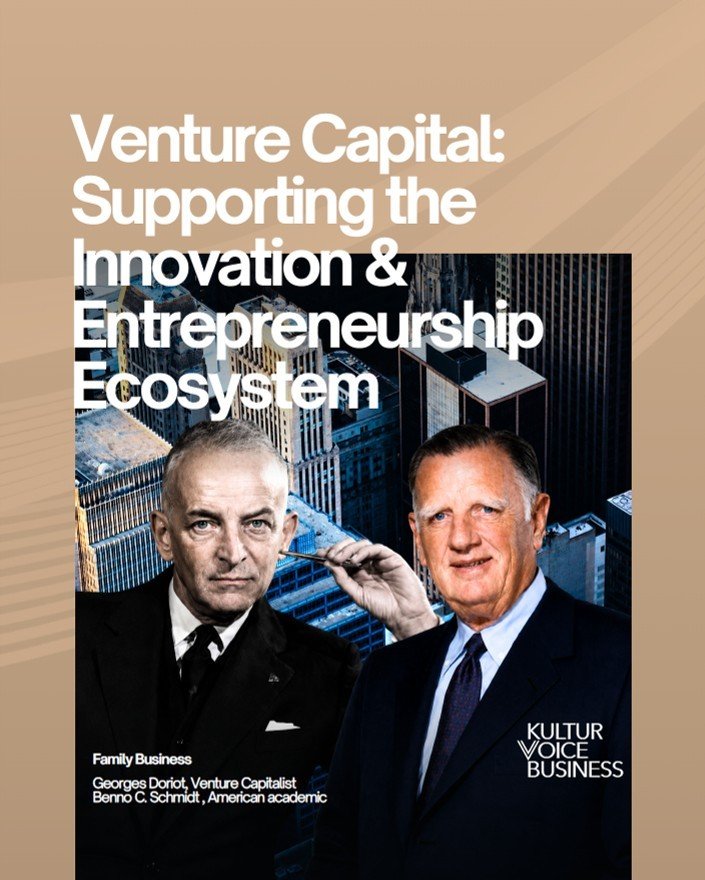
The concept of venture capital emerged in the 1940s as a new approach to supporting high-potential businesses. The term was coined by Benno C. Schmidt, an early managing partner at the investment firm J.H. Whitney & Company, who shortened the firm’s original description of “private adventure capital” into the phrase widely recognized today. While Schmidt introduced the terminology, General Georges Doriot is often regarded as the “father of venture capital” for co-founding the American Research and Development Corporation (ARDC) in 1946. ARDC became one of the first major venture capital firms to raise funds from institutional investors rather than relying solely on the personal wealth of affluent families, shaping the foundation of the modern VC industry.
Venture capital is a form of private investment that provides funding to early-stage companies with high growth potential, particularly those developing innovative products, technologies, or business models. Unlike traditional loans, venture capital investments do not require fixed repayments. Instead, investors provide capital in exchange for equity, or ownership shares, in the company.
The venture capital process begins when entrepreneurs seek funding to develop and expand their businesses. Investors carefully evaluate startups based on factors such as market potential, business models, founding teams, and innovation capabilities before making investment decisions. If the startup succeeds and increases in value, investors may gain returns through company growth, acquisitions, or initial public offerings (IPOs).
Within the innovation ecosystem, venture capital serves as a bridge between groundbreaking ideas and market realization. Beyond financial support, VC firms often provide mentorship, strategic guidance, and valuable networks that help startups overcome challenges, scale operations, and strengthen their market position.
The impact of venture capital can be seen across technology-driven industries such as artificial intelligence, biotechnology, fintech, and renewable energy. By supporting ambitious entrepreneurs, venture capital accelerates innovation and creates opportunities for new solutions to emerge.
However, venture capital also involves significant risks. Many startups face uncertainty due to market competition, operational challenges, and evolving consumer demands. Therefore, successful VC investment requires careful evaluation, long-term vision, and the ability to identify businesses with strong growth potential.
Ultimately, venture capital is more than a source of funding. It is a catalyst that connects entrepreneurs, investors, and markets, transforming visionary ideas into impactful businesses while driving economic growth and shaping the industries of tomorrow.
Success in business rarely comes from luck—it’s built through consistent decisions and sharp thinking. If you want to refine your strategy and avoid costly mistakes, explore more business insights on KVB.global. Share this with your peers and follow Kultur Voice Business or KVB to stay aligned with ideas that drive real progress.

Latest news from Kultur Voice Business