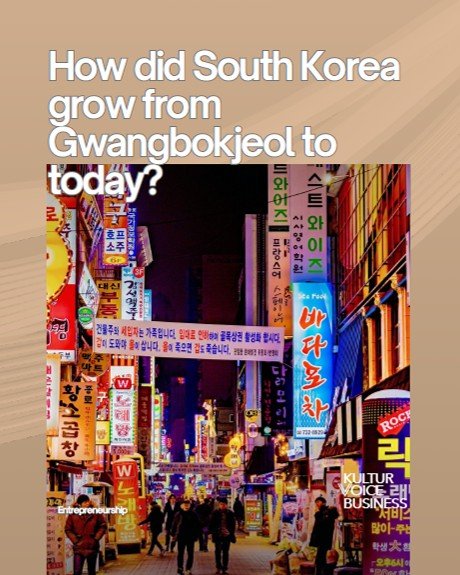

The “Miracle on the Han River” is South Korea’s inspiring entrepreneurial story of national transformation, that offers important lessons worth examining. After liberation from Japanese colonial rule on 15 August 1945, and the devastation of the Korean War from 1950 to 1953, the country pursued ambitious five-year development plans beginning in the 1960s, that determined strategy laid the foundation for South Korea’s rapid economic rise until now.
Although the Korean War ended with the Armistice Agreement on 27 July 1953, no formal peace treaty has ever been signed. The two Koreas therefore technically remain at war, with the armistice alone preventing renewed conflict. This unresolved status is especially visible in the Demilitarized Zone and the Joint Security Area at Panmunjom, where military dialogue related to the armistice continues. The conflict’s legacy still shapes life on the peninsula through heightened military readiness, strained political relations, divided families, and a nation yet to fully heal. South Korean cinema has explored this history in acclaimed films such as Tae Guk Gi and JSA, while series such as Crash Landing on You have brought North–South relations to global audiences through romantic comedy.
After the Korean War, South Korea faced severe economic devastation, with little infrastructure, capital, or access to natural resources. Greater economic sovereignty allowed the government to launch export-led industrialization in the 1960s. Strong state support and sustained investment in education helped the country move rapidly from dependence on foreign aid to an advanced, high-income economy.
Today, South Korea is one of the world’s largest economies, with a GDP of about $1.8 trillion and high living standards rooted in the sovereignty regained in 1945.
South Korea’s post-liberation economy was led by large, family-controlled conglomerates known as chaebols, including global companies such as Samsung, Hyundai, and LG. Supported by government policies promoting heavy industry and international trade, these groups became highly competitive in:
- Automotive manufacturing: Producing vehicles at scale for global markets.
- Shipbuilding and steel: Strengthening heavy industry and expanding commercial exports.
- Electronics and semiconductors: Leading global production of memory chips and advanced consumer electronics.
Korean culture also values nunchi (pronounced “noon-chee”), a social philosophy whose name roughly means “eye measure.” It is the skill of quickly reading a room, sensing others’ moods, and recognizing changing social dynamics to respond appropriately. In business, this awareness can support adaptability, negotiation, and the development of export products suited to global markets.
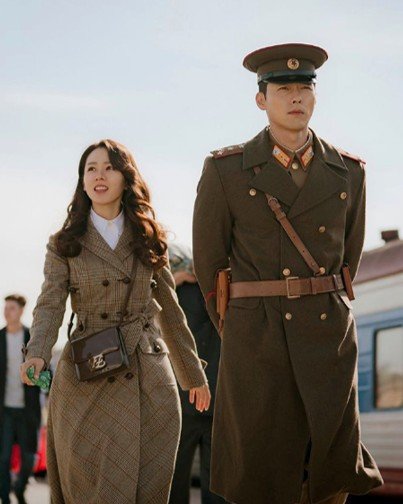 In recent decades, South Korean industry has expanded into advanced technology, artificial intelligence, electric-vehicle batteries, and renewable energy. At the same time, the Hallyu wave has transformed entertainment, cosmetics, and media into major global businesses.
Celebrated each year on 15 August, National Liberation Day—Gwangbokjeol, or “Restoration of Light Day”—commemorates more than political freedom. It also marks the turning point that enabled South Korea to build a sovereign economy, develop globally competitive industries, and evolve from a war-torn agrarian country into a major force in world commerce.
Happy Liberation Day, Koreans around the world.
Celebrating culture. Elevating craftsmanship. Follow Kultur Voice Business for stories on culture, heritage, creativity, and the people shaping communities around the world.
Latest news from Kultur Voice Business