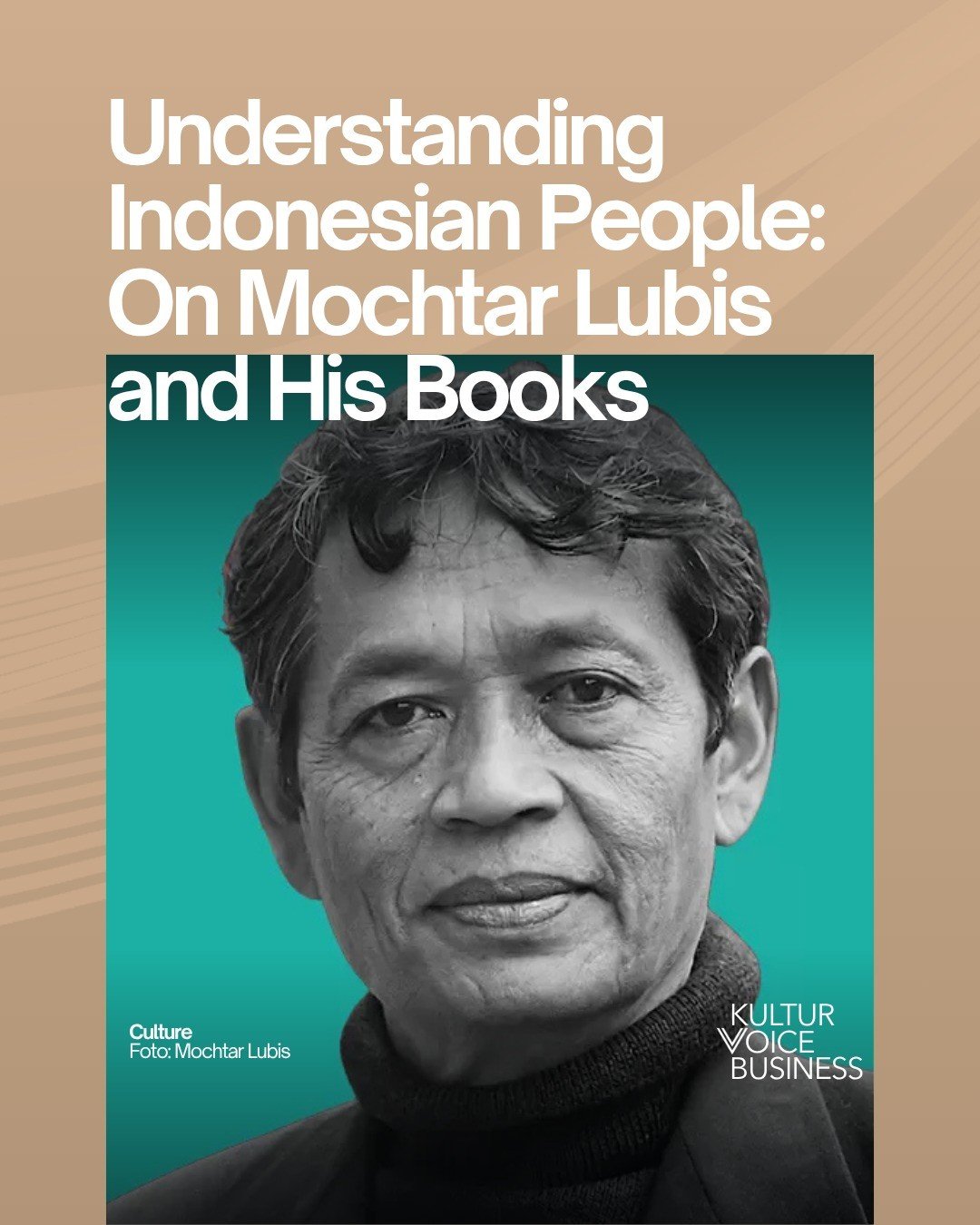

A journalist from Indonesia who played a lot of roles in freedom during his life and fought for the community to obtain honest information, the author of the first Indonesian literary work translated into English and the founder of the Indonesia Raya media and the monthly literary magazine Horison – Mochtar Lubis – on April 6, 1977 at Taman Ismail Marzuki (TIM) in Jakarta, Indonesia, delivered a cultural speech which was later raised into a book entitled Manusia Indonesia which is introspective.
Using the use of diagnosis, Mochtar Lubis, who lived from March 7, 1922 to July 2, 2004, revealed traits that are often found in Indonesian society to encourage awareness so that the community becomes better. Through the book Man Indonesia, Mochtar Lubis invites the public to dare to criticize themselves and not accept the situation passively. This idea influenced many writers and intellectuals to be more open in raising issues.
At the end of this article, Kultur Voice Business proposes to add one of the traits that is also often found in Indonesia with the passage of time and challenges.
Six traits that according to Mochtar Lubis are often found in Indonesian society:
Talented in art (artistic). A positive side was stated by Mochtar Lubis, where Indonesians have high creativity and artistic sensitivity in various cultural fields.
Hypocrites. Indonesians often display a different face between what is said and what is actually thought or done. The attitude of maintaining feelings and avoiding conflict sometimes turns into hypocrisy.
Lack of responsibility. There is a tendency to avoid personal responsibility and prefer to blame circumstances or other parties when problems arise.
Feudal spirit. People tend to glorify power, position, and social status. As a result, criticism of superiors is often avoided and social relationships become unequal.
Believing in superstitions. In the midst of the development of education and science, there are still many behaviors that are influenced by irrational beliefs.
Weak character or character. He assessed that people are often less firm in holding on to principles, are easily influenced, and lack the courage to defend the truth when faced with pressure.
Mochtar Lubis does not intend to insult the Indonesian nation, but his criticism is aimed at encouraging the public to recognize these weaknesses in order to build a more honest, responsible, democratic, rational, and integrity character. This book is basically an invitation to improve the quality of Indonesian people as the foundation of the nation’s progress.
Mochtar Lubis’s greatest influence was to make literature a tool for social criticism, the formation of the nation’s character, and the struggle for freedom of thought. He is remembered not only for the quality of his literary works, but also for his courage to speak the truth and invite the Indonesian people to introspect.
As a journalist whose contributions to press freedom are internationally recognized, Mochtar Lubis has received a number of prestigious awards, including the Ramon Magsaysay Award and the Golden Pen of Freedom. In addition, Mochtar Lubis had influences, namely:
- Bringing Social Criticism to Literature. Mochtar Lubis’s works not only tell the story of human life, but also criticize the social, political, and moral conditions of society. Through his novels and essays, he shows that literature can be a means of reflection and criticism of social reality.
- Producing Important Literary Works that were also the first to be translated into English. Some of his novels, such as Jalan Tak Ada Ujung, Senja di Jakarta, and Harimau! Tiger!, considered an important work in the treasures of modern Indonesian literature. Senja di Jakarta is even known as the first Indonesian novel to be translated into English.
- Connecting Literature and Journalism. As the founder of the daily Indonesia Raya and one of the figures who fought for press freedom, Mochtar Lubis showed that writing can function as a tool of social control. His influence can be seen in many Indonesian writers who combine journalistic acumen with literary power.
- Developing the Life of Indonesian Literature. Mochtar Lubis co-founded the Obor Indonesia Foundation which plays a role in the publication and dissemination of intellectual and literary works. This contribution helps the development of literacy culture in Indonesia.
- Fighting for an Independent Press. Mochtar Lubis founded and led the daily Indonesia Raya, a newspaper known for its criticism of the government. Through this media, he emphasized that the press must function to supervise power and convey the truth to the public.
- Dare to criticize the authorities. In the course of his career, Mochtar Lubis often expressed criticism of government policies and abuse of power. This critical attitude made him face various political pressures. He had served a detention period of almost nine years during the era of President Soekarno.
- Become a symbol of freedom of expression. His courage to defend journalistic principles made Mochtar Lubis a symbol of freedom of expression in Indonesia. He pointed out that journalists have a moral responsibility to convey facts and defend the public interest.
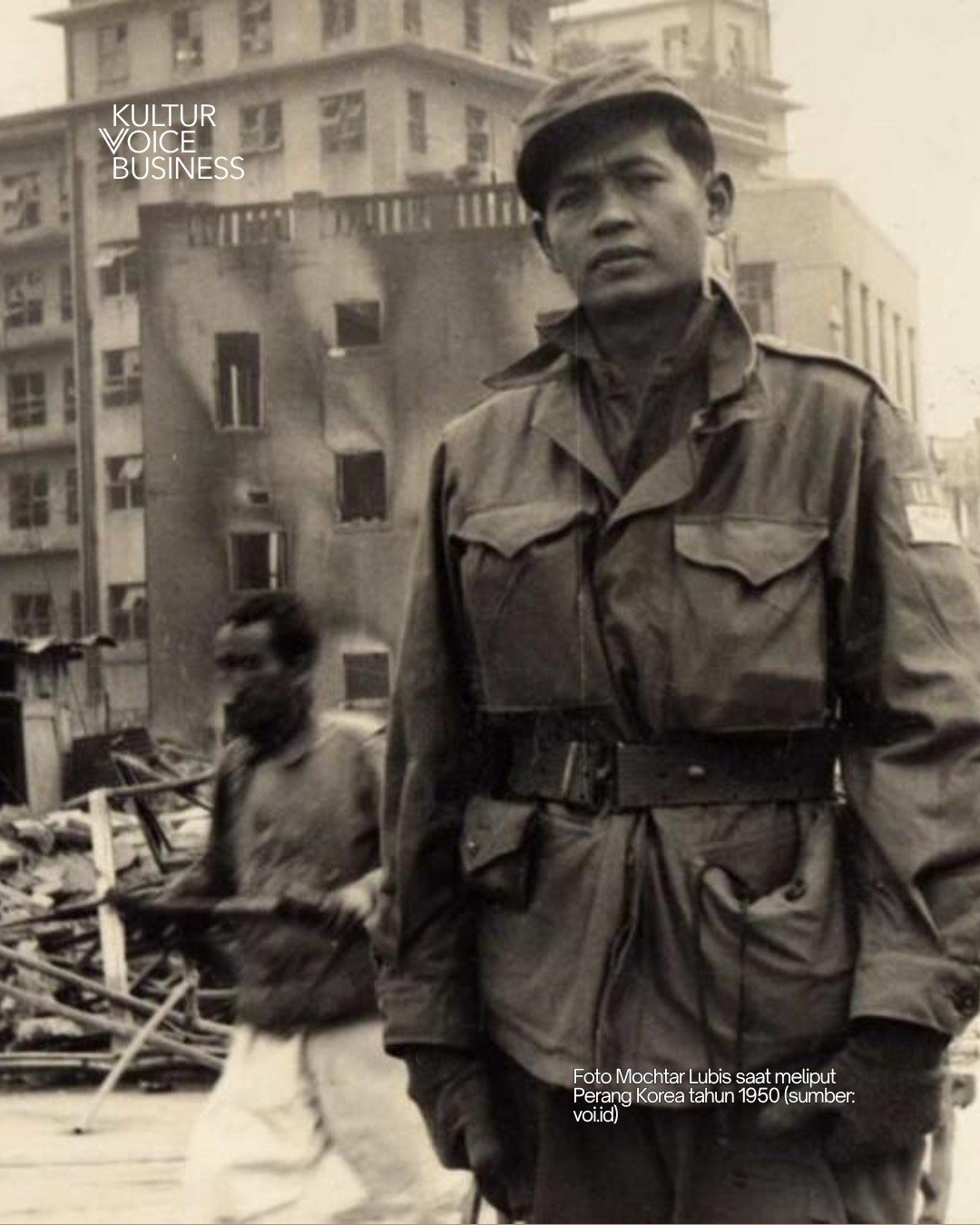 Kultur Voice Business advises readers to read Mochtar Lubis’s literary works at least Harimau! Harimau! or Tiger! Tiger! which elevates human character very well, Jalan Tak Ada Ujung is also Senja in Jakarta.
Kultur Voice Business also sees that artistic is one of the strengths of artisans with various craftsmanship, which continues to be developed into a creative economic force.
Kultur Voice Business also has a proposal to add the resilience and patience of Indonesian people when facing various challenges and pressures, accompanied by an extraordinary attitude of mutual cooperation.
Culture shapes how we live, create, and do business. Kultur Voice Business explores the ideas, traditions, craftsmanship, and communities that inspire everyday living and entrepreneurship. Need support in content production or public relations? Contact KVB at hello@kvb.global.
Latest news from Kultur Voice Business