
Agriculture has long underpinned Southeast Asian economies by supporting rural livelihoods, food security, and regional trade. The sector is now expanding beyond traditional farming into a broader agribusiness ecosystem that includes food processing, logistics, biotechnology, and digital technology. With its abundant agricultural resources, tropical climate, and growing food-innovation ecosystem, Indonesia—the region’s largest economy—is well placed to lead this transformation.
Across the region, agribusiness is moving beyond raw crop production toward higher-value products and more advanced supply chains. Palm oil, rice, rubber, coffee, and tea remain major economic contributors, but diversification is increasingly important. Climate change, evolving consumer preferences, and global supply-chain disruptions are prompting governments and businesses to pursue more resilient crops, sustainable production methods, and alternative food ingredients.
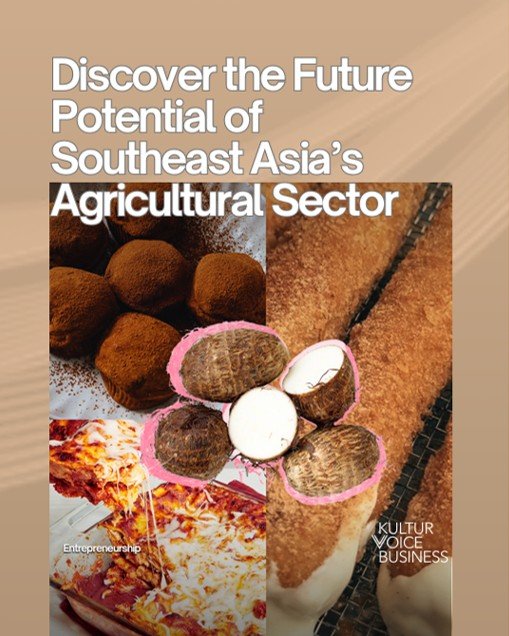
Indonesia has abundant root and tuber crops, including cassava, sweet potato, potato, and taro, as well as indigenous varieties such as uwi, gembili, and gadung. These crops can strengthen food security and enable farmers and producers to create higher-value products. One variety gaining renewed attention is talas belitung (Xanthosoma sagittifolium), commonly known as kimpul. Its recent popularity—including its playful use as a substitute ingredient in viral foods—points to a wider opportunity: Indonesia’s diverse local crops remain underused by the modern food industry.
Local tubers can also be processed into value-added ingredients such as flour. Talas belitung flour and MOCAF (Modified Cassava Flour), for example, could serve as affordable, gluten-free alternatives in selected food applications. Local production of these ingredients could diversify raw-material sources and create opportunities in farming, processing, manufacturing, and food innovation.
The opportunity goes beyond the crops. Stronger links among farmers, processors, brands, and consumers can increase value across the agricultural supply chain. Indonesian agritech companies such as EraTani and Koltiva are already using digital platforms, farm mapping, traceability, and data to build more transparent and sustainable supply chains. Their models show how technology can connect smallholders with businesses and global markets while supporting climate-resilient production.
Similar innovations are emerging across Southeast Asia. In Singapore, Archisen and Sustenir Agriculture use controlled-environment agriculture, hydroponics, sensors, and data analytics to improve food-production efficiency in land-scarce urban settings. Sustenir, for example, recirculates water in its controlled-environment hydroponic system and reportedly uses 95% less water than traditional farming.
Vietnam’s agritech ecosystem is also growing. Startup Enfarm combines AI, IoT sensors, and real-time agricultural data to help farmers monitor soil conditions, optimize fertilizer use, and raise productivity. Its approach shows how digital technology can improve both economic efficiency and farming sustainability.
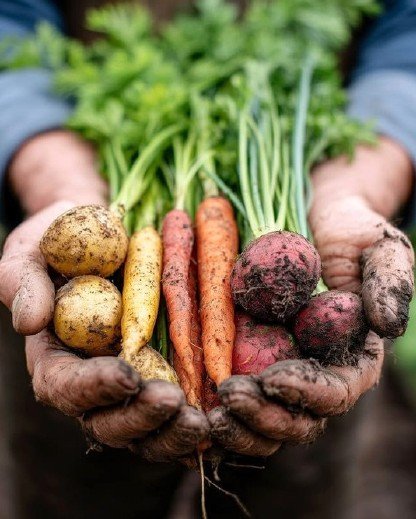 Together, these developments signal a broader shift in Southeast Asian agriculture. The sector’s future will depend not only on the amount of land cultivated, but also on how effectively the region combines local resources, technology, sustainable practices, and value-added processing.
As demand grows for healthier, more diverse, and sustainable food, Indonesia and Southeast Asia can transform agriculture from a traditional production sector into a sophisticated engine of innovation and economic growth. From local tubers such as kimpul to AI-powered farms and traceable supply chains, the region has immense potential to shape the future of food in Asia and beyond.
Explore Southeast Asia’s opportunities. Read the latest stories on business, entrepreneurship, culture, and leadership across one of the world’s most dynamic regions.
Latest news from Kultur Voice Business