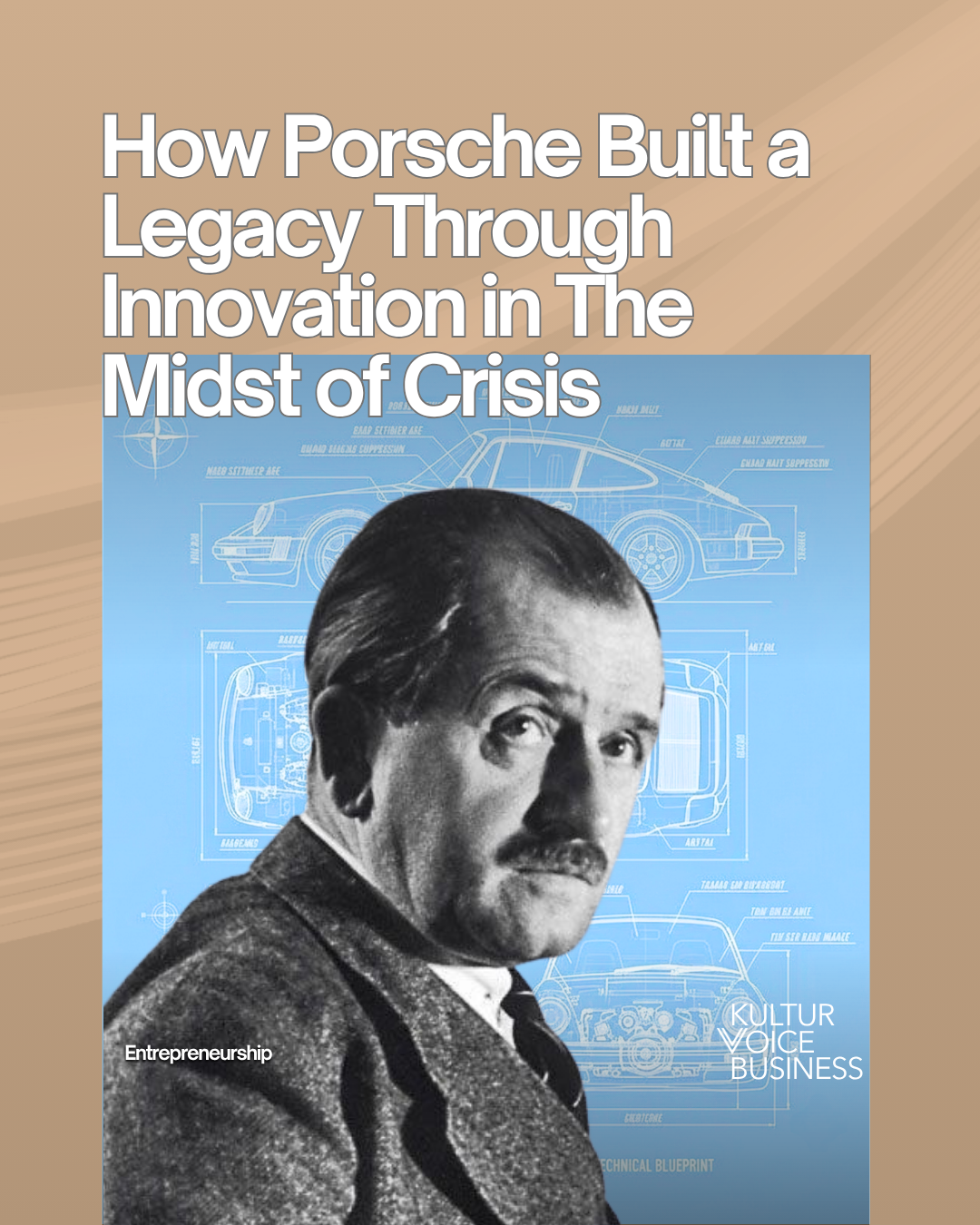

The evolution of modern industrial enterprise is defined by visionaries who bridge raw technical ingenuity with scalable commercial viability. Ferdinand Porsche (1875–1951) stands as one of the twentieth century’s most consequential automotive engineers and industrial architects. Originating from Bohemia—then part of the Austro-Hungarian Empire—Porsche channeled an innate fascination with electricity and mechanics into a transformative career spanning legendary European manufacturers, including Austro-Daimler, Daimler-Benz, and Steyr. His trajectory provides business leaders, multi-generational family enterprises, and institutional strategists with enduring insights into intellectual capital monetization, innovation governance, and the ethical accountability of enterprise stewardship.
Pioneering Innovation: Electrification, Hybrids, and Dynamic Performance
Long before modern electrification became an imperative of the global automotive transition, Porsche engineered solutions that anticipated contemporary technology by more than a century. At the 1900 Paris Exposition, his Lohner-Porsche debuted as a radical breakthrough, utilizing electric wheel-hub motors to eliminate traditional transmissions and mechanical friction. He quickly recognized the range limitations of early battery chemistry and engineered the Semper Vivus—the world’s first operational hybrid-electric vehicle—combining internal combustion engines with electric generators.
His technical mastery reshaped the fundamentals of automotive architecture:
- Chassis Dynamics & Suspension: Developing the front-wheel-drive and four-wheel-drive layouts alongside patented torsion-bar suspension systems that set modern vehicle handling standards.
- Motorsport Dominance: Directing the development of high-performance racing platforms for Mercedes-Benz and the mid-engine Auto Union Grand Prix cars, fundamentally redefining European motorsport performance metrics.
- Powertrain Optimization: Translating supercharged engine efficiency from competitive racing circuits directly into high-end passenger vehicles.
The Independent Engineering Bureau: Commercializing Pure Intellectual Property
In 1931, after decades of navigating the bureaucratic friction of large corporations, Porsche made a pivotal strategic pivot. Rather than establishing a capital-intensive manufacturing facility during the peak volatility of the Great Depression, he founded an independent engineering and design bureau in Stuttgart: Dr. Ing. h.c. F. Porsche GmbH.
Starting with an elite team of just twelve engineers, the bureau adopted an asset-light, knowledge-centric business model. Instead of carrying the overhead of mass production lines, Porsche packaged specialized technical competence, proprietary design, and operational advisory services for established manufacturers such as Wanderer, Zündapp, and Auto Union.
For entrepreneurs, family offices, and boutique consultancies, this operational pivot offers a timeless business lesson: an enterprise does not require proprietary manufacturing assets to create high-margin market value. Porsche monetized intangible assets—deep domain expertise, relational capital, and agile problem-solving—to generate resilient cash flows in distressed economic environments, ultimately laying the organizational bedrock for the Porsche automotive dynasty.
Mass Production and Industrial Scale: The Volkswagen Initiative
Porsche’s enterprise expanded from bespoke engineering consultancy to high-volume industrial orchestration through the development of the Volkswagen. Commissioned to design an accessible, reliable passenger vehicle capable of sustained highway speeds, he formulated the design and mechanical layout that ultimately became the iconic Volkswagen Beetle.
Beyond product design, Porsche was instrumental in designing the mass-production infrastructure, studying American assembly methods at Ford’s River Rouge plant to conceptualize the manufacturing facilities in Wolfsburg. His structural designs prioritized mechanical simplicity, modular maintenance, and functional aerodynamics, creating an automotive platform that would go on to achieve worldwide commercial scale for decades.
Historical Complicity: The Ethics of Industrial Enterprise
A rigorous examination of Ferdinand Porsche’s legacy requires an unvarnished assessment of his relationship with power, state apparatus, and moral compromise. His proximity to the National Socialist regime facilitated unfettered access to state capital, industrial resources, and sweeping authority over national automotive strategy.
During World War II, his operations turned toward military materiel, designing combat vehicles, heavy tank prototypes, and munitions. Most critically, the facilities under his technical leadership utilized forced labor and prisoners of war under inhumane conditions. This chapter serves as a profound historical warning for corporate boards and industrial leaders: technological prowess and organizational ambition divorced from ethical boundaries risk profound institutional complicity. Sustainable legacy cannot be evaluated solely on engineering brilliance or balance-sheet growth; it must withstand the scrutiny of human dignity and moral accountability.
The Architecture of an Enduring Industrial Legacy
The narrative of Ferdinand Porsche extends beyond the luxury sports cars that bear his family crest. His career demonstrates how engineering acumen can be leveraged into an enterprise asset, how intellectual agility disrupts entrenched industries, and how a boutique advisory firm can evolve into an intergenerational global powerhouse. Simultaneously, his history stands as an enduring case study in leadership responsibility, reminding modern executives that technological achievement and enterprise triumph achieve lasting legitimacy only when anchored in an uncompromising ethical foundation.
Latest news from Kultur Voice Business