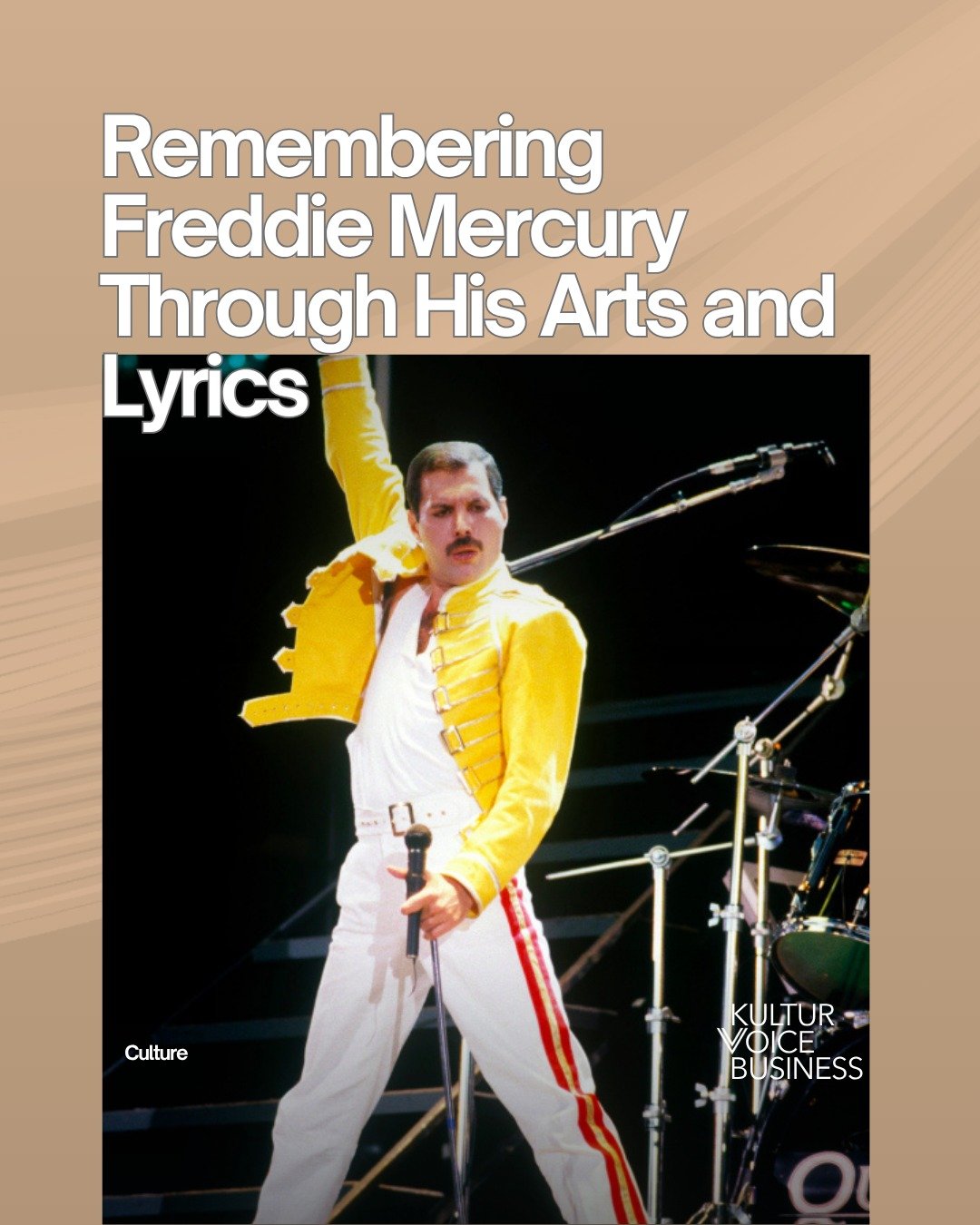

In the history of modern cultural enterprises, few figures have reshaped the boundaries of performance and creative leadership as profoundly as Freddie Mercury (1946–1991). Born Farrokh Bulsara in Zanzibar and raised between India and England, his cross-cultural upbringing cultivated a distinctive worldview that rejected rigid categorization. As the artistic catalyst and frontman of Queen, Mercury did not simply enter the competitive music industry; he orchestrated an entirely new commercial paradigm, demonstrating that uncompromising originality and global scale can coexist at the highest levels of enterprise. Freddie Mercury was really an architect of the Avant-Garde through his creative audacity, strategic mastery making an enduring legacy.
The Power of Distinctive Positioning: Redefining Queen’s Global Footprint
As Queen’s vocal architect, Mercury guided the ensemble through a crowded British rock market by establishing an inimitable product identity. Groundbreaking albums such as A Night at the Opera (1975), News of the World (1977), and The Game (1980) broke genre conventions by synthesizing hard rock, opera, vaudeville, and contemporary pop.
This multi-genre approach established an expansive artistic footprint capable of engaging diverse international demographics. The definitive manifestation of this prowess occurred during the 1985 Live Aid performance at Wembley Stadium. Over the course of 21 unscripted minutes, Mercury directed a global broadcast audience of 1.9 billion people through charisma, vocal resonance, and dynamic crowd management—a benchmark in live presence that corporate communicators and executive speakers study to this day.
Technical Precision and Brand Flamboyance: The Anatomy of Presence
Beyond charismatic bravura, Mercury’s authority was anchored in technical mastery. Possessing a four-octave vocal range, he controlled sub-harmonic vibrato, resonant operatic belts, and fragile lyrical passages with clinical precision.
This technical discipline was paired with a carefully curated public persona. His signature wardrobe, expansive physical rhetoric, and theatrical authority were not decorative affectations; they served as strategic brand assets. Mercury demonstrated that an executive leader’s personal branding reaches peak impact when exceptional competence backs a bold, singular aesthetic.
Resisting Compromise: The Strategic Triumph of “Bohemian Rhapsody”
The release of “Bohemian Rhapsody” in 1975 provides a compelling case study in product conviction and strategic risk management. Running nearly six minutes and lacking a traditional commercial chorus, the track defied every industry convention and distribution formula of its era. Record executives and radio programmers initially deemed it unplayable, urging the band to edit the runtime for mainstream appeal.
Mercury and his colleagues refused to dilute the product’s integrity. Their institutional confidence was rewarded when the single held the UK No. 1 spot for nine consecutive weeks, ultimately generating over 2.6 million sales in the UK alone and billions of multi-platform streams globally. For innovators and legacy brands, this milestone underscores a core business lesson: long-term enterprise value is forged not by conforming to consensus market templates, but by setting new standards through bold, unyielding creative vision.
Lyrical Depth and Universal Resonances
Mercury’s songwriting portfolio remains a cornerstone of Queen’s compounding cultural equity. His lyrical catalog explored complex human conditions, transforming personal vulnerabilities into universal anthems
- “Bohemian Rhapsody” articulates existential ambiguity, guilt, and identity conflict.
- “Somebody to Love” explores emotional longing through intricate, gospel-infused vocal arrangements.
- “We Are the Champions” reframes hardship into an anthem of resilience and perseverance.
- “The Show Must Go On” recorded during the twilight of his health, stands as an ode to institutional resolve, professional dignity, and performance under pressure.
The Architecture of an Immortal Creative Legacy
Following his untimely passing in 1991, Freddie Mercury’s legacy continues to yield outsized cultural and economic dividends across decades. From sold-out global arena revivals to multi-platinum biopics and streaming records, Queen’s catalog remains a resilient masterclass in brand longevity.
For forward-thinking leaders, family enterprises, and cultural tastemakers, Mercury’s journey illustrates that true eminence demands the courage to transcend standard protocols. True industry leadership is not achieved by replicating competitor playbooks, but by mastering foundational craft, honoring an authentic voice, and delivering exceptional value that commands global relevance across generations.
Latest news from Kultur Voice Business