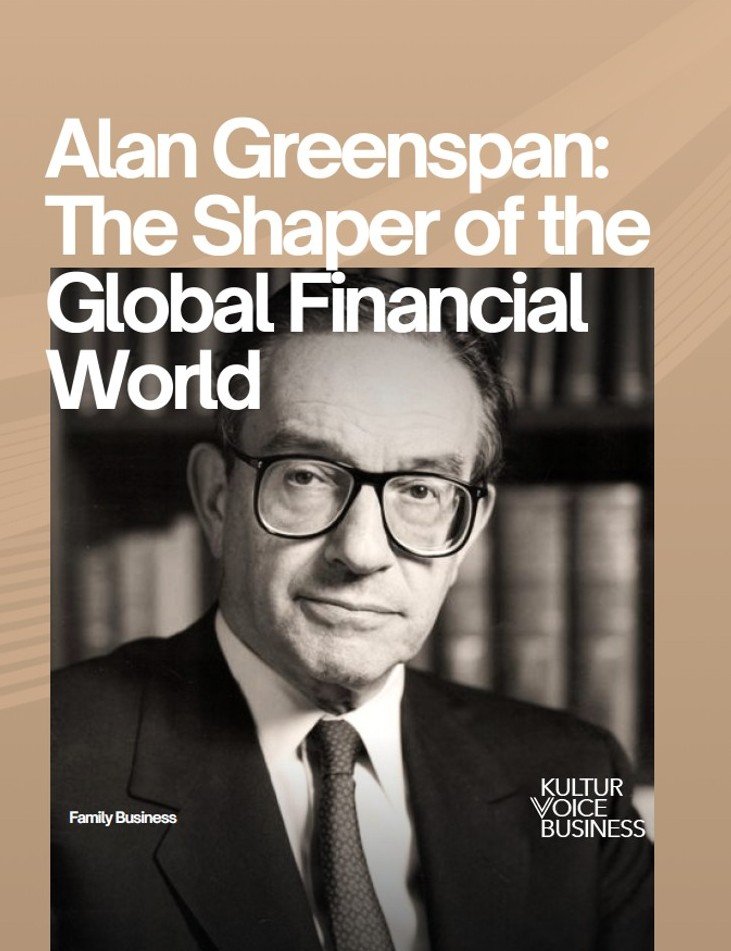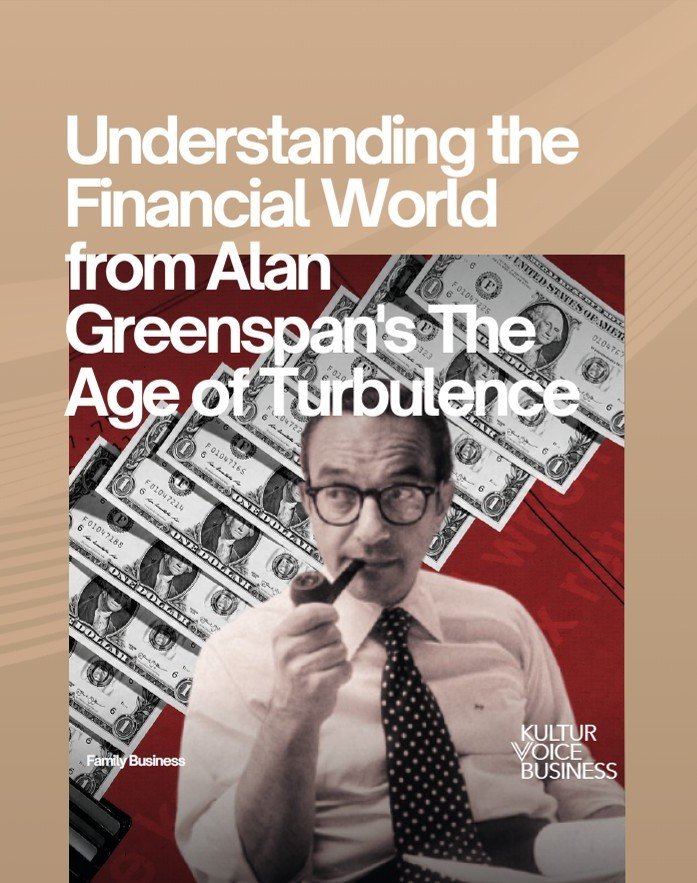

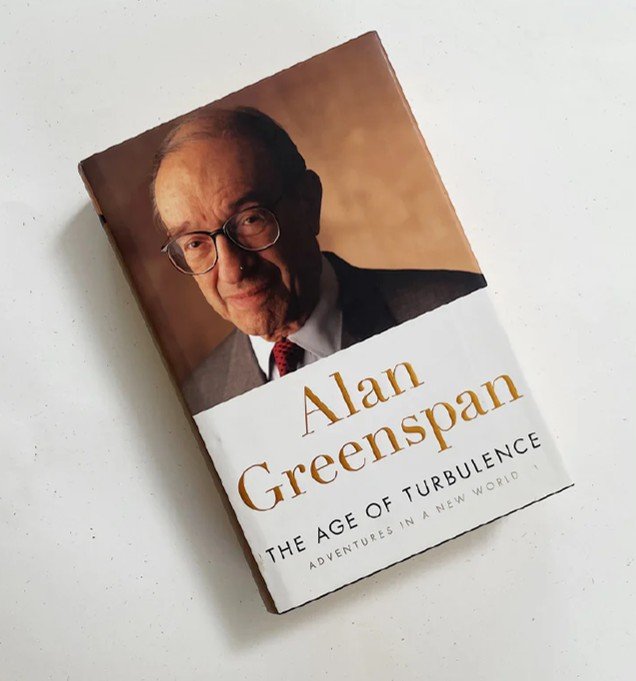
We need to read Alan Greenspan’s The Age of Turbulence: Adventures in a New World is a compelling memoir that combines personal experiences, economic insights, and reflections on some of the most significant financial events of the modern era. Published in 2007, the book provides readers with a unique perspective from one of the most influential figures in global economics. As the former Chairman of the Federal Reserve System from 1987 to 2026 and modern capitalism figure developing econometric, Greenspan offers an inside look at the decision-making processes behind monetary policy and the challenges of managing the world’s largest economy.
Co-authored by Peter Petre, a former executive editor at Fortune magazine, The Age of Turbulence: Adventures in a New World debuted at the New York Times Bestseller list for hardcover nonfiction with Penguin Press reportedly paid Alan Greenspan a US 8 million dollars in advance.
The first part of the book focuses on Greenspan’s personal journey, beginning with his childhood in New York and his early interest in mathematics, music, and economics. He describes how these interests shaped his analytical approach and eventually led him into the world of finance and public policy. His career included advising political leaders, like Richard Nixon, Gerald Ford, Ronald Reagan, Bill Clinton and George W. Bush. He worked with financial institutions and ultimately served as Federal Reserve Chairman from 1987 to 2006. Through his experiences, Greenspan demonstrates how economic decisions are often influenced not only by data and models but also by human behavior and uncertainty.
The second part of The Age of Turbulence explores major economic developments that shaped the late 20th and early 21st centuries. Greenspan discusses events such as inflation crises, globalization, technological advancement, and financial market transformations. He emphasizes the complexity of economic systems, explaining that markets are driven by millions of individual decisions that are difficult to predict. His observations highlight the importance of flexibility, adaptability, and careful analysis in navigating economic change.
 One of the key themes of the book is the relationship between capitalism, innovation, and global growth. Greenspan argues that free markets and technological progress have contributed significantly to rising living standards around the world. However, he also acknowledges the risks created by excessive optimism, financial speculation, and the interconnected nature of modern economies. These reflections became especially relevant after the global financial crisis of 2008, which occurred shortly after the book’s publication and led to renewed debate about the policies of his era.
The Age of Turbulence provides valuable insights into the mind of a central banker who witnessed decades of economic transformation. While some of Greenspan’s views remain debated among economists, the book remains an important historical document that captures the challenges of leadership, economic decision-making, and navigating uncertainty in an increasingly complex global economy.
Building a resilient family business requires clarity, discipline, and long-term thinking. If you’re serious about strengthening governance, preparing the next generation, and protecting your legacy, explore more insights on KVB.global. Share this article with your partners or family members and follow Kultur Voice Business or KVB to stay ahead with perspectives that turn complexity into clarity.
Latest news from Kultur Voice Business