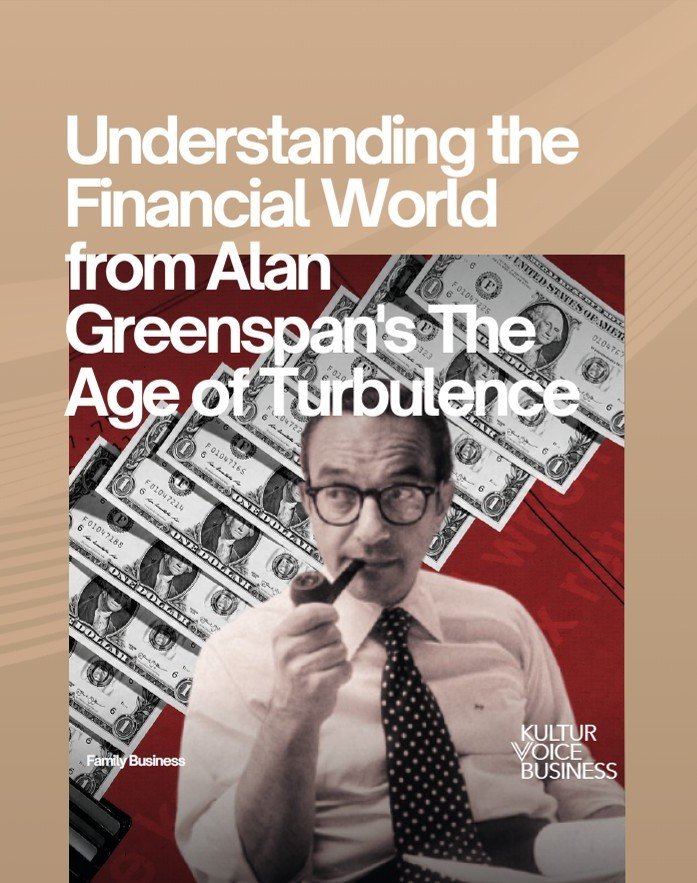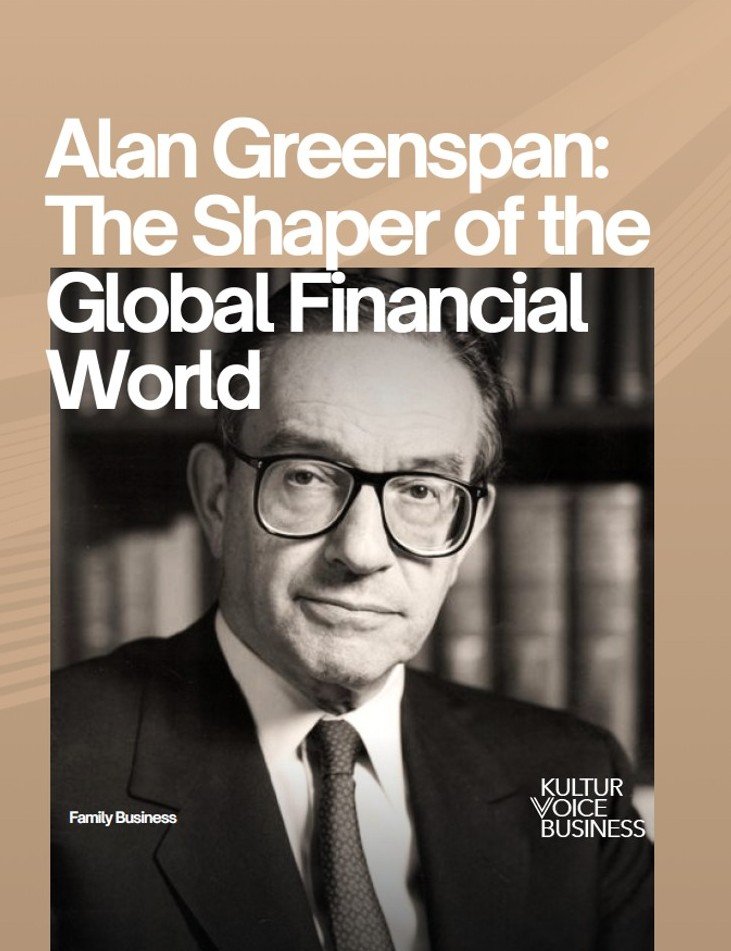

Alan Greenspan, former Chairman of the Fed or Federal Reserve System or American central bank, will be remembered as one of the most influential economists and central bankers of the modern era. Throughout his remarkable career, he played a major role in shaping the direction of the United States economy and influencing global financial markets. Born on 6 March 1926, in Manhattan, New York City, Greenspan began his journey with a strong interest in mathematics, music, and economic theory.
Greenspan is best known for serving as the 13th Chair of the United States Federal Reserve from 1987 to 2006. His nearly 19-year tenure, spanning four U.S. presidential administrations, made him one of the longest-serving and most recognizable figures in central banking history. Often referred to as the “Maestro,” he gained global recognition for his role in guiding the U.S. economy through significant moments, including the 1987 stock market crash, the technology boom of the 1990s, and periods of economic uncertainty in the early 2000s.
The 1987 stock market crash, famously known as “Black Monday,” occurred on 19 October 1987, when the Dow Jones Industrial Average (DJIA) plummeted by a record 508 points, or 22.6% in a single day, erased over US$500 billion from the New York Stock Exchange and triggered a global financial panic. In the meantime, the 1990s technology boom was an era of unprecedented digitization and market speculation. Driven by the commercialization of the internet and cheaper computing power, it triggered massive labor productivity growth but culminated in the “dot-com bubble”—a speculative market crash where billions in market value were erased.
One of Greenspan’s greatest contributions in his career was strengthening the influence and credibility of the Federal Reserve as a key institution in maintaining economic stability. His approach focused on controlling inflation, adjusting interest rates carefully, and using economic data to guide decision-making. During his leadership, the United States experienced a long period of economic expansion, low inflation, and strong market growth, a period often associated with the “Great Moderation.”
However, Greenspan’s legacy remains complex. While he was praised for his ability to manage economic challenges, he also faced criticism after the 2008 financial crisis. Some economists argued that policies supporting financial deregulation and prolonged low interest rates contributed to conditions that intensified the crisis.
Many have argued that the “easy-money” policies of the Fed during Greenspan’s tenure, including the practice known as the “Greenspan put”, were a leading cause of the dot-com bubble and subprime mortgage crisis (the latter occurring within a year of his leaving the Fed), which, said The Wall Street Journal, “tarnished his reputation”. Greenspan argued that the housing bubble was not a result of low-interest short-term rates but rather a worldwide phenomenon caused by the progressive decline in long-term interest rates – a direct consequence of the relationship between high savings rates in the developing world and its inverse in the developed world. Greenspan later acknowledged that some of his assumptions about market self-regulation had limitations.
Despite these debates, Alan Greenspan’s impact on economics remains undeniable. His decisions influenced not only the United States but also financial systems around the world. As economists and policymakers continue to study his career, Greenspan’s life represents both the achievements and challenges of modern economic leadership.
Alan Greenspan was the 13th chair of the Federal Reserve from 1987 to 2006 and first nominated to the Federal Reserve by United States president Ronald Reagan in August 1987. Greenspan was reappointed at successive four-year intervals until retiring on January 31, 2006, after the second-longest tenure in the position, behind only William McChesney Martin.
Greenspan attended George Washington High School from 1940 until he graduated in June 1943; one of his classmates was John Kemeny. He played clarinet and saxophone along with Stan Getz and studied clarinet at the Juilliard School from 1943 to 1944. He reported to a draft board for potential military service in World War II and was rejected as medically unfit in 1944 due to a spot on his lung.
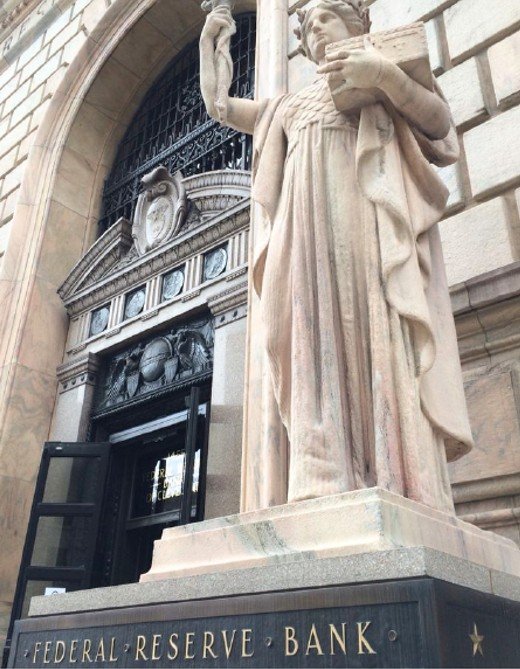 In 1945, Greenspan attended New York University’s School of Commerce, Accounts and Finance (since renamed to the Stern School of Business), where he earned a B.A. degree in economics summa cum laude in 1948 and an M.A. degree in economics in 1950. At Columbia University, he pursued advanced economic studies under Arthur Burns but withdrew because of his increasing work demand at Townsend-Greenspan & Company.
He passed away on June 22, 2026, at the age of 100, leaving behind a legacy that continues to shape discussions about monetary policy and economic leadership. His legacy serves as a reminder of how the decisions of one individual can shape markets, institutions, and societies for generations.
Global shifts don’t wait—and those who understand them early gain the advantage. If you want sharper perspective on trade, geopolitics, and regional dynamics, explore more on KVB.global. Share this insight with your team, and follow Kultur Voice Business or KVB to stay strategically informed.
Latest news from Kultur Voice Business