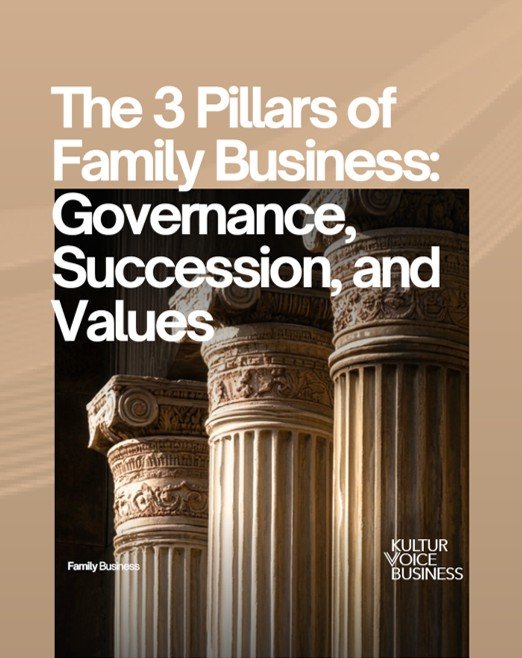


Family businesses are essential drivers of innovation, employment, and community stability in the modern market. Analysis done by McKinsey & Company, an international management consulting firm, found that family-owned businesses account for more than 70 percent of global GDP and about 60 percent of global employment. Unlike their publicly traded counterparts, which are often beholden to quarterly earnings and short-term shareholder demands, family businesses possess the unique ability to think across generations. This enduring relevance is rooted in three critical pillars: governance, succession, and values.
Governance serves as the structural backbone that prevents personal emotions from disrupting professional operations. Effective governance in a family firm involves creating clear boundaries between domestic life and the boardroom. By establishing formal mechanisms, such as family councils or boards of directors that include independent advisors, these businesses can navigate the complexities of power dynamics and financial distribution. This objective framework ensures that the company operates with the transparency and discipline required to compete in a globalized economy, protecting the enterprise from the “entitlement trap” that can sometimes plague family-run organizations.
Governance also relies on strong communication. Clear, consistent dialogue across generations builds alignment, manages expectations, and prevents conflict. When communication is intentional, it strengthens trust, turning governance from structure alone into a system that actually works.
Succession is perhaps the most significant challenge and opportunity for family longevity. A well-orchestrated transition from one generation to the next is a deliberate, multi-year process rather than a single event. It requires identifying and mentoring capable leaders who respect the company’s history while possessing the agility to adapt to new technologies and market shifts. When succession is handled with foresight, it provides a seamless continuity that builds trust with employees, suppliers, and clients. This long-term planning ensures that the institutional knowledge remains intact while allowing fresh perspectives to revitalize the business model.
Finally, values act as the moral compass that distinguishes family enterprises from faceless corporations. These businesses are frequently built on a foundation of integrity, resilience, and a deep-seated commitment to the local community. Because the family name is often synonymous with the brand, there is a heightened incentive to maintain a stellar reputation and foster a loyal corporate culture. This value-driven approach creates a “patient capital” mindset, where the focus is on sustainable growth rather than reckless expansion. This approach drives a focus on sustainable growth, keeping family businesses relevant amidst demands for social responsibility.
How is your family business governance? Is it supported by strong and focused communication?
Strong governance, clear succession, and shared values are not optional—they are your foundation. If you are serious about building a lasting enterprise, explore more on KVB.global. Share this with your family or leadership team and follow Kultur Voice Business or KVB for long-term strategy insights.
Latest news from Kultur Voice Business