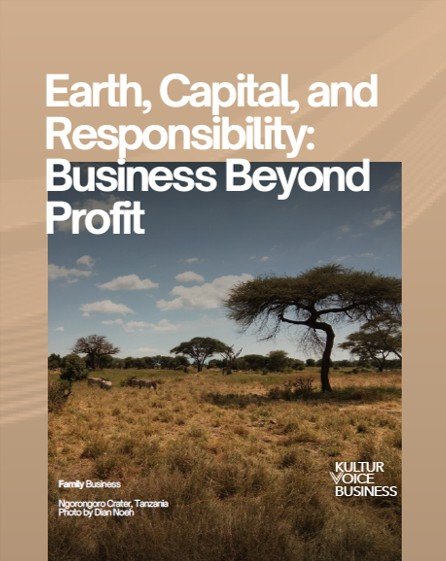


Businesses can no longer view the Earth and its people simply as resources along with a fundamental shift toward the circular economy that is designed to eliminate waste, keep products and materials in use for as long as possible, and regenerate natural systems. A circular economy contrast with the traditional linear economy where raw materials are extracted, transformed into products, used and later discarded. In a circular economy, resources are maintained at their highest value through sharing, repairing, refurbishing, remanufacturing, recycling and composting to ensure materials ever become waste.
Not like the traditional economic that operates on a linear “take-make-waste” trajectory and treats natural capital such as our forests, oceans, and atmosphere, as an infinite subsidy. In the meantime, the modern mandate for industry is a transition toward a model where the Earth and its inhabitants are viewed as stakeholders, not just resources to be exploited. These are the traditional model after decades; the business world has lived by one principle: maximizing profits. But amidst the climate crisis and growing social inequality, this mindset is losing its relevance.
As we shift toward a circular economy, responsibility means designing products for longevity and regeneration, ensuring that the pursuit of capital does not come at the expense of the planet’s biological integrity. When a company internalizes its environmental costs rather than externalizing them onto the public, it moves from being a predator of the commons to a steward of the future.
True responsibility also involves broadening the definition of capital. While financial liquidity remains essential for survival, businesses must now account for social and human capital. This involves fostering ethical supply chains that ensure fair wages and safe conditions, promoting equity and inclusion to drive innovation, and investing in the communities where they operate. By integrating Environmental, Social, and Governance (ESG) metrics into their core strategies, firms transform “responsibility” from a marketing slogan into a measurable performance indicator.
The concept of Profit, People, and Planet is now a strategy for businesses. Companies and businesses that ignore their environmental footprint or social impact face increasing regulatory pressure, divestment from institutional lenders, and a loss of trust from a conscious consumer base. Profit should not be the sole objective, but rather the result of a business providing genuine value to the world. Moving beyond profit is not an abandonment of commerce, but an evolution of it—one that ensures the engine of capitalism serves the survival of the planet that hosts it.
Sustainability is no longer optional—it’s a strategic advantage for those who act early. If this perspective matters to your business or worldview, dive deeper into KVB.global for grounded insights on circular thinking, global shifts, and responsible leadership. Share this with your network and follow Kultur Voice Business or KVB to stay informed on what truly shapes our future.
Latest news from Kultur Voice Business