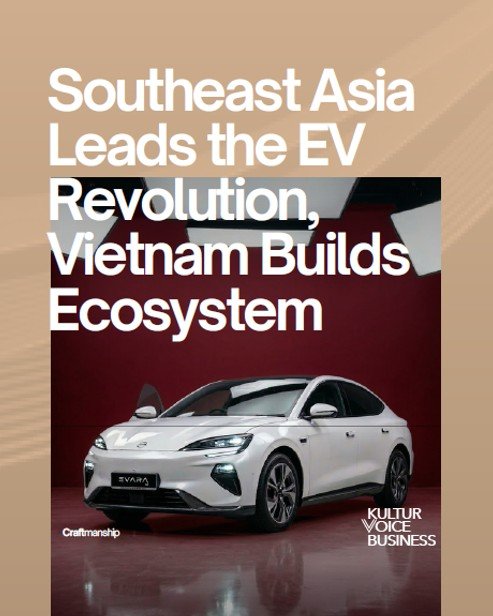

Southeast Asia is no longer a trailblazer — but Southeast Asia leads on the world’s electric vehicle or EV revolution. One interesting fact: Vietnam now has a 40% share of electric car sales — surpassing the UK and the European Union. Singapore even broke through 40%+. Thailand rose from 1% in 2019 to 20% in 2025. Indonesia? It has passed through the United States for the first time. This is no coincidence. This is the result of bold policies and a clear vision.
By 2025, more than 1 in 4 new cars sold worldwide will be electric vehicles. A recent report from Ember Energy mentions one surprising thing: “The center of gravity has shifted. Emerging markets are no longer the ones chasing — they’re leading.”
What makes Southeast Asia so fast?
1. Indonesia is cutting VAT on EVs that meet local content requirements, and 7 manufacturers are committed to building factories, including battery giant CATL.
2. Vietnam has VinFast which builds an ecosystem from scratch: from ride-hailing, charging networks, to direct-to-consumer sales. VF 3 will be the best-selling car in Vietnam throughout 2025. The impact? Vietnam saves 63% of fossil energy consumption. Indonesia 48%. The World Bank projects that Vietnam’s EV industry could create 6.5 million new jobs by 2050.
It’s not just about electric cars, but also the energy of the future. It is also about the global automotive industry 25 years ahead.
Processed from The Asian Development Bank (ADB) Southeast Asia Development Solutions (SEADS).
Southeast Asia is a geopolitical and geographical region consisting of 11 countries, namely Brunei, Cambodia, Indonesia, Laos, Malaysia, Myanmar, the Philippines, Singapore, Thailand, Vietnam, and Timor Leste. Southeast Asia is bordered by China, India, and the Pacific/Indian Ocean. Southeast Asia is divided into two main regions, namely the mainland Indochina Peninsula and the archipelago / Malay Archipelago. Southeast Asia is one of the most important centers of diplomacy through ASEAN (Association of Southeast Asian Nations) which was established on 8 August 1967 in Bangkok for economic growth, social progress, and cultural development. For more than 2000 years, Southeast Asia has managed to maintain stability and embrace various Hindu, Buddhist, Islamic and Colonial cultural influences.
Global shifts don’t wait—and those who understand them early gain the advantage. If you want sharper perspective on trade, geopolitics, and regional dynamics, explore more on KVB.global. Share this insight with your team, and follow Kultur Voice Business or KVB to stay strategically informed.
Latest news from Kultur Voice Business