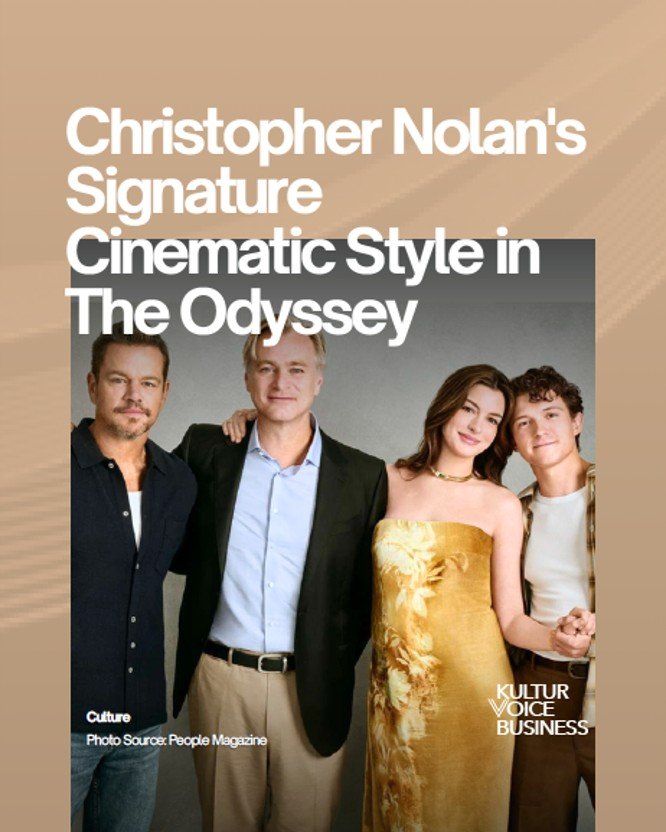

Christopher Nolan is known for his unique signature style from non-linear storytelling, an obsession with manipulating time, reliance on practical effects over CGI, and massive cinematography. His adaptation of Homer’s The Odyssey is not merely an exercise in epic narrative, but a testament to physical, uncompromising filmic technique. Viewed strictly through the lens of craftsmanship, the film demonstrates how raw celluloid and practical trickery can elevate a classic myth into an immersive experience.
At the heart of Nolan’s method is his commitment to large-format film. Shot entirely with 70mm IMAX cameras, The Odyssey uses film stock to create physical depth. The full, uncropped 1.43:1 aspect ratio expands vertically on a true IMAX screen, filling the audience’s entire peripheral field. Rather than framing ancient Greece through a cropped, letterboxed window, Nolan utilizes the sheer surface area of 70mm film to pull the viewer directly into the environment. The sea crashes with visceral presence, and the sheer scale of the Mediterranean landscapes feels real because it is recorded on physical, light-sensitive film rather than rendered inside a computer. The resolution of high-gauge analogue film offers a texture that is rich in grain, depth of color, and organic shadows, that digital sensors cannot replicate.
Complementing this visual philosophy is Nolan’s persistent refusal to rely on computer-generated imagery (CGI). While a modern mythic epic typically leans on digital models, Nolan approaches mythical elements through practical visual effects, mechanical rigs, in-camera forced perspective, and physical miniatures. From towering mechanical builds to ocean sets subject to real water dynamics, every monster and tempest carries weight because it existed in physical space before the lens. By making the actors and the camera interact with tangible, hand-built props and real elements, the scenes gain a grounded intensity. The monsters and hazards possess a tactile danger that CGI inherently lacks.
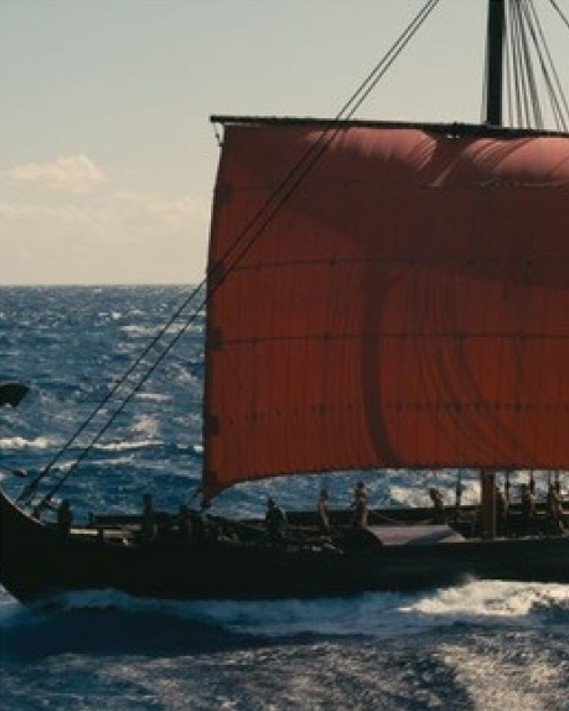
Nolan’s The Odyssey proves that true cinematic magic resides in the tangible mechanics of the craft. By marrying the physical grandeur of 70mm IMAX photography with a devotion to in-camera effects, Nolan demonstrates that a centuries-old epic is best served by classic, hands-on visual storytelling.
Sir Christopher Edward Nolan, born on 30 July 1970, is a British and American filmmaker. Known for his blockbusters with complex storytelling earning over USD 6 billion worldwide, making him considered a leading filmmaker of the 21st century. He was appointed a Commander of the British Empire (CBE) in 2019, knighted in 2024 for his contributions to film and presented with accolades include two Academy Awards, a Golden Globe Award and two British Academy Film Awards. Nolan gained international recognition with his second film, Memento (2000), and transitioned into studio filmmaking with Insomnia (2002). He became a high-profile director with The Dark Knight trilogy (2005–2012) and Dunkirk (2017) among some others. Nolan has co-written several of his films with his brother Jonathan Nolan and runs a production company Syncopy Inc. with his wife, Emma Thomas.
Celebrating culture. Elevating craftsmanship. Follow Kultur Voice Business for stories on culture, heritage, creativity, and the people shaping communities around the world.
Latest news from Kultur Voice Business