
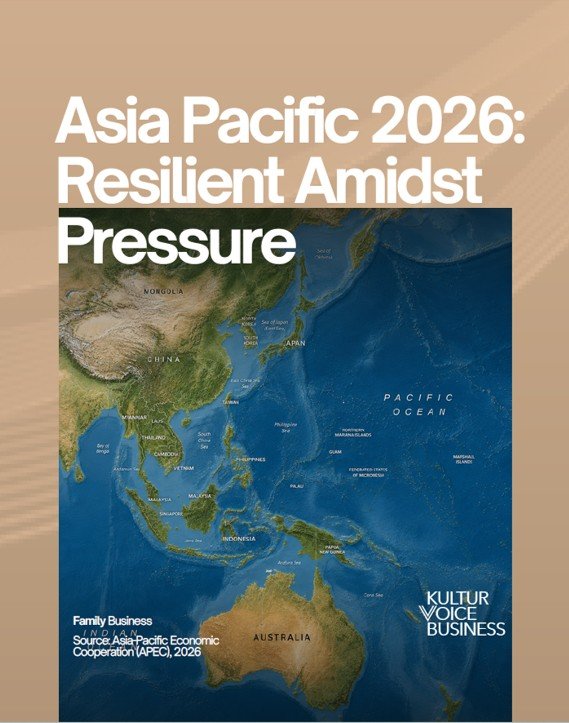

Inflationary pressures are also intensifying. Inflation is projected to rise to 2.9 percent in 2026, driven largely by surging energy and food prices. Between February and April 2026 alone, crude oil prices jumped by 52.8 percent, while LNG prices increased by 9.3 percent. Given that the Middle East supplies nearly half of APEC’s crude oil imports and almost a quarter of its LNG, the region remains highly exposed to energy market volatility.
These disruptions are reverberating throughout trade and supply chains. Rising fuel costs and logistical bottlenecks have increased freight costs, while declining port traffic signals weakening trade activity. Merchandise export growth, which reached 7.6 percent in 2025 due to strong demand for high-tech goods, is expected to moderate significantly. At the same time, growing reliance on tariffs and anti-dumping measures points to deeper fragmentation within the global trading system.
Beyond immediate pressures, structural challenges are becoming harder to ignore. Persistent trade imbalances and rising public debt—projected to reach 112 percent of GDP by 2027—could limit governments’ ability to respond to future shocks. Addressing these issues will require stronger domestic reforms, more disciplined fiscal management, and greater investment efficiency rather than protectionist policies.
Despite these challenges, APEC retains important sources of resilience, including relatively strong macroeconomic fundamentals and continued investment in technology and supply chain diversification. Moving forward, the region’s priority must be to strengthen cooperation, diversify energy and supply networks, and adopt forward-looking policies that transform resilience into long-term stability, adaptability, and sustainable prosperity.
In 2025, APEC’s GDP expanded by 3.3 percent, slightly above earlier projections, but growth is expected to slow to 3.1 percent in 2026 and 3.0 percent in 2027, before easing further to 2.7 percent over the medium term. Rather than signaling an abrupt downturn, this reflects a gradual weakening of momentum as geopolitical tensions, supply chain disruptions, and policy uncertainty continue to accumulate.
 APEC, or Asia-Pacific Economic Cooperation, is a regional economic cooperation forum comprising 21 economies in the Asia-Pacific region, including Indonesia, Malaysia, Thailand, the Philippines, Singapore, Peru, the United States, China, Japan, South Korea, Australia, Canada, and Mexico. Founded in 1989, APEC has goals on trade liberation through supply demand facilitation services, investments and talent between APEC members for effectiveness and efficiency, and goal on integrated economy through solid supply chain, digital connectivity and inclusive economic growth.
 Global shifts don’t wait—and those who understand them early gain the advantage. If you want sharper perspective on trade, geopolitics, and regional dynamics, explore more on KVB.global. Share this insight with your team and follow Kultur Voice Business or KVB to stay strategically informed.
Source of this article: APEC website.
Latest news from Kultur Voice Business

zimerovertover 13 Aug 2026
Perfectly composed content material, Really enjoyed reading through.