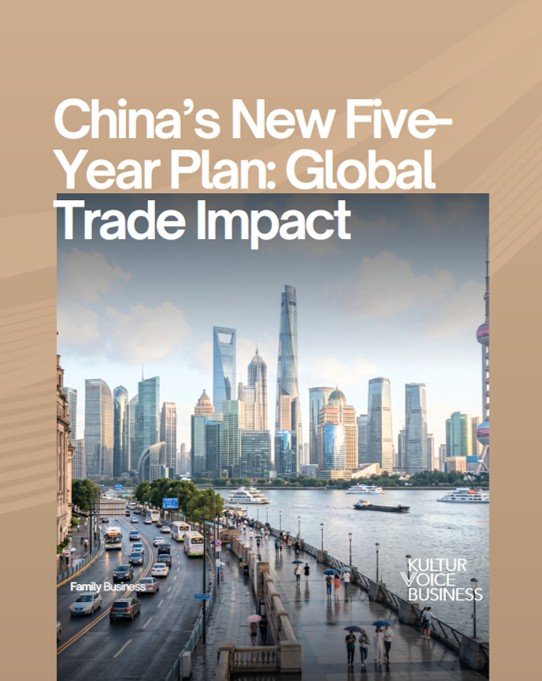

China’s new Five-Year Plan 2026 up to 2030 shows that despite some distancing from the United States; it remains strongly committed to global trade. In early April 2026, China’s National People’s Congress has officially adopted China’s 15th Five-Year Plan 2026-2030, that outlines how China plans to navigate an uncertain, rapidly changing and fragmented global environment.
In principle, there are continuation and something new. China continues to support systems like the World Trade Organization while expanding into newer areas such as digital, green, and cross-border e-commerce trade. This strategy has proven to be working as China’s exports grew by 5.5% in 2025, with declining exports to the U.S. offset by increased trade with regions like the European Union and Association of Southeast Asian Nations, resulting in a record $1.2 trillion trade surplus.
However, there is friction following the China’s expert strength. Many countries are concerned about an influx of low-priced Chinese goods, which can undercut local industries and has prompted responses like tariffs from Brazil and growing concerns in Europe over direct competition in similar industries.
As China strengthens its position in global trade and manufacturing, it is also deepening ties with developing economies through initiatives like the Belt and Road Initiative to secure new markets and sustain its growth.
With this new Five-Year Plan, China is focusing on technology self-reliance as the core of its future growth, aiming to make breakthroughs in key areas like chips, advanced machinery, software, and materials to strengthen its economic security amid global competition. At the same time, it is rapidly advancing fields such as artificial intelligence, quantum technology, biotechnology, and clean energy, while investing more in research and innovation.
Despite its focus on self-reliance, China’s Five-Year Plan still opens to foreign businesses and investment. It aims to grow sectors like telecoms, education, and healthcare, while adjusting tariffs and incentives to attract imports of advanced technology and high-quality goods. At the same time, it is improving the overall business environment by easing cross-border payments, strengthening financial connections, and promoting the global use of its currency, the renminbi.
Beyond its domestic market, China is also encouraging companies to invest and form partnerships overseas, especially in areas like e-commerce, AI, and professional services. Through initiatives like the Belt and Road Initiative, it is expanding cooperation across sectors such as digital economy, green energy, and healthcare.
Overall, China is not only focusing on internal growth but also increasing its global economic presence, including through foreign investments that contribute to its broader economic goals.
Source: World Economic Forum 2026
Policy direction shapes opportunity faster than markets react. If you want early strategic awareness, explore more on KVB.global. Share this with decision-makers and follow Kultur Voice Business or KVB to stay ahead globally.
Latest news from Kultur Voice Business