
A resilient banking sector serves as the cornerstone of macroeconomic stability, trade continuity, and consumer confidence. Beyond safeguarding deposits, reputable financial institutions allocate capital, mitigate systemic risks, and provide the infrastructure required for sustainable commerce. Across Asia, private and commercial lenders navigate shifting economic cycles through stringent risk management, innovative digital infrastructure, and robust corporate governance. Let us take you to analysis that examines the premier commercial banks driving financial stability and innovation across six key Asian markets: Indonesia, Singapore, Malaysia, Hong Kong, South Korea, and Japan.
Indonesia: The dual power of commercial giants and digital pioneers
Indonesia’s banking landscape reflects a balance between established commercial heavyweights and high-growth digital banks serving Southeast Asia’s largest digital economy.
- Bank Central Asia (BCA): The largest private bank in Indonesia by market capitalization, BCA serves as the backbone of domestic retail transactions, supported by an extensive clearing infrastructure and low cost of funds (CASA).
- Panin Bank: A long-standing institution known for prudent underwriting in commercial and trade financing.
- Bank Mega: Captures synergistic value by integrating consumer banking with diversified media and retail ecosystems.
- Bank Jago & Bank Neo Commerce (BNC): Disruptors transforming micro-lending and digital financial inclusion through API integrations with super-apps and e-commerce platforms.
This hybrid ecosystem provides tailored financial solutions, empowering millions of underbanked individuals and micro, small, and medium enterprises (MSMEs) nationwide.
Singapore: The global gold standard for prudence and innovations
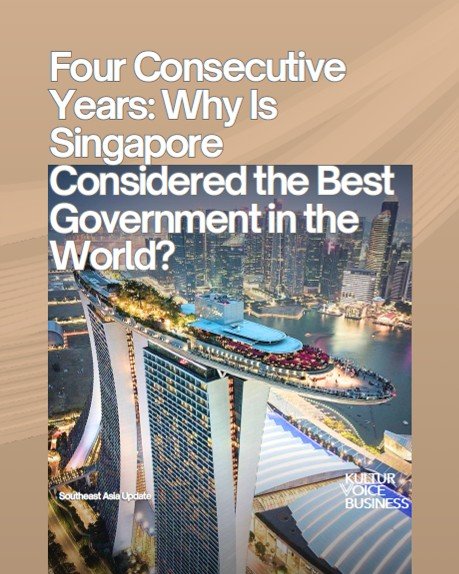
Singapore is internationally recognized as a premier financial hub, anchored by its indigenous “Big Three” banking groups.
| Bank | Key Competitive Advantage | Notable Industry Distinction |
| DBS Bank | Global frontrunner in cloud adoption, AI underwriting, and wealth tech. | Regularly ranked among the safest banks globally by Global Finance. |
| OCBC Bank | Deep footprint in SME financing, insurance (Great Eastern), and regional wealth management. | Oldest established local bank in Singapore with extensive ASEAN-Greater China connectivity. |
| UOB | Extensive cross-border supply chain financing network across Southeast Asia. | Leading regional player in trade finance following major retail acquisitions in ASEAN. |
Supported by proactive oversight from the Monetary Authority of Singapore (MAS), these institutions establish operational benchmarks for regional financial governance.
Malaysia: Prudent Risk Mitigation and Regional Connectivity
Malaysia’s commercial banking arena is characterized by strict regulatory compliance, low delinquency ratios, and cross-border expansion.
- Maybank (Malayan Banking Berhad): The country’s largest financial services provider, commanding significant market share in conventional loans, Islamic finance, and regional retail operations.
- CIMB Bank: A pioneer in investment banking and consumer digital services across the ASEAN trade corridor.
- Public Bank Berhad: Renowned for disciplined credit risk management, consistently maintaining one of the lowest non-performing loan (NPL) ratios in the Asia-Pacific region for decades.
Hong Kong: The capital gateway linking China to global markets
Hong Kong remains a key global financial center, serving as the conduit for cross-border capital flows between Mainland China and international markets.
- The Hongkong and Shanghai Banking Corporation (HSBC HK): The anchor of Hong Kong’s financial system, serving as an official note-issuing bank and maintaining vast global liquidity networks.
- Hang Seng Bank: A leader in domestic wealth management and commercial banking with deep ties to local retail enterprises.
- The Bank of East Asia (BEA): A major independent local commercial bank offering extensive cross-border corporate solutions.
Through deep capital markets, high foreign-exchange liquidity, and advanced trade-settlement systems, these banks reinforce Hong Kong’s role in international trade finance.
South Korea: Technologically Advanced Banking Anchored by Domestic Giants
South Korea’s financial ecosystem blends retail scale with fast digital modernization to support the nation’s export-driven economy.
- KB Kookmin Bank: The nation’s retail leader by customer volume and asset scale, setting high standards in digital omnichannel banking.
- Shinhan Bank: A leader in corporate banking and overseas market expansion across emerging Asia.
- Hana Bank: The domestic benchmark for foreign exchange services, trade settlement, and cross-border wealth management.
These institutions leverage consumer culture and open banking—frequently partnering with mainstream cultural figures—to drive mobile adoption while financing critical industrial sectors and high-tech startups.
Japan: Megabanks Powering Global Industrial and Capital Markets
Japan’s banking landscape is defined by its three financial conglomerates (megabanks), which manage balance sheets totaling trillions of dollars.
- MUFG Bank (Mitsubishi UFJ Financial Group): Japan’s largest financial group and one of the largest bank holding companies in the world, holding major stakes in global assets.
- Sumitomo Mitsui Banking Corporation (SMBC): Known for aggressive digital transformation, cross-border structured finance, and direct equity investments across Asia.
- Mizuho Bank: The primary transaction and settlement bank for major international corporations and Japanese industrial conglomerates.
These institutions provide the multi-currency liquidity and debt financing required to maintain Japan’s industrial supply chains and international investment portfolios.
The Strategic Importance of Institutional Trust and Governance
The resilience demonstrated by Asia’s top banking institutions highlights a clear principle: long-term stability is built upon public trust, strict risk oversight, and transparent corporate governance. Whether safeguarding retail savings or structuring complex trade finance solutions, institutions that prioritize risk mitigation alongside digital innovation remain indispensable partners for economic progress across the global economy.
Latest news from Kultur Voice Business