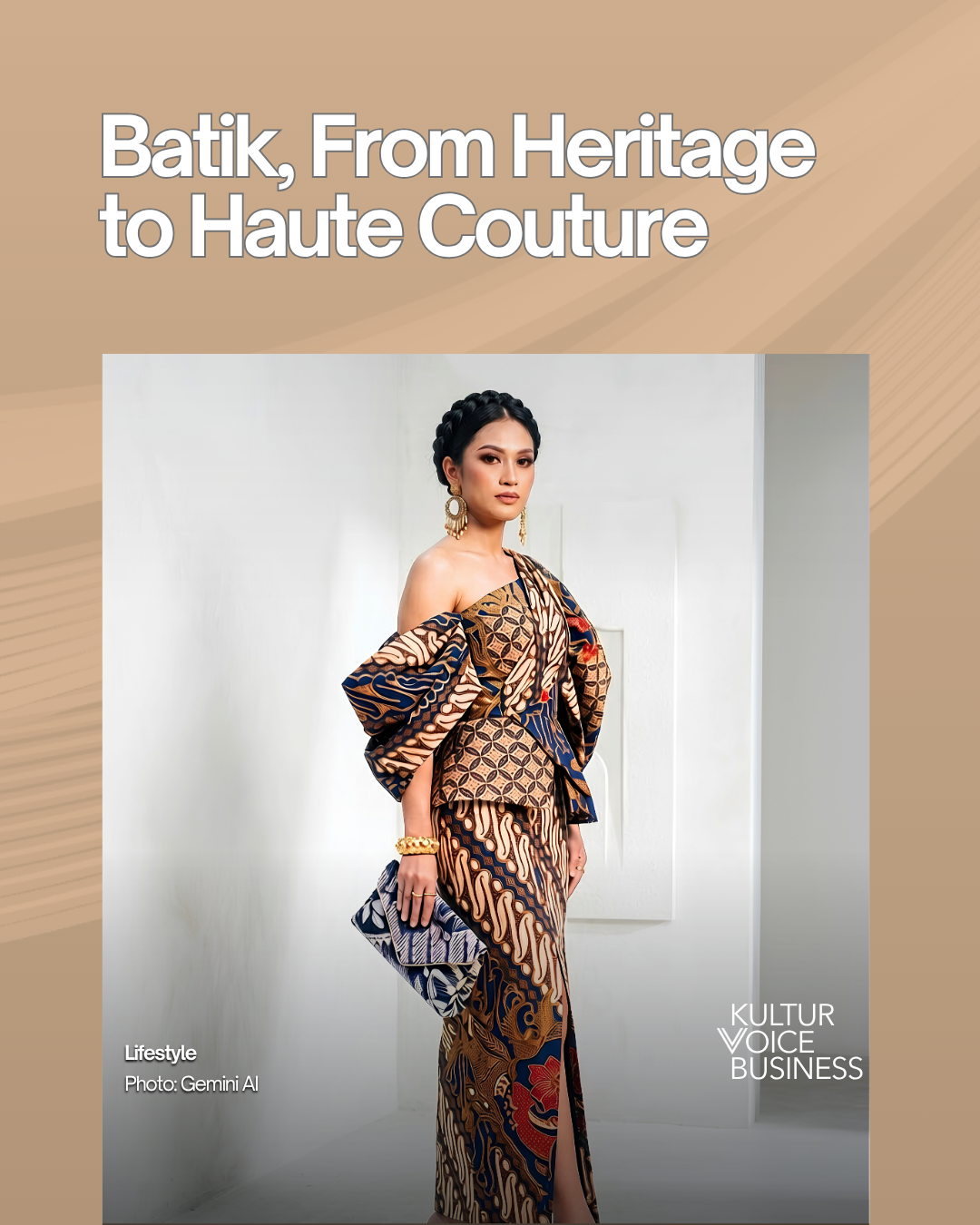

While its roots run deep in Indonesian history, batik continues to evolve alongside the way people live, dress, and express themselves today. From everyday office wear to contemporary streetwear and haute couture, batik has found a place far beyond its traditional settings.
Every October 2, National Batik Day celebrates this enduring cultural tradition, commemorating UNESCO’s 2009 recognition of Indonesian batik as a Masterpiece of the Oral and Intangible Heritage of Humanity. The recognition reflects batik’s cultural significance, but its continued presence in modern life tells another part of the story: heritage does not have to remain unchanged to remain meaningful.
Today, batik can take many forms. Traditional patterns are being incorporated into relaxed silhouettes, oversized pieces, contemporary tailoring, dresses, jackets, and other modern designs. Designers are finding new ways to work with centuries-old visual elements, allowing batik to feel at home in wardrobes that look very different from those of previous generations.
Its evolution also extends beyond Indonesia. Across Southeast Asia, countries such as Malaysia, Thailand, and Singapore have developed their own interpretations of batik, each shaped by local aesthetics and cultural influences. Javanese batik is often associated with earthy tones and intricate geometric or natural motifs, while Malaysian batik is known for more vibrant floral and abstract patterns. Together, these variations show how one textile tradition can take on different identities across the region.
Throughout Southeast Asia, it has been woven into important moments of life and cultural practice, from welcoming newborns to honoring ancestors. Its patterns and fabrics can carry memories, traditions, and a sense of belonging, giving the textile meaning beyond fashion itself.
To this day, batik remains a visible and evolving part of our lives. From heritage to haute couture, it continues to cross boundaries, find new expressions, and connect generations through a tradition that never stops moving forward.
Latest news from Kultur Voice Business