
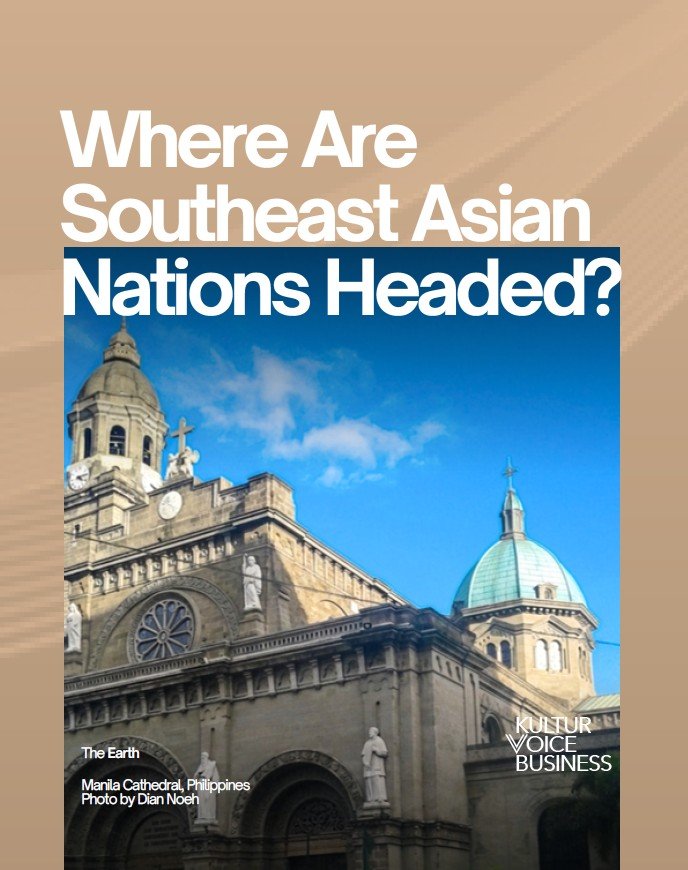


Amidst global dynamics, the Association of Southeast Asian Nations or ASEAN held the ASEAN Summit in the Philippines on May 7-8, 2026. Cebu City hosted the ASEAN leaders and showcased the Philippines as a young, digital nation ready to lead ASEAN 2026. The meeting discussed the AEC Strategic Plan 2026-2030 and prioritized enhancing regional competitiveness.
The meeting discussed various strategic agendas, ranging from global economic conditions, digital transformation, strengthening trade and investment, MSME development, to inclusive and sustainable development.
ASEAN also continues to push for the completion of the ASEAN Digital Economy Framework Agreement (DEFA), which is targeted for signing at the ASEAN Summit in November 2026. The implementation of the DEFA is believed to strengthen ASEAN’s digital economic integration and increase the value of the region’s digital economy to USD 2 trillion by 2030.
ASEAN demonstrated strong economic resilience, with growth reaching 4.9% in 2025, exceeding various initial projections. The ASEAN Economic Ministers’ Meeting on May 7-8, 2026, is a crucial opportunity to strengthen regional cooperation amidst evolving global challenges.
With the theme of the Philippines’ ASEAN Chairmanship 2026, “Navigating Our Future Together,” ASEAN is committed to maintaining unity, strengthening collaboration, and ensuring the region remains strong, inclusive, and competitive in the future.
As one of the most resilient economies in Southeast Asia, the Philippines continues to thrive through a robust services sector and a digitally savvy workforce. Beyond economic growth, the values of bayanihan, or the spirit of togetherness, culture, and sustainable development are also key focuses for the Philippines in driving a more inclusive and sustainable regional progress.
These values are reflected in the dynamics of daily life in Manila, the capital city, a symbol of the Philippines’ blend of tradition and modernity. Manila thrives in contrasts—the colonial charm of Intramuros sits alongside the modern glass buildings of Bonifacio Global City. From leisurely mornings sipping coffee barako to late-night shopping, the city reflects a balance between cultural heritage, energy, and constantly evolving modernization.
The Association of Southeast Asian Nations (ASEAN) is an intergovernmental forum of all 11 countries in Southeast Asia. ASEAN primarily focuses on Southeast Asian economic development, peaceful coexistence and adherence to international norms. ASEAN operates on the principle of consensus and respecting national sovereignty, meaning that ASEAN cannot force another member state to change its domestic laws.
ASEAN was created on 8 August 1967, when the foreign ministers of five countries – Indonesia, Malaysia, the Philippines, Singapore, and Thailand – signed the ASEAN Declaration at Saranrom Palace in Bangkok, negotiated in Lam Thaen Guest House. According to the Declaration, ASEAN aims to accelerate economic, social, and cultural development in the region, as well as promoting regional peace, to collaborate on matters of shared interest, and to promote Southeast Asian studies and maintain close cooperation with existing international organisations
ASEAN member states represent a diverse set of economies: the least developed countries like Laos, to emerging economies like Vietnam, to developed economies like Singapore. Many Southeast Asian projects have originated from decentralized initiatives between member states, such as the ASEAN Power Grid, ASEAN Free Trade Area, ASEAN Integrated QR Code Payment System, or the mutual ASEAN visa-free policies. Every two years, it organizes a sporting event to promote cultural exchange known as SEA Games.
ASEAN has strong ties with East Asian and South Asian countries. It has a vested interest in the security of the South China Sea and the greater Indo-Pacific region. In terms of diplomacy, ASEAN operates on a principle of centrality, meaning that all concerns from other countries or organizations about Southeast Asia should be routed to ASEAN instead of individual states. All Southeast Asian countries, many great powers, and international organizations have dedicated diplomatic presence near ASEAN headquarters in Jakarta.
If this perspective matters to your business or worldview, dive deeper into KVB.global for grounded insights on circular thinking, global shifts, and responsible leadership. Share this with your network and follow Kultur Voice Business or KVB to stay informed on what truly shapes our future.
Latest news from Kultur Voice Business

Purity peptides 8 Oct 2026
Solid overview, the part about research peptides was laid out step by step, sharing this with my colleagues.