
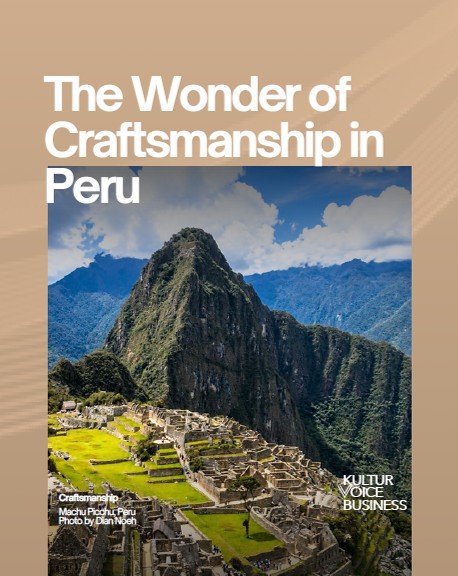

Every year on June 11th, World Craftsmanship Day invites us to celebrate the skill, dedication, and creativity that have shaped human civilization across generations. Beyond objects of art and handmade goods, craftsmanship can also be found in the monumental achievements of architecture—structures that reflect not only technical excellence but also the cultural identity and ingenuity of their creators.
The beauty of craftsmanship translates well in Peru, where the ancient stonework of Machu Picchu and the distinctive balconies of Lima and Cusco stand as remarkable examples of craftsmanship that have endured the test of time.
Perched high in the Andes Mountains, Machu Picchu remains one of humanity’s most extraordinary architectural accomplishments. Built by the Inca civilization in the fifteenth century, the site showcases a level of precision that continues to fascinate engineers and historians alike. Massive stones were carefully cut and fitted together without mortar, creating walls so exact that even a blade cannot easily pass between them. This technique not only reflects exceptional craftsmanship but also demonstrates a deep understanding of seismic resilience, allowing many structures to withstand centuries of earthquakes. Every terrace, staircase, and temple reveals the patience, knowledge, and mastery of the artisans who transformed a rugged mountain landscape into a thriving citadel.
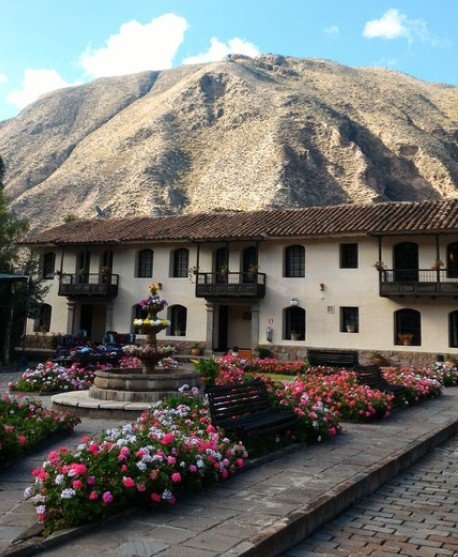
The spirit of craftsmanship is equally evident in the historic cities of Lima and Cusco, particularly in their iconic balconies. In Cusco, many colonial-era buildings feature beautifully crafted wooden balconies that reflect a unique blend of Inca foundations and Spanish architectural influence. These structures not only add visual character to the city’s streetscape but also showcase the skill of artisans who carefully shaped and assembled each element by hand. Meanwhile, Lima is renowned for its distinctive enclosed wooden balconies, many dating back to the colonial period. Richly carved and adorned with intricate details, these balconies reflect centuries of artistic influence, blending Indigenous, Spanish, and Moorish design traditions into a unique architectural identity.
The beauty of Machu Picchu and the historic balconies of Lima and Cusco remind us that craftsmanship is more than technical skill—it is a dialogue between culture, environment, and human creativity. They stand as enduring symbols of how artisans and builders can leave a legacy that transcends generations. On World Craftsmanship Day, these architectural treasures inspire us to appreciate the hands, minds, and traditions that continue to shape our shared human story.
Peru is a South America country, that faces the Pacific Ocean and shares land borders with Ecuador, Colombia, Brazil, Bolivia, and Chile, with its longest land border shared with Brazil. The eastern portions of Peru include the Amazon Basin or selva baja, a region that is larger in the north than in the south. Representing roughly 60% of Peru’s national territory, this area includes the Amazon, Marañón, Huallaga and Ucayali Rivers.
Almost 60% of the country’s area is located within this region, (700,000 km2 or 270,000 sq mi) giving Peru the fourth largest area of tropical forest in the world after Brazil, Congo and Indonesia.
The history of Peru spans 15 millennia, extending back through several stages of cultural development along the country’s desert coastline and in the Andes mountains. Peru’s coast was home to the Norte Chico civilization, the oldest civilization in the Americas and one of the six cradles of civilization in the world. When the Spanish arrived in the sixteenth century, the highlands of southern Peru were the center of the Inca Empire, the largest and most advanced state in pre-Columbian America. After the conquest of the Incas, the Spanish Empire established a Viceroyalty with jurisdiction over most of its South American domains. Peru declared independence from Spain in 1821 but achieved independence only after the Battle of Ayacucho three years later.
 Modern historiography of Peru divides its history into three main periods:
- A pre-Hispanic period, which lasts from the first civilizations of the region to the Spanish conquest of the Inca Empire.
- A viceregal or colonial period, which lasts from the conquest to the Peruvian declaration of independence.
- A republican period, which lasts from the war of independence to the current day.
Craftsmanship reflects discipline, patience, and a commitment to excellence—values that translate across every industry. If you appreciate depth over noise, explore more stories on KVB.global. Share this with fellow creators and follow Kultur Voice Business or KVB for perspectives that celebrate meaningful work.
Latest news from Kultur Voice Business

zimerov ertover 10 Aug 2026
Right now it seems like BlogEngine is the preferred blogging platform available right now. (from what I’ve read) Is that what you are using on your blog?