
From the bustling cafés of Jakarta and Bangkok to minimalist coffee bars in Seoul and New York, Southeast Asian coffee is having a global moment. Coffee is now one of the world’s most traded commodities, with millions of cups consumed daily across continents. Yet behind today’s specialty coffee movement lies a deeper story that’s rooted in centuries of trade, culture, and regional identity. Among the region’s most distinctive producers, Aceh in Indonesia, Vietnam, and Thailand each offer a unique interpretation of coffee shaped by geography, history, and local taste.
Indonesia’s relationship with coffee dates to the colonial trading era. In the 17th century, the Dutch East India Company (VOC) recognized coffee’s enormous commercial value and began cultivating it across the Indonesian archipelago, particularly in Java and Sumatra. Coffee was not simply an agricultural product, but a strategic trade commodity transported through maritime routes connecting Asia and Europe. The VOC established one of the earliest large-scale coffee export systems in the world, introducing Asian-grown coffee to European markets and positioning the region as a major force in the global coffee economy.
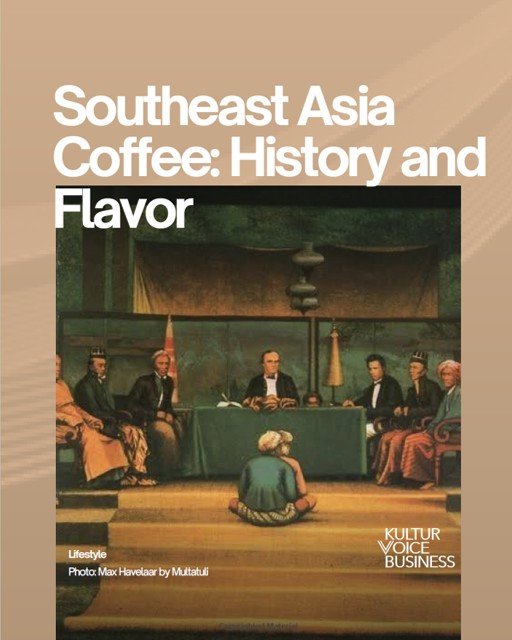
However, the history of coffee in Southeast Asia is not only about commerce and expansion. The legacy of colonial coffee production was later reflected in Max Havelaar, the influential 19th-century Dutch novel written by Multatuli. The book criticized the exploitation behind the colonial cultivation system in the Dutch East Indies, where commodities such as coffee became central to economic profit. While coffee elevated the archipelago’s importance in global trade, Max Havelaar also revealed the human realities tied to the industry during that period. Today, the name continues to resonate through the global fair-trade movement, connecting coffee with conversations around ethics, sustainability, and social responsibility.
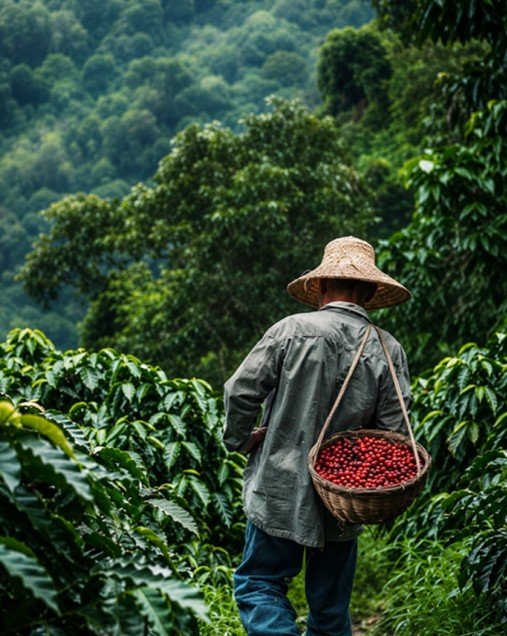
Today, Southeast Asian coffee stands out not only for its production scale but also for its remarkably diverse flavours profiles. In Aceh, particularly the Gayo Highlands of northern Sumatra, coffee is known for its earthy body, low acidity, and rich herbal or chocolate-like notes. Aceh coffee often undergoes the traditional giling basah process, creating the deep and bold characteristics Indonesian coffee is famous for.
Vietnam, meanwhile, has built its reputation as one of the world’s largest coffee exporters, largely through robusta beans. Vietnamese coffee culture embraces intensity such as strong brews, condensed milk, and slow drip phin filters create a cup that feels both powerful and comforting. Beyond tradition, Vietnam is also increasingly entering the specialty coffee scene with high-quality arabica from regions like Da Lat.
Thailand offers a different experience altogether. Thai coffee, particularly from the country’s northern mountains, tends to be lighter, fruitier, and more floral. Supported by royal agricultural projects that encouraged coffee farming as an alternative crop, Thailand has quietly developed a growing specialty coffee reputation cantered on sustainability and craftsmanship.
Together, Aceh, Vietnam, and Thailand reflect the evolving identity of Southeast Asian coffee — a blend of heritage, trade, and innovation that continues to shape global coffee culture today.
Multatuli is the pen name of Eduard Douwes Dekker (The Netherland, 2 March 1820 – German, 19 February 1887), who condemned colonialism in the Dutch East Indies or Indonesia. Multatuli or I have suffered a great deal in Latin, was recognized as one of the greatest Dutch writers. The Multatuli Statue can be visited in Amsterdam, Netherlands with the Multatuli Museum located at Korsjespoortsteeg 20, Amsterdam and the Multatuli Museum in Lebak, Indonesia which opened on February 11, 2018.
Eduard worked as an ambtenaar or civil servant at some posts such as the Batavia Financial Supervision office, Manado (Sulawesi), Bogor, Ambon, then Lebak. In Lebak, Eduard found the situation was worse than the news he got.
The Regent of Lebak at that time was in a situation of severe financial difficulties because his household expenses were greater than the income obtained from his position. Thus, the Lebak regent can only rely on income from rodi work that is required to the residents of his district based on customs.
 Eduard Douwes Dekker found the fact that the work of rodi imposed on the people of the district had exceeded the limit and even encountered extortion practices carried out by the Regent of Lebak and his officials by asking for produce and livestock from his people. Even if you buy it, it is at a very cheap price. Eduard Douwes Dekker wrote a letter to his superiors and requested that the regent and his sons be detained and that the situation be investigated. His superior, Brest van Kempen was so shocked by the news that Eduard sent that he held an on-the-spot inspection but refused Eduard’s request. Thus, Eduard requested that the case be forwarded to Governor General A.J. Duymaer van Twist, who is known to be liberal. However, even though his intention was carried out, Eduard received a harsh warning. Disappointed, Eduard submitted a request for resignation and his request was granted by his superiors.
Everything he saw and experienced in the Dutch East Indies at that time he poured into Max Havelaar’s book which was published in 1860 and became famous. Max Havelaar’s book was made into a film in 1976.
If you appreciate depth over noise, explore more stories on KVB.global. Share this with fellow creators and follow Kultur Voice Business or KVB for perspectives that celebrate meaningful work.
Latest news from Kultur Voice Business