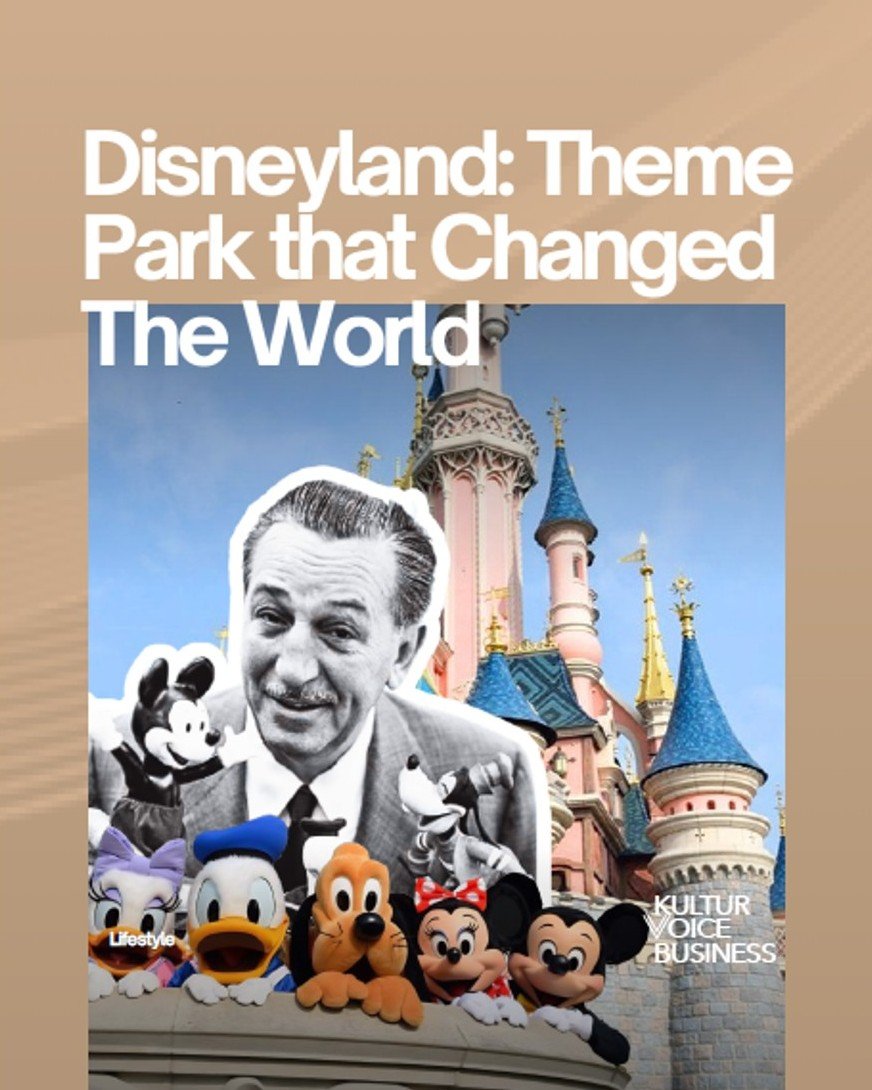

On 17 July 1955 a new chapter in the history of entertainment began with the grand opening of Disneyland in Anaheim, California, that started as story of founders with strong creativity and enhancing mission turning the company into a family business with legacy. More than just an amusement park, Disneyland represented a revolutionary idea, that storytelling, technology, and imagination could come together to create an entirely new form of entertainment. The park transformed the way people experienced movies, characters, and fantasy. It turned audiences from passive viewers into active participants in a story.
Before Disneyland, The Walt Disney Company had already established itself as a pioneer in animation and family entertainment. Founded by Walt Disney and Roy O. Disney in 1923, the company gained worldwide recognition through iconic characters such as Mickey Mouse and groundbreaking animated films including Snow White and the Seven Dwarfs (1937), the first full-length animated feature film. However, Walt Disney envisioned something beyond cinema. He wanted to create a place where families could physically step into the worlds they saw on screen.
This vision became Disneyland. Unlike traditional amusement parks that focused mainly on rides and attractions, Disneyland was designed as a carefully crafted storytelling environment. Its themed lands — such as Fantasyland, Adventureland, Frontierland, and Tomorrowland — offered visitors different experiences, from fairy-tale castles to futuristic innovations. Every detail, from architecture to music and character appearances, was intentionally created to immerse guests in a complete narrative.
The opening of Disneyland also marked a major evolution in the global entertainment industry. Theme parks became more than places for thrill rides; they became destinations built around experiences, emotions, and brand storytelling. Disneyland introduced a business model where intellectual property could extend beyond films into merchandise, tourism, television, and live experiences. This approach would later become a blueprint for many entertainment companies worldwide.
The success of Disneyland strengthened Disney’s position as an entertainment powerhouse. The company expanded internationally with parks such as Tokyo Disneyland, Disneyland Paris, and others, while continuing to grow through film studios, streaming services, consumer products, and media networks. The idea of creating interconnected entertainment ecosystems became one of Disney’s greatest business achievements.
Nearly seven decades later, Disneyland remains a symbol of innovation and imagination. Its legacy is not only measured by the millions of visitors who walk through its gates but also by how it changed the definition of entertainment itself. The opening of Disneyland on 17 July 1955 was the beginning of an industry revolution where stories became places, and dreams became experiences.
Let’s learn more about the founders behind the company and the brand that has become a strong legacy.
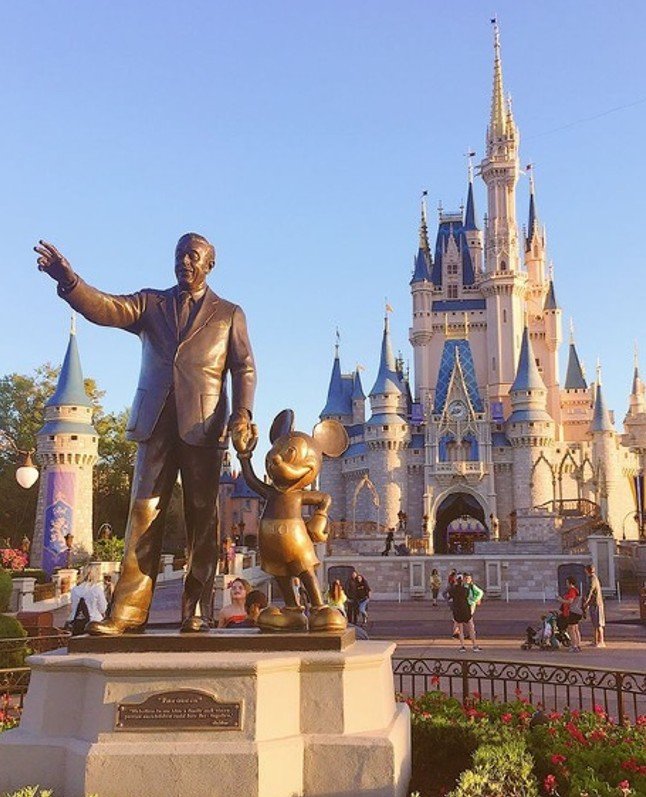 Walter Elias Disney or Walt Disney (5 December 1901 – 15 December 1966) was an entrepreneur, voice actor, film producer, animator, and the pioneer of American animation industry. He holds the records for most Academy Awards won at 22 and 59 nominations as individual. He was presented with two Golden Globe Special Achievement Awards and an Emmy Award, among other honours. Disney took art classes as a boy and took a job as a commercial illustrator at 18 years old. He moved to California from Missouri and set up The Walt Disney Company with Roy Disney. He was known as a shy, self-depreciating and insecure man in private but warm and outgoing public persona, while setting high standards and high expectations of those with whom he worked.
In the meantime, Roy Disney with Walt founding Walt Disney Company by focusing on the financial and management. Roy and Walt built their homes side by side in 1928 and Roy stayed in the company after Walt Disney passed away to ensure smooth operations. The legacy continued as Roy E. Disney, the son of Roy Disney became the successor keeping the legacy.
Every family business has a story worth preserving and sharing. Kultur Voice Business highlights the people, values, and ideas shaping businesses across generations.
Need help telling your family business story? KVB Content Production and Public Relations help family businesses build visibility, strengthen reputation, and connect with stakeholders. Contact us: hello@kvb.global
Latest news from Kultur Voice Business