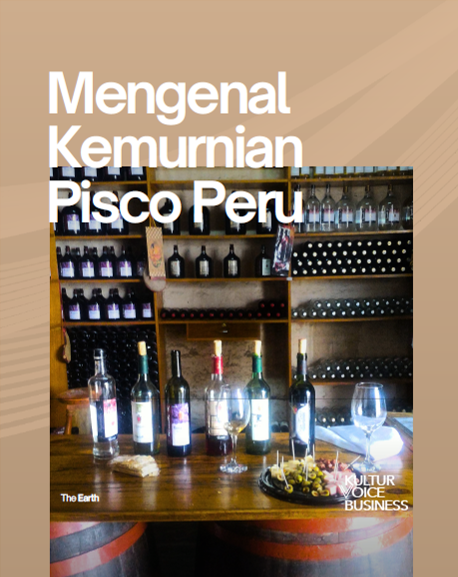

 Peru presents Pisco as its masterpiece; while France has Cognac and Scotland has Whiskey. Pisco is a typical Peruvian “spirit” that is different from the common belief, Pisco is not just a “wine”. Pisco is a spirit or brandy that does not go through the aging process in wooden barrels (oak) that presents an honesty of taste. Pisco wanted to highlight the original characteristics of aromatic wines such as Quebranta, Italian, or Torontel without being overshadowed by woody flavors. It is born from natural forces of the Andes, the longest continental mountain range in the world with an average height of 4,000 meters that spans seven South American countries, namely Argentina, Chile, Bolivia, Ecuador, Colombia, Venezuela and Peru.
Quebranta itself is the most widely produced grape variety in Peru, especially in the manufacture of Pisco. Quebranta is known as a non-aromatic variety with a delicate aroma with banana and pineapple flavors. Quebranta is often used to make Pisco Puro and can be turned into a dry white beer. Torontel is a variety known for its aromatic and floral, with citrus and floral flavors.
In the process of its manufacture, Pisco in Peru is governed by very strict laws, making it one of the purest spirits in the world. No water is added to lower the alcohol content, no sugar, and no additives. It is the result of a single distillation that captures the purest essence of the grapes that grow under the scorching sun of the Ica and Moquegua valleys.
When it touches the tongue, premium quality Pisco will feel warm but not “burning”. It offers a complexity of flavors: from lime, jasmine, to delicate spices. It is a drink for those who appreciate the transparency of taste and artisan quality.
The author had the opportunity to visit one of Pisco’s producers in Lima, Peru and witness how the sour and creamy Pisco tastes refreshing, slowly for flavor contemplation. Pisco offers a different premium lifestyle standard than usual.
The process of making pisco in Peru involves several key steps that ensure the quality and specific characteristics of these spirits. Here are the main steps of making Pisco:
1. Grapes plant processing with care such as preparation, care, pest control so that grapes grow healthy and productive.
2. Picking and Drying in February and mid-March, when the fruit reaches the right state for drying, which is carried out in the area according to the geographical map.
3. Milling and Pressing, where pisco grapes are separated from the twigs and seeds are taken to extract the juice from the fruit. The juice is then transported for the fermentation process.
4. Combustion by discountinous distillation, where sugar and juice are converted into alcohol and CO2.
5. Storage for at least six months in a container.
This process reflects tradition and technique, which is not only a drink, but also a spirit of Peru.
Craftsmanship reflects discipline, patience, and a commitment to excellence—values that translate across every industry. If you appreciate depth over noise, explore more stories on KVB.global. Share this with fellow creators and follow Kultur Voice Business or KVB for perspectives that celebrate meaningful work.
Latest news from Kultur Voice Business