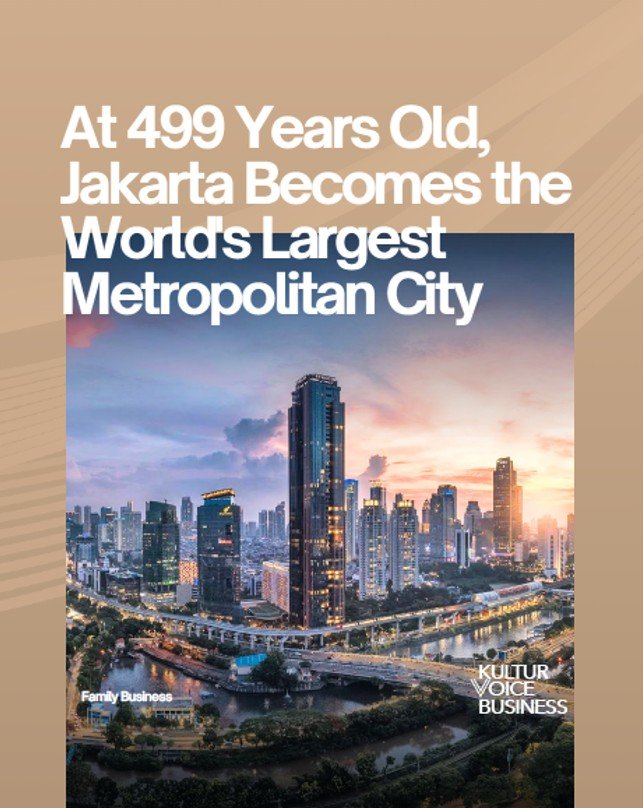

Celebrating its 499 anniversaries, Jakarta has surpassed Tokyo of Japan as the world’s largest metropolitan area. Tokyo became the world’s largest urban area around the 1960s, surpassing cities like New York during Japan’s rapid post-war economic growth. It held this position for more than six decades, becoming a symbol of a highly developed megacity driven by advanced infrastructure, finance, and technology. Today, Jakarta’s metropolitan area (Jabodetabek) has surpassed Tokyo in population size, with over 40 million residents compared to Tokyo’s approximately 37 million.
From a port called Sunda Kelapa to becoming Indonesia’s economic powerhouse, Jakarta has undergone a remarkable journey that has shaped it into one of Asia’s most influential cities. Centuries ago, the city served as a crossroads of global trade. Batavia emerged as a center of colonial economic activity, bringing together diverse cultures, commodities, and international trade networks. After Indonesia gained independence, Jakarta entered a new chapter as the nation’s capital and a key driver of national economic growth.
Today, Jakarta is not only defined by its large population. The city has become a hub for business decisions, investment, finance, technology, and creative industries, connecting Indonesia with the global market.
Jakarta’s growth reflects the shifting landscape of the global economy, where Asian cities are emerging as centers of innovation and new opportunities. Despite facing urban challenges, Jakarta’s potential as a global business hub continues to expand through digital transformation, infrastructure development, and the creativity of its people.
Jakarta’s history spans from a 4th-century Hindu settlement to a modern megacity, shaped by kingdoms, colonial powers, and Indonesia’s independence. Jakarta has been known by several names: Sunda Kelapa (Sunda Kingdom), Jayakarta (Banten Sultanate), Batavia (Dutch colonial period), and Djakarta/Jakarta (Japanese occupation and modern era). Each name reflects a distinct historical phase and the city’s evolving identity.
The area now known as Jakarta has been inhabited since at least the 4th century AD, initially as a Hindu settlement and port under the Tarumanagara kingdom. Later, it became part of the Sunda Kingdom, known as Sunda Kelapa, serving as a thriving trading port connecting Java with merchants from India, China, and the Middle East. Its strategic location along the Ciliwung River and the Java Sea made it a hub for the spice trade, particularly pepper and nutmeg. In the early 16th century, Portuguese traders attempted to establish a fort, but in 1527, Fatahillah of the Demak Sultanate captured the port, renaming it Jayakarta, meaning “Glorious Fortress”.
In 1619, the Dutch East India Company (VOC), led by Jan Pieterszoon Coen, seized Jayakarta, razed it, and established Batavia as the capital of the Dutch East Indies. The city was designed with canals and European-style architecture, resembling Amsterdam, and became the center of VOC trade and administration. Batavia’s prosperity relied heavily on forced labor and a strict racial hierarchy, earning it the nickname “Graveyard of the East” due to malaria outbreaks. The colonial period can be divided into three phases: the VOC era (1619–1799), the Dutch government period (1800s–1942), and modernization in the early 20th century.
During World War II, Japanese forces occupied Batavia, renaming it Djakarta. After the war, Indonesian nationalists declared independence on August 17, 1945, and Jakarta was chosen as the national capital. The Dutch initially attempted to regain control, but full recognition of Indonesian sovereignty came on December 27, 1949, solidifying Jakarta’s status as the capital.
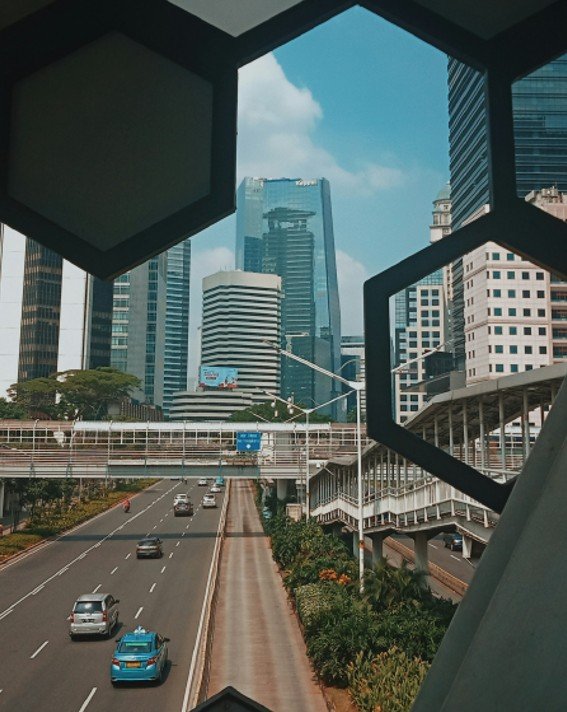 Under President Sukarno, Jakarta underwent large-scale construction projects, including the National Monument (Monas) and the Istiqlal Mosque, symbolizing national pride. During Suharto’s New Order regime (1966–1998), the city experienced rapid industrialization, with skyscrapers, highways, and commercial centers transforming its urban landscape, though often at the expense of equitable urban planning. Today, Jakarta continues to grow as a megacity, reflecting centuries of cultural, political, and economic evolution.
Most Indonesia family businesses, who are from key cities like Surabaya, Semarang, Kudus, Medan, Banjarmasin, Makassar, also open their offices in Jakarta due to its greater access to financial needs and stock exchange.
Building a resilient family business requires clarity, discipline, and long-term thinking. If you’re serious about strengthening governance, preparing the next generation, and protecting your legacy, explore more insights on KVB.global. Share this article with your partners or family members and follow Kultur Voice Business or KVB to stay ahead with perspectives that turn complexity into clarity.
Latest news from Kultur Voice Business