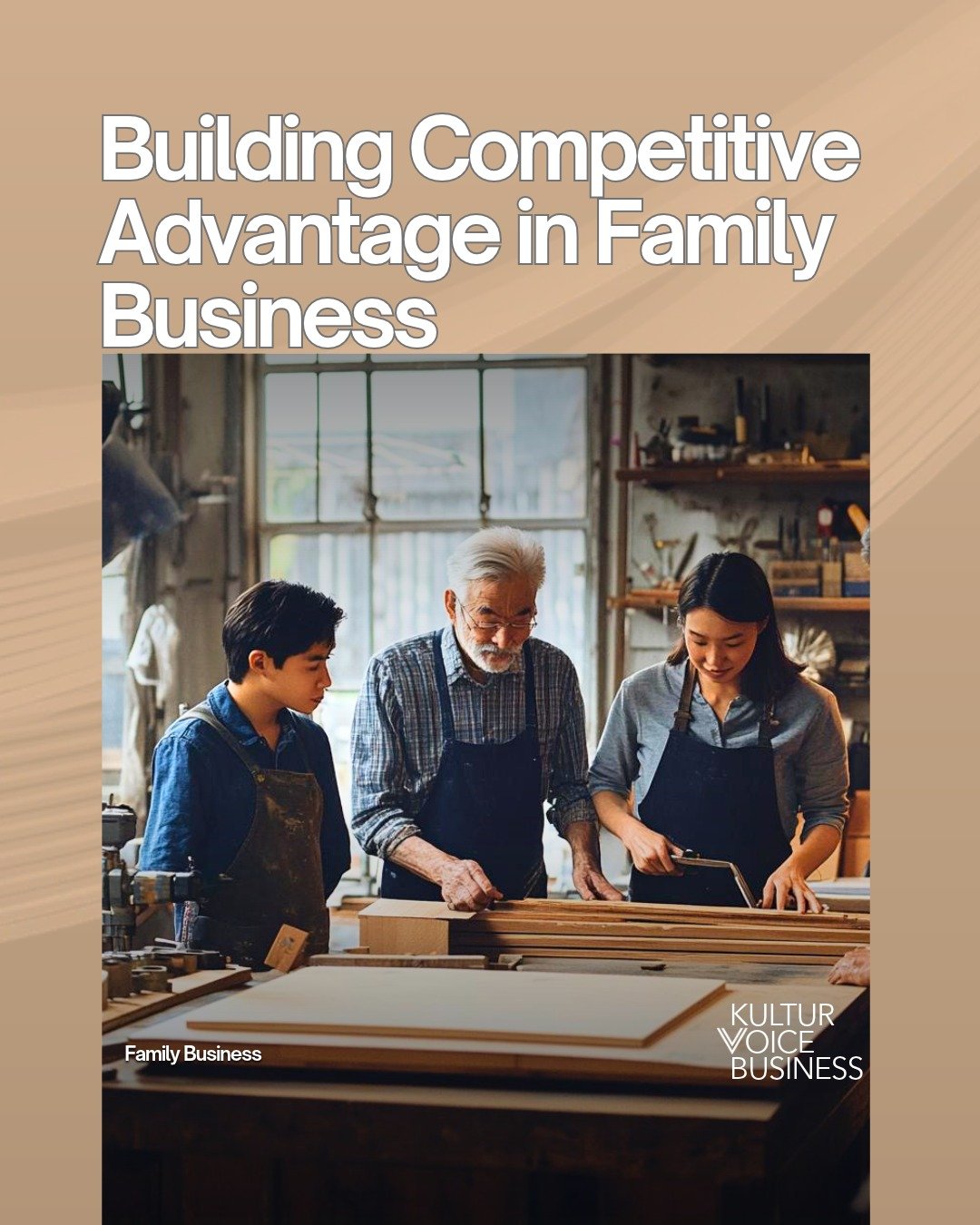

For generations, family enterprises have formed the bedrock of the global economy, anchored by patient capital, deeply held values, and multi-generational vision. Yet, longevity alone does not guarantee survival. Without a deliberate strategy, even the most cherished legacy risks falling into strategic drift.
By applying Michael Porter’s fundamental principles from Competitive Advantage, family businesses can transform inherited traditions into enduring market leadership.
At the heart of Porter’s doctrine is the Value Chain, which is a systematic breakdown of every activity a firm performs to create value. In family businesses, decision-making frequently becomes clouded by emotional ties or governance friction across the classic Three-Circle Model of family, ownership, and management. Mapping primary and support activities provides an objective standard. It allows leaders to evaluate operations dispassionately: Does this process lower costs or amplify distinct buyer value? Furthermore, while family firms often excel at primary craftsmanship and client relationships, systematically auditing support activities (such as procurement, human resources, and technological integration) helps professionalize the enterprise without sacrificing its core soul.
Equally vital is choosing a clear generic strategy. Porter warns against the trap of being “stuck in the middle”, which is essentially trying to be all things to all customers. Family enterprises often succumb to this trap by attempting to offer bespoke, heritage quality while simultaneously discounting prices to retain every legacy buyer. True competitive advantage requires trade-offs. Family businesses must deliberately align their activities toward either cost leadership, deep differentiation, or a concentrated focus on a high-barrier niche.
Here, multi-generational ownership becomes a unique competitive moat. Unlike public corporations bound to quarterly earnings pressure, family enterprises can leverage “patient capital.” They can invest deeply in long-term learning curves, proprietary technology, and multi-generational relationships with suppliers and clients; these are drivers of differentiation that public competitors cannot easily mirror.
Strategy is not about preserving the past; it is about engineering a sustainable edge for the future. When family enterprises codify their operational activities and align their unique long-term perspective with Porter’s strategic discipline, legacy ceases to be a mere sentimental history. It becomes an unassailable competitive advantage.
Latest news from Kultur Voice Business