
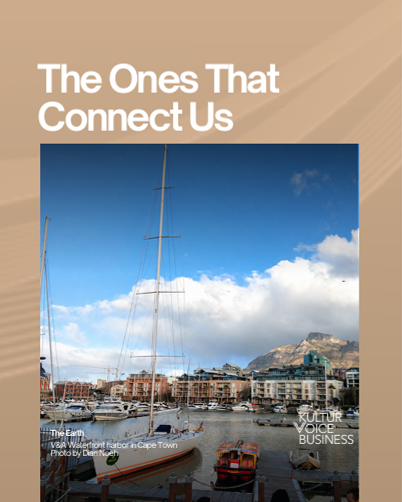

Every year on 8 June World Oceans Day reminds us of the vital role oceans play in sustaining life on Earth. Covering more than 70 percent of the planet’s surface, oceans regulate climate, provide food and livelihoods, and support an extraordinary diversity of marine life. As global challenges such as pollution, overfishing, and climate change continue to threaten marine ecosystems, World Oceans Day serves as a call to protect and preserve these invaluable waters for future generations.
One of the most fascinating places to appreciate the beauty and significance of the ocean is Cape Town, South Africa. The city is uniquely positioned between two major oceans: the Atlantic Ocean to the west and the Indian Ocean to the east. This rare geographical location creates distinct coastal environments, each with its own characteristics and attractions.
On Cape Town’s western side, the Atlantic Ocean brings cold waters influenced by the Benguela Current. The chilly temperatures create a refreshing coastal atmosphere and attract surfers who often wear wetsuits to brave the cold waves. Popular beaches such as Clifton Beach and Camps Bay are renowned for their stunning scenery, white sand, and dramatic mountain backdrops. Despite the cold water, these beaches remain favourite destinations for both locals and tourists who enjoy sunbathing, beach walks, and spectacular ocean views.
In contrast, the eastern side of Cape Town is influenced by the Indian Ocean, whose waters are generally warmer. This creates a different beach experience, making the coastline particularly appealing for swimming and family-friendly activities. One of the most iconic destinations is Muizenberg Beach, famous for its colorful beach huts that line the shore. The vibrant structures have become a symbol of Cape Town’s coastal culture and attract visitors from around the world.
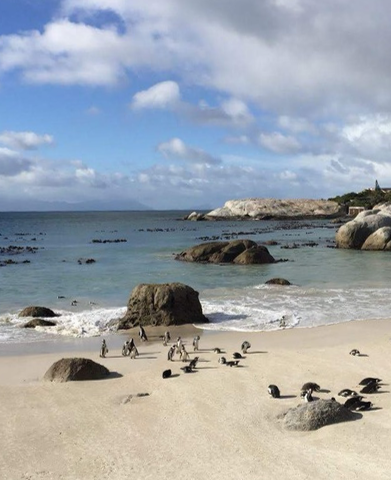
Beyond its scenic beaches, Cape Town is also home to one of the world’s most beloved coastal residents: the African penguin. Found along the city’s shoreline, particularly at Boulders Beach, these charismatic birds thrive in the nutrient-rich waters created by the surrounding oceans. Visitors can observe penguins waddling across the sand, nesting among coastal vegetation, and swimming in the clear waters nearby. However, African penguin populations have declined significantly in recent decades due to habitat loss, climate change, and reduced fish stocks. Their presence serves as a powerful reminder that healthy oceans are essential not only for people, but also for the countless species that depend on marine ecosystems for survival.
The meeting of these two oceans highlights the incredible diversity and interconnectedness of marine environments. It also serves as a reminder of why ocean conservation is so important. Whether it is the cold Atlantic coastline or the warmer Indian Ocean shores, every part of the world’s oceans contributes to the health of our planet.
The meeting of two oceans in Cape Town shows how the ocean shapes the landscape, life and identity of a place. As we celebrate World Oceans Day, we are reminded to protect these waters. Protecting these waters is not only an environmental responsibility but also a commitment to preserving one of Earth’s greatest natural treasures.
As the legislative capital of South Africa, Cape Town is the oldest city and the second largest city after Johannesburg. Cape Town is known for its harbors, natural setting and landmarks such as Table Mountain and Cape Point.
A popular global tourist destination, Cape Town has been named the best city in the world, and the world’s best city for traveler’s numerous times, including by The New York Times in 2014, Time Out in 2025, and The Telegraph from 2017 to 2025. It has the highest incomes and lowest rate of unemployment compared to other cities in South Africa.
At the post-apartheid era, Cape Town has undergone significant changes such as economic growth and development in the post-apartheid era. The city has become a major economic hub in South Africa, attracting international investment and tourism. The Democratic Alliance (DA), a liberal political party which came to power in Cape Town in 2006, has been credited with improving bureaucratic efficiency, public safety and fostering economic development.
Opinion polls show that South Africans view Cape Town as the best governed city in the country, with diversification in the economy has diversified, with growth in sectors such as technology, finance, real estate, and tourism. Cape Town was named World Design Capital of the Year in 2014 and voted the best tourist destination in Africa at the 2023 World Travel Awards in Dubai and continues to be the most important tourist destination in the country. Cape Town has been named the best travel city in the world every year since 2013 in the Telegraph Travel Awards.
Cape Town faced a severe water shortage from 2015 to 2018. According to Oxfam, “in the face of an imminent water shortage, the city of Cape Town in South Africa successfully reduced its water use by more than half in three years, cutting it from 1.2bn liters per day in February 2015 to 516m litres per day in 2018.
Nonetheless, let’s celebrate World Ocean Day 2026 and take part to love the ocean that connects all of us on the planet earth.
Sustainability is no longer optional—it’s a strategic advantage for those who act early. If this perspective matters to your business or worldview, dive deeper into KVB.global for grounded insights on circular thinking, global shifts, and responsible leadership. Share this with your network and follow Kultur Voice Business or KVB to stay informed on what truly shapes our future.
Latest news from Kultur Voice Business

zimerov ertover 12 Aug 2026
Great blog here! Also your site loads up very fast! What host are you using? Can I get your affiliate link to your host? I wish my website loaded up as quickly as yours lol