
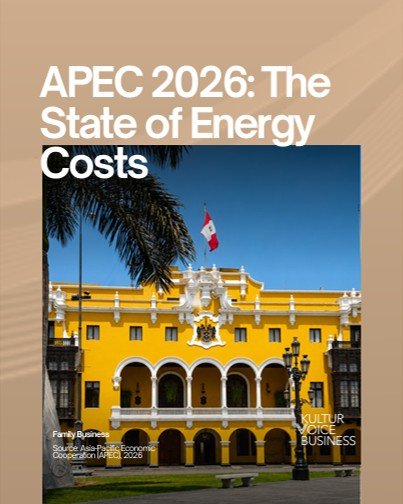

The Asia-Pacific region demonstrated resilience in 2025, recording economic growth of 3.3 percent, slightly exceeding earlier projections of 3.2 percent. However, according to the latest report from the APEC Policy Support Unit (PSU), the region faces growing challenges that are expected to slow economic momentum in the coming years.
Asia-Pacific Economic Cooperation (APEC) is a regional economic cooperation forum established in 1989 comprising 21 economies in the Asia-Pacific region, including Indonesia, Malaysia, Thailand, the Philippines, Singapore, Peru, the United States, China, Japan, South Korea, Australia, Canada, and Mexico. The forum focuses on trade, investment, and sustainable economic growth in the region. Growth is projected to moderate to 3.1 percent in 2026 and further ease to 3.0 percent in 2027 as more than half of APEC economies experience slower output expansion.
A key factor behind the weakening outlook is the escalation of geopolitical tensions in the Middle East, which has significantly disrupted global energy and supply markets. Since February 2026, oil prices have surged by more than 50 percent, rising from USD68 to USD103.9 per barrel. These increases have driven up transportation and logistics costs, disrupted shipping routes, and contributed to rising food prices across the region.
APEC’s heavy reliance on Middle Eastern energy supplies heightens its vulnerability to these disruptions. Oil and gas account for nearly half of the region’s energy mix, while over 45 percent of crude oil and 23 percent of natural gas imports originate from the Middle East. The impact extends beyond energy, as the region also imports 27 percent of its nitrogen-based fertilizers from the area, creating additional risks for agricultural production and food security. As a result, prices of key commodities such as vegetable oils, cereals, and meat have risen sharply.
At the same time, increasing trade fragmentation is adding pressure to the regional economy. A growing number of tariffs and trade-restrictive measures have weakened the trade outlook, with merchandise export growth expected to slow significantly between 2026 and 2028 compared to the strong performance recorded in 2025. Rising freight costs and slower port activity have further intensified supply chain challenges.
These overlapping disruptions are also contributing to higher inflation. Average inflation across APEC economies is projected to rise from 2.4 percent in 2025 to 2.9 percent in 2026. While this remains below the global average, higher living costs, shrinking business margins, and slower job creation are already being felt throughout the region.
Despite these challenges, APEC economies remain relatively resilient. The PSU emphasizes that strengthening supply chain resilience, diversifying energy sources, investing in infrastructure, and providing targeted support to households and businesses will be essential. Through continued regional cooperation and agile policymaking, APEC can mitigate current pressures and promote long-term economic stability and shared prosperity.
Global shifts don’t wait—and those who understand them early gain the advantage. If you want sharper perspective on trade, geopolitics, and regional dynamics, explore more on KVB.global. Share this insight with your team and follow Kultur Voice Business or KVB to stay strategically informed.
Latest news from Kultur Voice Business

zimerovertover 13 Aug 2026
Very interesting details you have noted, thankyou for putting up. “You can tell the ideas of a nation by it’s advertisements.” by Douglas South Wind.