
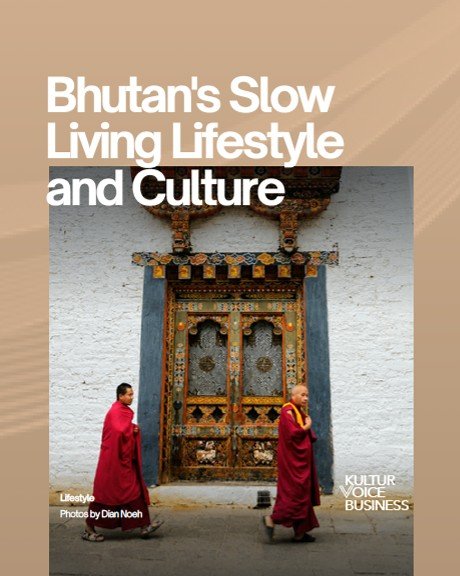

Can you imagine waking up every day in Bhutan with the fresh air of the Himalayas and breathtaking views?
Nested in Himalayas and between India and China, Bhutan is often described as one of the world’s most peaceful and mysterious destinations. Known as the “Land of the Thunder Dragon,” this small Himalayan kingdom offers more than breathtaking mountain landscapes. It presents a unique way of life centered around balance, culture, and happiness.
Unlike many countries that prioritize rapid industrial growth, Bhutan famously measures success through Gross National Happiness (GNH), a philosophy introduced by the country’s fourth king in the 1970s. The concept focuses on citizens’ well-being, environmental preservation, cultural heritage, and sustainable development. In Bhutan, progress is not only about economic numbers, but also about how fulfilled people feel in their daily lives.
Bhutan’s culture remains deeply rooted in Buddhist traditions. Across the country, colorful prayer flags flutter through mountain valleys while ancient monasteries sit dramatically on cliffsides. One of the most iconic landmarks is Tiger’s Nest Monastery, perched nearly 3,000 meters above sea level. Festivals known as tshechus are major cultural celebrations where locals gather in vibrant traditional clothing to watch masked dances, music performances, and spiritual ceremonies passed down for generations.
Traditional attire is still commonly worn in daily life, including the gho for men and kira for women. These garments are made from colorful handwoven textiles through Bhutan’s traditional weaving art, Thagzo. The ancient craft remains highly valued across the country, reflecting Bhutan’s strong commitment to preserving its cultural identity in an increasingly globalized world.
Bhutan’s economy is one of the smallest and least developed in the world, with a base of agriculture and forestry. Agriculture provides a livelihood for more than 80% of the population. Agrarian practices mostly consist of subsistence farming and animal husbandry. Handicrafts, especially sewing and the production of religious arts for home altars, are small industries owned by the people and a source of income.
The different scenery of the rugged hilly mountains makes the construction of roads and other infrastructure difficult and expensive. This, and the lack of access to the sea, meant that Bhutan could never profit from the significant trade of its products. Bhutan currently has no railways, although Indian Railways plans to connect southern Bhutan with its extensive network under an agreement signed in January 2005. Past trade routes between the Himalayas, which connect India to Tibet, have been closed since the military takeover of Tibet in 1959 (although smuggling activities continue to bring PRC goods to Bhutan).
The industrial sector is very minimal, its production is included in the people’s industry. Most development projects, such as road construction, rely on Indian contract laborers. Agricultural products include rice, lombok, dairy products (yak), buckwheat, gerst, root harvest, apples, and orange trees at low altitudes. Other industries such as cement, productionWood, processed fruits, MiRas, and calcium carbide. Despite being one of the smallest in the world, Bhutan’s economy has grown rapidly by around 8% in 2005 and 14% in 2006. As of March 2006, Bhutan’s per capita income was US$ 1,321 which made it the highest in South Asia. Bhutan’s standard of living is growing and is one of the best in South Asia.
The currency of Bhutan, ngultrum, is pegged to the Indian Rupee. Rupees are also accepted as an official offering in the country.
Bhutan’s main export partner is India, accounting for about 87.9% of its exports, then Bangladesh (4.6%) and the Philippines (2%) are its most important export partners after India. Because its border with Tibet is closed, trade between Bhutan and the PRC is almost non-existent. Bhutan’s import partners are India (71.3%), Japan (7.8%) and Austria (3%). Bhutan also sells hydropower plants to India.
What makes Bhutan especially fascinating is its ability to modernize without losing its soul. While the country embraces education, technology, and sustainable growth, it continues to prioritize mindfulness, community, and harmony with nature. In a fast-moving world, Bhutan offers a rare reminder that success can also mean living simply, meaningfully, and happily.
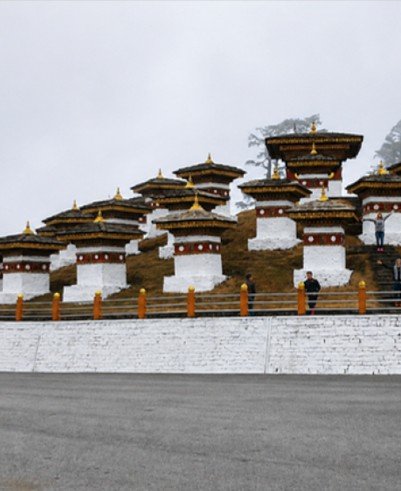 In response to an accusation in 1987 by a reporter from the Financial Times that progress in Bhutan was slow, the King said that “Gross National Happiness is more important than Gross Domestic Product.” This statement harkens to recent findings by Western economic psychologists, including 2002 Nobel laureate Daniel Kahneman, that question the relationship between income levels and happiness. It marks its commitment to building an economy that is suitable for Bhutan’s unique culture, based on the spiritual values of Buddhism, and has served as a unified vision for the economy. In addition, it seems that the policy is getting the expected results as in a recent survey conducted by the University of Leicester. Archived 2006-08-04 at the Wayback Machine in the United Kingdom, Bhutan is ranked as the 8th happiest place on earth.
Great living is built from intentional choices— what you watch, wear, read, and practice. If you value thoughtful lifestyle and cultural insights, explore more on KVB.global. Share this article with someone who would appreciate it and follow Kultur Voice Business or KVB for curated inspiration that adds value.
Latest news from Kultur Voice Business
zimerovertover 9 Aug 2026
Nice post. I learn something more challenging on different blogs everyday. It will always be stimulating to read content from other writers and practice a little something from their store. I’d prefer to use some with the content on my blog whether you don’t mind. Natually I’ll give you a link on your web blog. Thanks for sharing.