
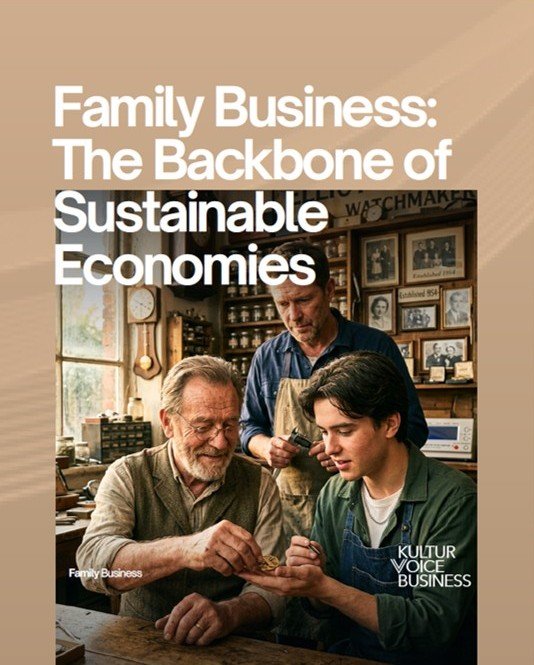


Family business or family-owned enterprises are more than just commercial entities. Family businesses are the bedrock of the global economy, representing a significant share of GDP and employment in their countries of origin and worldwide. By blending deeply rooted family values with entrepreneurial ambition, these businesses create a distinct model—one that prioritizes long-term resilience over short-term gains.
But what factors make family business sustainable in the todays’ economy landscape? Are there new factors that family businesses need to learn?
In today’s landscape, success for family business is no longer defined solely by financial expansion. Family businesses increasingly shaped by adaptability, purpose, and meaningful impact. Unlike many corporations driven by immediate shareholder expectations, family enterprises often operate with a generational horizon. This long-term perspective enables them to make decisions that safeguard continuity, invest in sustainable practices, and remain steady amid economic uncertainty. Their ability to evolve while staying anchored in core values gives them a unique advantage in navigating rapid technological and market shifts.
Beyond financial contributions, family businesses play a critical role in shaping a more human-centered economy. Their close ties to local communities foster a sense of responsibility that extends beyond profit. When these businesses grow, they contribute to social stability by creating jobs, nurturing trust, and strengthening local networks. This interconnectedness builds an ecosystem where economic progress and community well-being move forward together, reinforcing inclusive and sustainable development at every level.
This deep-rooted connection also reinforces accountability. Decisions are often guided not only by performance metrics, but by legacy—what is left behind for the next generation. As a result, there is a stronger emphasis on responsible practices, from environmental stewardship to long-term workforce development. These choices may not always yield immediate returns, but they lay the foundation for sustained relevance and credibility, especially in increasingly conscious markets.
As global economies continue to evolve, the role of family businesses becomes even more significant. Their commitment to longevity, combined with a balanced approach to growth and responsibility, positions them as key drivers of a more sustainable future. In an era defined by constant change, this consistency of purpose allows family businesses to endure and lead.
In your opinion, as the backbone of the economy, what do family businesses need to do to ensure long-term sustainability?
Sustainability in business is built through disciplined long-term thinking. If you want to create a business that endures, explore more insights on KVB.global. Share this with your partners and follow Kultur Voice Business or KVB to keep building with purpose.
Latest news from Kultur Voice Business

zimerovertover 14 Aug 2026
Woah! I’m really digging the template/theme of this website. It’s simple, yet effective. A lot of times it’s very hard to get that “perfect balance” between user friendliness and visual appeal. I must say you have done a very good job with this. Also, the blog loads super quick for me on Firefox. Excellent Blog!