
The International Monetary Fund (IMF) has released its April 2026 World Economic Outlook, offering a “reference forecast” of the global economy amid rising geopolitical tensions, particularly the outbreak of war in the Middle East.
The global economy now faces renewed uncertainty. Despite earlier resilience — supported by strong tech investment, accommodative financial conditions, and policy support — the February 2026 conflict threatens to derail momentum by disrupting commodity markets, fuelling inflation expectations, and tightening financial conditions. These pressures could ripple across both advanced and emerging markets, amplifying volatility.
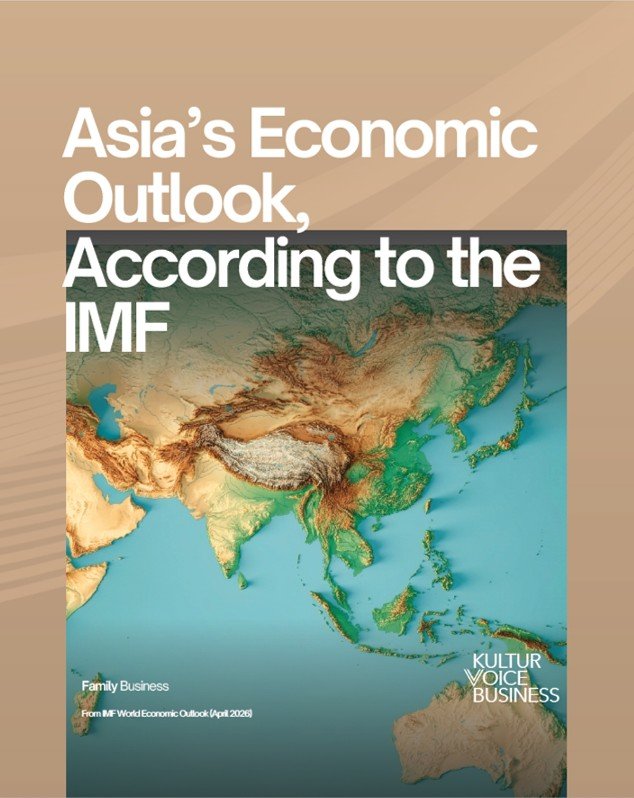
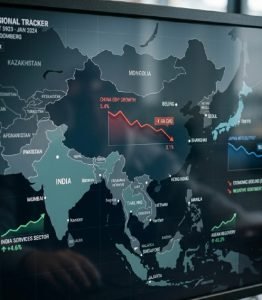
Across emerging and developing Asia, growth is projected to slow from 5.5% in 2025 to 4.9% in 2026, before easing further to 4.8% in 2027, reflecting both external shocks and moderating domestic demand. In China, growth for 2026 has been slightly revised upward to 4.4%, supported by lower US tariffs and domestic stimulus measures that help offset the impact of the conflict. However, growth is expected to slow to 4.0% in 2027 due to structural challenges such as a weakening property sector, a shrinking labor force, and declining productivity gains. India continues to show strong momentum. Growth reached 7.6% in 2025 and is projected at 6.5% for both 2026 and 2027, supported by strong domestic performance and reduced US tariff pressures.
Elsewhere in the region, several South and Southeast Asian economies are expected to feel indirect effects from the conflict. Disruptions to tourism and remittance flows may weigh on domestic demand. The Philippines sees a notable downgrade in its 2026 outlook, compounded by weaker investment and confidence in the previous year.
Among key regional economies, Vietnam records projected growth of 7.1% in 2026, followed by India at 6.5%. Taiwan is expected to grow 5.2%, marking a notable drop from 8.7%. Indonesia remains stable at 5%, largely unchanged from 5.1% last year. Malaysia rounds out the group with 4.7%.
Overall, the IMF projects Asia-Pacific growth at 4.4% in 2026, down from 5% the previous year, reflecting a broader moderation across the region as global uncertainties intensify. While the outlook remains resilient, downside risks continue to dominate, making regional cooperation increasingly critical for corporate operational continuity amidst global risks.
The International Monetary Fund (IMF) works to achieve sustainable growth and prosperity for all its 191 member countries. It does so by supporting economic policies that promote financial stability and monetary cooperation, which are essential to increase productivity, job creation, and economic well-being. The IMF is governed by and accountable to its member countries. The International Monetary Fund (IMF) is an international financial institution and a specialized agency of the United Nations, headquartered in Washington, D.C., with 191 member countries. Its mission is to foster global monetary cooperation, secure financial stability, facilitate international trade, promote high employment, sustainable economic growth, and reduce poverty. The IMF supports economic policies that enhance productivity, job creation, and overall economic well-being. The IMF has three critical missions: furthering international monetary cooperation, encouraging the expansion of trade and economic growth, and discouraging policies that would harm prosperity. To fulfil these missions, IMF member countries work collaboratively with each other and with other international bodies.
Economic signals only matter if you act on them early. If you want sharper insight into regional growth, explore more on KVB.global. Share this with your network and follow Kultur Voice Business or KVB to stay ahead of macro shifts.
Latest news from Kultur Voice Business