
 Closing January, the editorial team was thrilled to have the opportunity to ask Nonita Respati, Founder of Purana Home more in-depth. Purana has been known by consumers as Purana Fashion and launched Purana Home to answer the lifestyle needs of consumers. Let’s get to know more about the craftsmanship and value of Nonita for Purana Home.
Kultur Voice Business (KVB): Fundamentally, what is the main vision that you want to achieve through the launch of Purana Home?
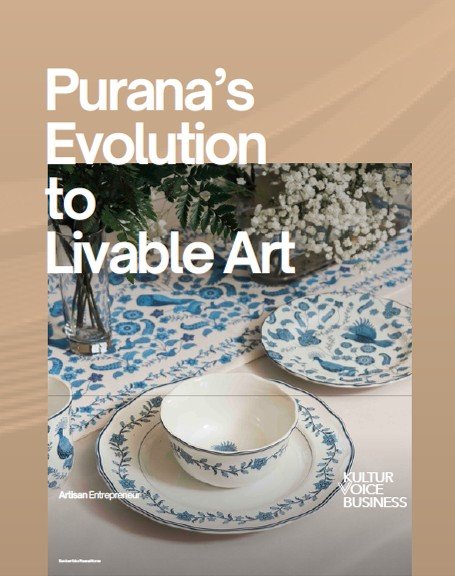
Nonita: Our main vision in launching Purana Home is to make Purana a holistic lifestyle brand. So far, consumers have known Purana as wearable art or what consumers wear or wear. With Purana Home, we want Puranas to be a part of where they live (livable art).
KVB: Is there a difference in values compared to Purana’s main fashion line?
Nonita: There is no difference in values, in fact it is an extension or extension of the same value of the Purana. Purana’s DNA has always been about two things, namely ease and craftsmanship.
In fashion, we make clothes that are stylish but comfortable to wear on the move. At Purana Home, we create aesthetically pleasing yet functional household products for everyday use, not just for display in glass cabinets.
KVB: How would you describe the “Soul” of Purana Home? If Purana Home is a feeling or atmosphere of home, what is it like?
Nonita: The soul of the Purana Home is the “Sanctuary” or Shelter of Calm and “Warmth” or Warmth.
If it is described as an atmosphere, it is like the feeling of a quiet Sunday morning. You sit on a comfortable sofa, drinking coffee from a beautiful cup, surrounded by things that have a story, but feel light and not intimidating. Purana Home is an unpretentious luxury.
KVB: What is Purana Home’s mission to the lifestyle and craftsmanship industry in Indonesia in the long term?
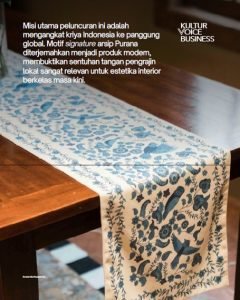
Nonita: The mission is to prove that Indonesian crafts — be it batik motifs, weaving, or hand dyeing techniques — can be translated into modern and globally relevant home and living products.
We want local artisans to have a new container; that their hand skills are not limited to a piece of cloth or clothes, but can be tableware, bedding, and home décor that are of high value.
KVB: Puranas have been known for a dozen years in the fashion industry. What was the “turning point” or specific moment that convinced the team that now was the right time to venture into home and living?
Nonita: Our turning point was the pandemic. The moment in which we are all “forced” to return home made me realize that the home is not just a bed, but a center of life. It was then that I saw Purana customers starting to look for visual comfort in their homes. After 15 years of building trust through fashion, I feel that the market confidence has been formed. They believe in Purana taste, so when we hand over a plate or pillow, they know the quality will be the same as the clothes they bought.
KVB: Did the change in people’s lifestyle post-pandemic affect the decision to do this expansion?
Nonita: It’s very influential. The culture of “hosting” or entertaining guests at home is now a very strong new lifestyle trend. People prefer to invite relatives to intimate dinners at home rather than in restaurants. That’s where Purana Home comes in; We provide the “tools” to create an artistic and memorable hosting experience in a private space.
KVB: How do you see the correlation between the way someone dresses and the way they organize the house? Is Purana Home here to complement the existing “Wanita Purana” lifestyle?
Nonita: It’s very correlated. Home is an extension of oneself, just like clothing. The “Purana woman” is a figure who appreciates art and detail. There was no way she was dressed so artistically and yet her house was empty without character.
Purana Home is here to harmonize that aesthetic—ensuring that the dishes she uses or the blankets she wears have the same “language” of beauty as the dress she wears.
KVB: Can you tell us a little about this debut collection? What is the main inspiration behind the motifs and color palette chosen?
Nonita: For this debut, we did a lot of archive remixing. We took Purana’s most beloved signature motifs —such as flora motifs and abstract geometric ones—and adjusted the color palette to be more soothing for the interior.
Earth tones, indigo blue, and terracotta dominate because these colors bring elements of nature into the room.
KVB: What is the process of adapting the design from clothing patterns to interior media such as ceramics or bedding? Are there any technical challenges in translating these motifs?
Nonita: The challenge is in the medium. In the shirt, the motif moves with the body (draping). In plates or ceramics, the motif is static and flat. We had to redesign the composition to keep it looking dynamic even on stationary objects. In addition, the technique of applying color to ceramic burning is very different from dyeing fabric, so it takes a lot of trial and error to get the Purana signature color right.
KVB: We see a collaboration between Purana and Sango Ceramics, for example. What were the key considerations in choosing a collaboration partner for the Purana Home line and how did the creative process go?
Nonita: The collaboration between Purana and Sango Ceramics is a marriage between art and engineering.
We at Purana chose the collaboration with Sango Ceramics because they are the best in their field with outstanding export quality standards. Purana brings artistic vision and creative direction, while Sango brings technical expertise and material durability.
The process is highly collaborative; We had an intense discussion about how our hand-painted motifs could be applied to the plate without losing the details of the brush.
KVB: The issue of sustainability is increasingly the main spotlight for businesses. Does Purana Home implement eco-friendly practices?
Nonita: Yes, mindfulness is at the heart of Purana. For home textile products (such as bedding or loungewear), we use materials such as Tencel™ which are made from sustainable wood fiber, biodegradable, cool and soft so they are perfect for tropical climates.
In addition, the concept of “timeless design” itself is a form of sustainability; We make high-quality products that will not be thrown away after a season has passed.
KVB: As a designer, is there an emotional difference or creative approach when designing something that is worn on the body (fashion) vs something that fills the space (home décor)?
Nonita: The difference is in “interaction”. Fashion is intimate and personal for the wearer. While Home Decor is communal — it is enjoyed together, seen by guests, and becomes the backdrop to family memories. Designing For the home feels more “permanent” and calm or grounded, while fashion is more dynamic and expressive.
KVB: Is Purana Home planned as a capsule or seasonal collection or will it be a permanent line that releases collections on a regular basis? What other products can we look forward to in the future?
Nonita: Purana Home is a permanent line and will be a new business pillar for us. In the future, we want to complement all sensory aspects of the house. Not only visual (ceramics/textiles), but maybe also scents (home fragrance) and other decorative objects.
We want when someone walks into the house, they can say, “Ah, it smells and feels like Purana.”
Craftsmanship reflects discipline, patience, and a commitment to excellence—values that translate across every industry. If you appreciate depth over noise, explore more stories on KVB.global. Share this with fellow creators and follow Kultur Voice Business or KVB for perspectives that celebrate meaningful work.
Latest news from Kultur Voice Business