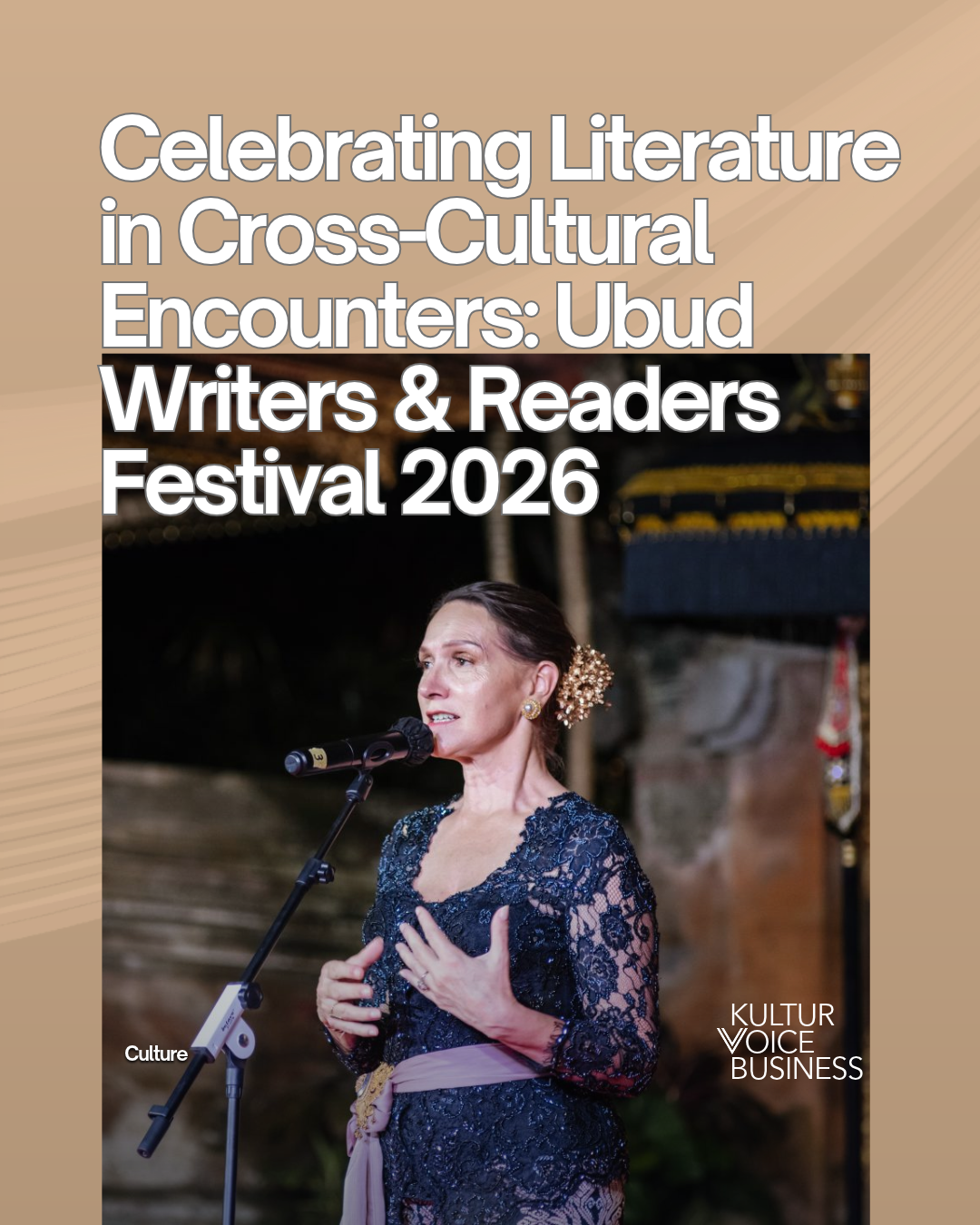

Last week, Ubud, Bali became a meeting ground for some of the world’s most compelling voices. From 21 to 25 October, the 23rd Ubud Writers & Readers Festival brought writers, readers, artists, and thinkers to Ubud for five days of conversations exploring the stories that shape our understanding of the world. Under the theme Samarasā: Awareness. Empathy. Action., this year’s gathering offered a timely reminder of literature’s enduring power to connect people across cultures and experiences.
With more than 300 speakers from over 30 countries and a programme spanning panel discussions, book launches, masterclasses, and live performances, the festival once again placed Indonesia at the centre of an international literary conversation. Yet its significance extends beyond the scale of its programme. At its heart lies a simple proposition: stories can help us see beyond our own circumstances, encounter unfamiliar perspectives, and find common ground in an increasingly divided world.
The festival’s origins make this mission particularly meaningful. Founded in 2004 by Janet DeNeefe and her husband, Ketut Suardana, the event emerged from an initiative to help heal Bali’s community following the 2002 bombings. What began as an act of cultural renewal has since developed into one of Southeast Asia’s leading literary gatherings, sustained by the belief that creativity and open dialogue can foster understanding.
This year’s theme, Samarasā, draws on the relationship between awareness, empathy, and action. Across its programme, that philosophy found expression in discussions ranging from literature and identity to politics, spirituality, and the environment. Among the featured voices was Francesca Albanese, whose work explores the human realities of conflict, alongside writers and cultural figures examining how personal narratives illuminate broader social questions. The festival also honoured translator John H. McGlynn for his longstanding contribution to bringing Indonesian literature to international readers.
Just as distinctive is the setting. Ubud’s artistic heritage lends the festival an atmosphere in which literature moves naturally beyond the page. Conversations unfold alongside Balinese cultural experiences, intimate literary gatherings, and performances that bring together words, music, and storytelling. Here, culture is not presented as something to observe from a distance, but as a living exchange shaped by the people who preserve and reinterpret it.
Though this year’s festival has ended, its most lasting contribution may be found in the conversations that continue beyond its venues. In bringing different voices into the same room, Ubud reminds us that reading is also an act of listening and that a story, encountered with an open mind, can become the beginning of meaningful change.
Latest news from Kultur Voice Business