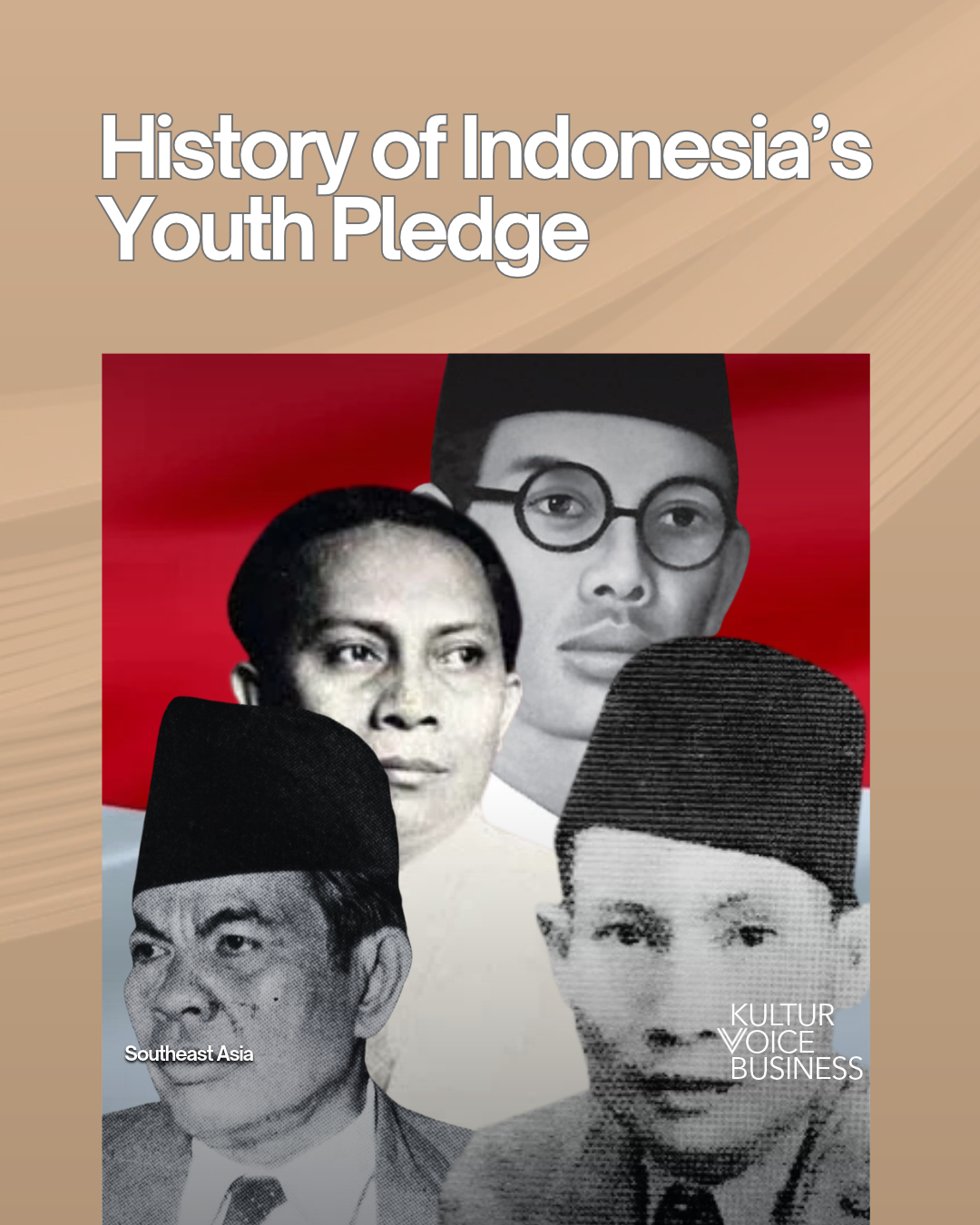

Sumpah Pemuda, or Youth Pledge Day, is commemorated every 28 October to remember an important milestone in Indonesia’s struggle for independence. The pledge represented a growing sense of national identity among young Indonesians during the colonial period, when the country was still under Dutch rule. It emphasized the importance of unity among people from different ethnic, cultural, and linguistic backgrounds in pursuing a common national goal.
The origins of Sumpah Pemuda can be traced to the early twentieth century, when various youth organizations emerged across the Dutch East Indies. Many of these groups initially represented specific regional or ethnic identities, such as Jong Java, Jong Sumatranen Bond, and Jong Celebes. Although their backgrounds differed, their members increasingly recognized the need for cooperation to advance the broader nationalist movement.
This spirit of unity led to the First Youth Congress in 1926, followed by the Second Youth Congress on 27–28 October 1928 in Batavia, now known as Jakarta. The second congress brought together representatives of different youth organizations to discuss education, nationalism, and the future of the Indonesian people. The discussions culminated in the declaration known as Sumpah Pemuda on 28 October 1928.
The pledge consisted of three central commitments: one homeland, Indonesia; one nation, the Indonesian nation; and one unifying language, Indonesian. These principles reflected a collective aspiration to move beyond regional divisions and establish a shared national identity. The decision to recognize Bahasa Indonesia as the language of unity was particularly significant, as it provided a common means of communication among communities with diverse local languages.
Several figures played important roles in this historical event. Soegondo Djojopoespito served as the chairman of the Second Youth Congress, helping guide its proceedings. Mohammad Yamin contributed ideas concerning national unity and is widely associated with the formulation of the pledge. Wage Rudolf Supratman also made a lasting contribution by introducing the song Indonesia Raya, which later became Indonesia’s national anthem.
Beyond their historical contributions, the figures behind Sumpah Pemuda also offer an opportunity to reflect on the role of critical thinking in shaping national movements. Their willingness to engage with ideas beyond their respective regional identities demonstrated the importance of considering different perspectives and identifying shared goals. Rather than allowing differences to become barriers, they participated in discussions that helped establish a broader understanding of Indonesian identity. Their experience illustrates how thoughtful dialogue, the exchange of ideas, and the ability to look beyond established boundaries can contribute to collective progress.
Today, Sumpah Pemuda remains an important part of Indonesia’s national history. Its commemoration provides an opportunity to reflect on the role of young people in shaping the country’s national movement. More than a historical declaration, the Youth Pledge illustrates how critical thinking skills and cooperation across differences contributed to the development of Indonesian nationalism and laid part of the foundation for the country’s eventual independence in 1945.
Latest news from Kultur Voice Business