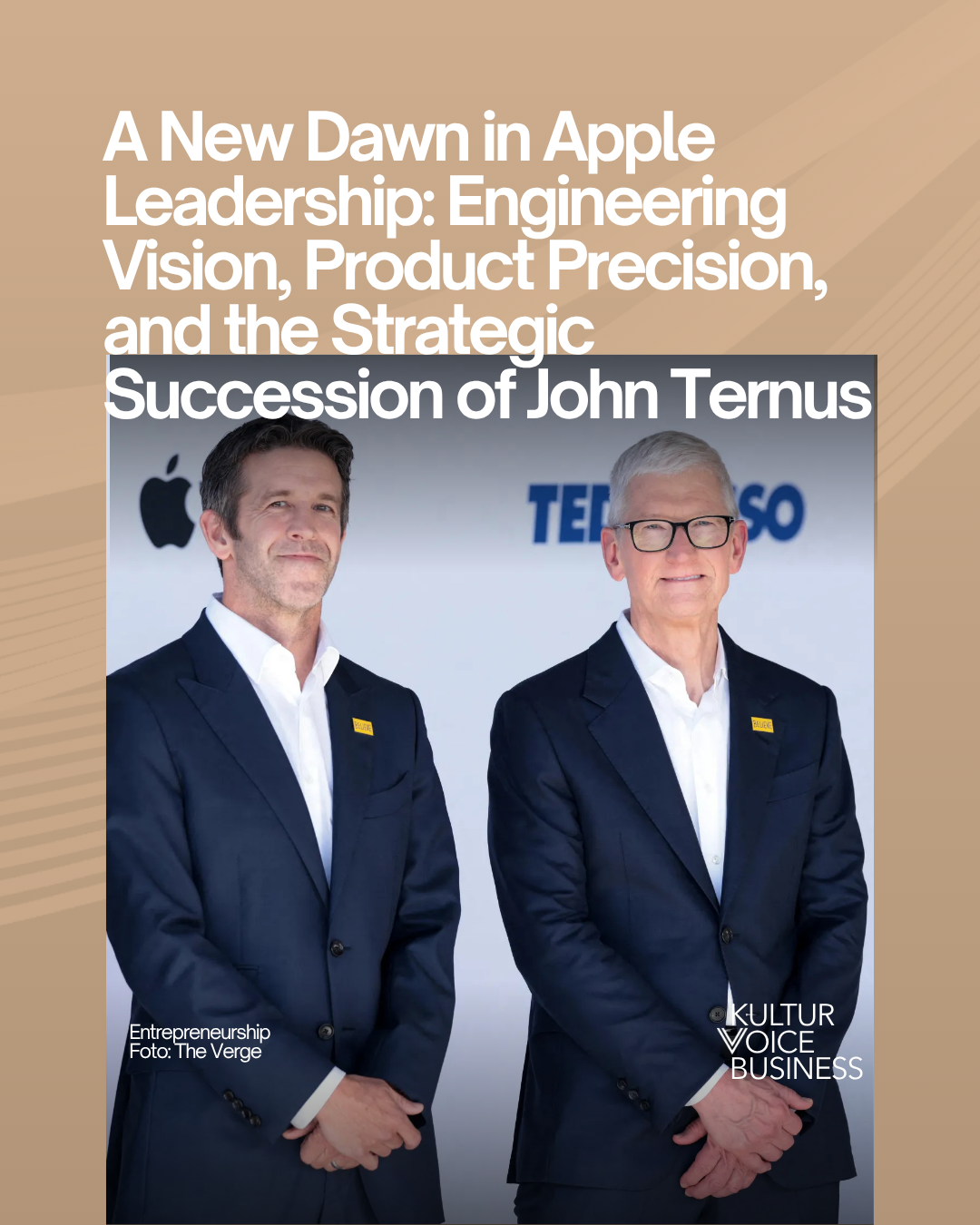

A New Dawn in Apple Leadership: Engineering Vision, Product Precision, and the Strategic Succession of John Ternus
Executive succession within the upper echelons of global commerce often reflects the broader trajectory of modern industry. Apple’s appointment of John Ternus to its highest executive office marks a monumental transition—not only for the Cupertino-based titan, but also for multinational governance at large. For family enterprise principals, senior executives, and stewards of private wealth, this leadership handover provides an instructive case study on structured succession planning, institutional loyalty, and the deliberate synthesis of deep technical mastery with long-term strategic vision.
Organic Dedication and the Foundation of Substantive Mastery
John Ternus’s ascent to the pinnacle of Apple exemplifies an enduring dedication increasingly rare in an era marked by rapid executive turnover. Beginning his tenure in 2001 within the product design team, Ternus cultivated his executive authority organically from the foundational layers of hardware engineering.
A tenure spanning a quarter of a century demonstrates that resilient corporate stewardship emerges from an intimate understanding of an enterprise’s core product architecture. Rather than navigating a purely administrative career path, Ternus honed his executive acumen through rigorous technical immersion. This trajectory established him as a leader who understands the nuanced intersections of engineering integrity and industrial design that define Apple’s premium brand equity.
Orchestrating Innovation and the Architectural Leap of Apple Silicon
As Senior Vice President of Hardware Engineering, Ternus oversaw a portfolio comprising some of the most influential technological milestones in modern personal computing. Under his direct stewardship, cornerstone product categories—including the iPad, AirPods, and successive generations of the iPhone—achieved unprecedented levels of industrial maturity and functional sophistication.
His most defining strategic milestone was leading the architectural transition to Apple Silicon. The decision to engineer proprietary, ARM-based processors successfully:
- Revitalized the Mac product ecosystem by delivering industry-leading power efficiency and computational performance.
- Eliminated critical dependencies on external silicon suppliers, reinforcing technological sovereignty.
- Unified the integration between proprietary hardware and operating systems, strengthening an unassailable economic moat against market competitors.
Navigating AI Disruption, Geopolitics, and Regulatory Scrutiny
Despite inheriting an enterprise with a multi-trillion-dollar market capitalization, the new administration faces a complex matrix of systemic challenges. The accelerating artificial intelligence landscape demands that Apple assert market leadership in cognitive computing without compromising its core commitment to user privacy—an ethical pillar that serves as a primary differentiator in its premium positioning.
Concurrently, shifting global trade realities necessitate the careful diversification of manufacturing footprints to mitigate supply-chain vulnerabilities. Ternus’s corporate diplomacy will also be tested amid mounting antitrust scrutiny across critical international jurisdictions. Safeguarding institutional brand prestige while steering market-access adjustments requires high-stakes precision and strategic composure.
A Strategic Shift Toward Product-Led Governance
The elevation of a dedicated engineer to chief executive represents a conscious evolution in corporate philosophy. While the era of Tim Cook was distinguished by operational mastery, global logistics optimization, and the expansion of high-margin recurring services, the appointment of Ternus signals the resurgence of product-centric governance.
This transition re-anchors design purity, engineering excellence, and sophisticated aesthetic integration as the primary drivers of enterprise value creation. It guarantees continuity in corporate culture while reinforcing the company’s identity as an elite architect of luxury, high-performance consumer technology.
Strategic Succession Insights for Family Enterprises and Corporate Boards
For family business leaders and multi-generational enterprise boards, Apple’s succession under John Ternus provides an enduring blueprint for mitigating executive transition risk:
- Cultivating Native Talent: Nurturing internal leaders aligned with institutional values preserves corporate culture far more effectively than external interventions.
- Harmonizing Mastery and Governance: Combining deep operational familiarity with macro-strategic vision maintains corporate stability across generational shifts.
- Safeguarding Institutional Legacy: A seamless, planned succession bolsters stakeholder trust, demonstrating that generational endurance relies on structural integrity and fidelity to foundational principles.
Latest news from Kultur Voice Business