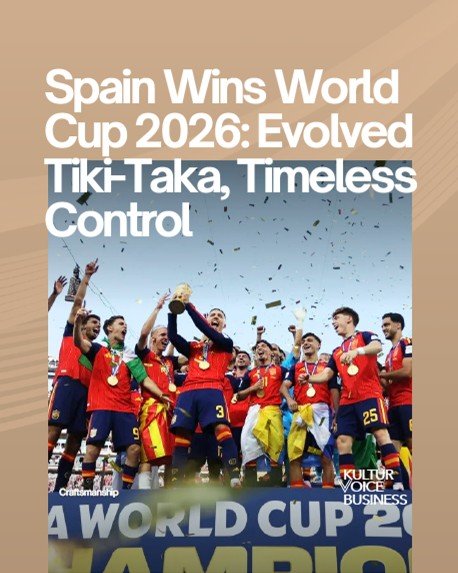

Spain’s victory at the 2026 FIFA World Cup marks the ultimate culmination of a decade-long national transformation, proving that sustained international success requires both tactical adaptability and a continuous talent development engine. Under head manager Luis de la Fuente, La Roja restored their place at the summit of global football by modernizing their traditional footballing identity and trusting a deeply integrated youth system built over years.
At the core of Spain’s campaign was a refined tactical framework often referred to as “Tiki-Taka 2.0.” Rather than abandoning the nation’s famed possession-oriented philosophy, De la Fuente intelligently modernized it to meet the fast-paced demands of modern tournament football. Spain retained their insistence on technical control and short passing, but added greater verticality, rapid counter-transitions, and aggressive exploitation of open space. Instead of probing endlessly with hundreds of sideways passes, this side attacked with directness and speed. Complemented by a relentless high-intensity press that forced turnovers deep in opposition territory, De la Fuente established an extraordinarily balanced side, one anchored by unprecedented defensive solidity and minimal expected goals allowed.
Crucially, this modernized tactical blueprint flourished because of Spain’s structured youth player regeneration system. Having coached within the Spanish federation for over a decade across the U-19, U-21, and Olympic teams, De la Fuente brought unprecedented continuity to the senior squad. Working closely alongside youth coaches like Santi Denia, Spain established a consistent tactical philosophy throughout every age division. Talents like Pau Cubarsí and Lamine Yamal made seamless transitions to the World Cup stage because they were already steeped in the team’s precise operational setup. This federation-wide alignment allowed De la Fuente to build a culture where “the team is the star,” selecting players based purely on system suitability rather than club popularity.
Ultimately, Spain’s 2026 World Cup victory completed a magnificent tactical and structural renaissance. By pairing a dynamic, vertically driven evolution of tiki-taka with an unmatched youth development pipeline, La Roja provided a masterclass in modern international football. Their triumph proves that true dominance is achieved through clear structural vision, institutional trust in youth, and an absolute commitment to collective harmony over individual stardom.
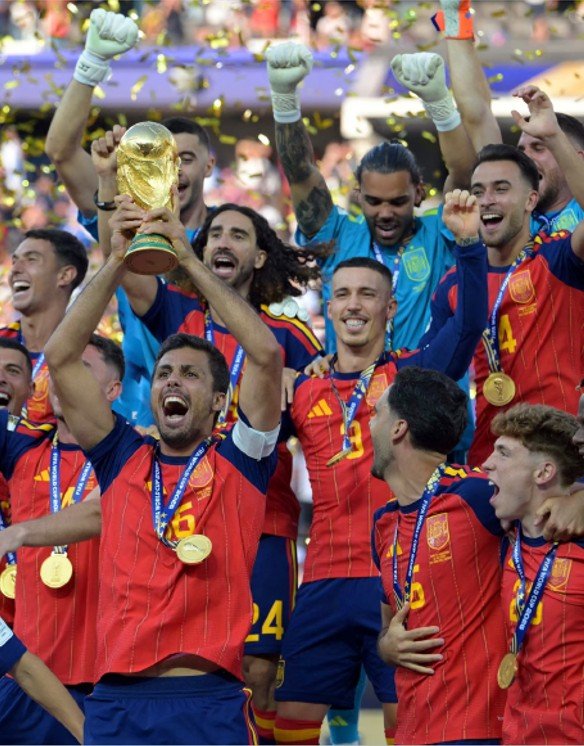 Congratulations on your victory as the World Cup 2026 Champion, Spain!
Congratulations also to captain Rodri, Rodrigo Hernández Cascante, who won the FIFA World Cup 2026 Golden Ball Award. A defensive midfielder known for his passing, composure, playmaking, and physicality, Rodri is widely regarded as one of the best in the world.
Congratulations also to Spain centre-back Pau Cubarsi has won the FIFA Best Young Player Award, presented by Aramco, for his outstanding performances during the FIFA World Cup 2026™. Cubarsi never put a foot wrong as he helped Spain register seven clean sheets during the tournament, forging a fabulous partnership alongside Aymeric Laporte at the heart of a defence that conceded just a single goal, in their 2-1 quarter-final win against Belgium. Cubarsi, who has become one of only five teenagers in history to have won the World Cup, is also the first defender to win this award.
Latest news from Kultur Voice Business