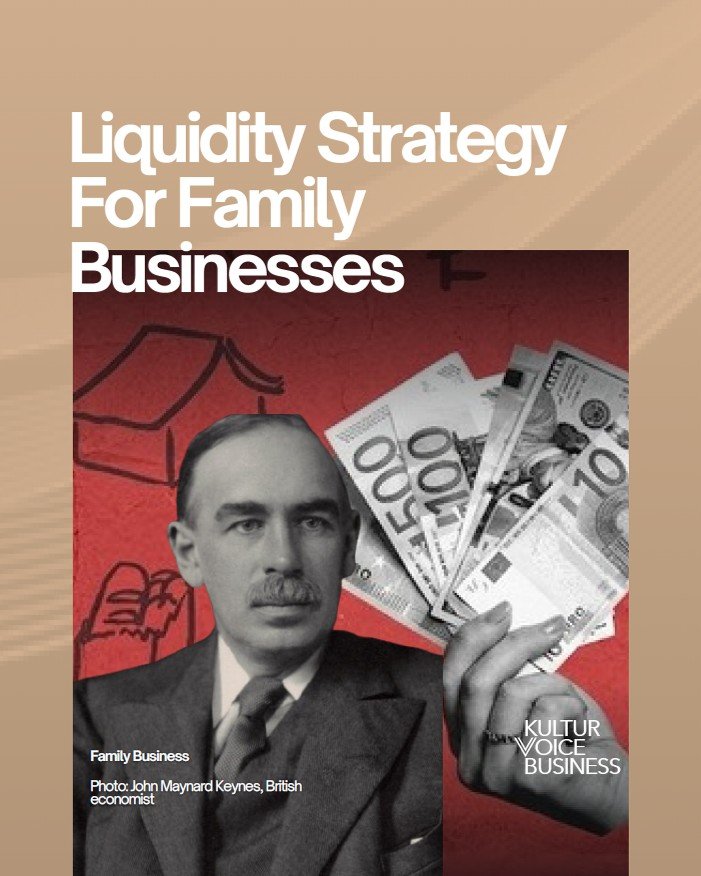

Keynes’ Liquidity Theory is a fundamental concept in economics introduced by the British economist John Maynard Keynes that matter for family business. The theory explains why individuals and businesses prefer to hold money in liquid form rather than investing it in other assets. Cash is king, people say.
According to Keynes, people demand liquidity for three main reasons: the transaction motive, which covers everyday expenses; the precautionary motive, which prepares for unexpected financial needs; and the speculative motive, where individuals hold cash while waiting for better investment opportunities. Keynes argued that the demand for liquidity influences interest rates because when people prefer to hold cash, less money is available for lending and investment. As a result, economic activity may slow down, especially during periods of uncertainty.
But why people prefer to hold cash instead of investing it? What circumstances that drive it? The practice of holding cash happens when there are unpredictable investment opportunities or to avoid capital losses when interest rates are volatile.
A well-known example of a liquidity crisis occurred during the Great Depression. Following the stock market crash of 1929, businesses failed, unemployment surged, and consumer confidence collapsed. Banks experienced widespread withdrawals as depositors rushed to convert their savings into cash, fearing the failure of financial institutions. Since banks held only a fraction of deposits in liquid form, many were unable to meet these withdrawal demands, leading to bank failures across the United States and other countries. At the same time, businesses and consumers became reluctant to spend or invest, choosing instead to hold cash. This sharp increase in liquidity preference reduced investment and consumption, deepening the economic downturn. The Great Depression demonstrated how excessive demand for liquidity can worsen a recession and create a prolonged cycle of declining production, income, and employment.
 For family businesses, Keynes’ liquidity theory highlights the importance of maintaining sufficient cash reserves to survive periods of financial uncertainty. Unlike large corporations, family-owned firms often rely on limited financing sources and may face greater challenges in obtaining external capital during a crisis. Therefore, family businesses should establish emergency cash funds, carefully monitor cash flow, and avoid taking on excessive debt during periods of economic stability. Diversifying revenue streams and maintaining strong relationships with banks and suppliers can also improve financial flexibility when liquidity becomes scarce.
Additionally, family businesses should prepare contingency plans that include reducing non-essential expenses, delaying unnecessary investments, and prioritizing core business operations. Open communication among family members and professional financial planning are equally important to ensure that emotional decision-making does not jeopardize the firm’s long-term sustainability. By balancing liquidity with strategic investment, family businesses can better withstand financial crises while remaining prepared to seize growth opportunities when economic conditions improve.
Building a resilient family business requires clarity, discipline, and long-term thinking. If you’re serious about strengthening governance, preparing the next generation, and protecting your legacy, explore more insights on KVB.global. Share this article with your partners or family members and follow Kultur Voice Business or KVB to stay ahead with perspectives that turn complexity into clarity.
Latest news from Kultur Voice Business