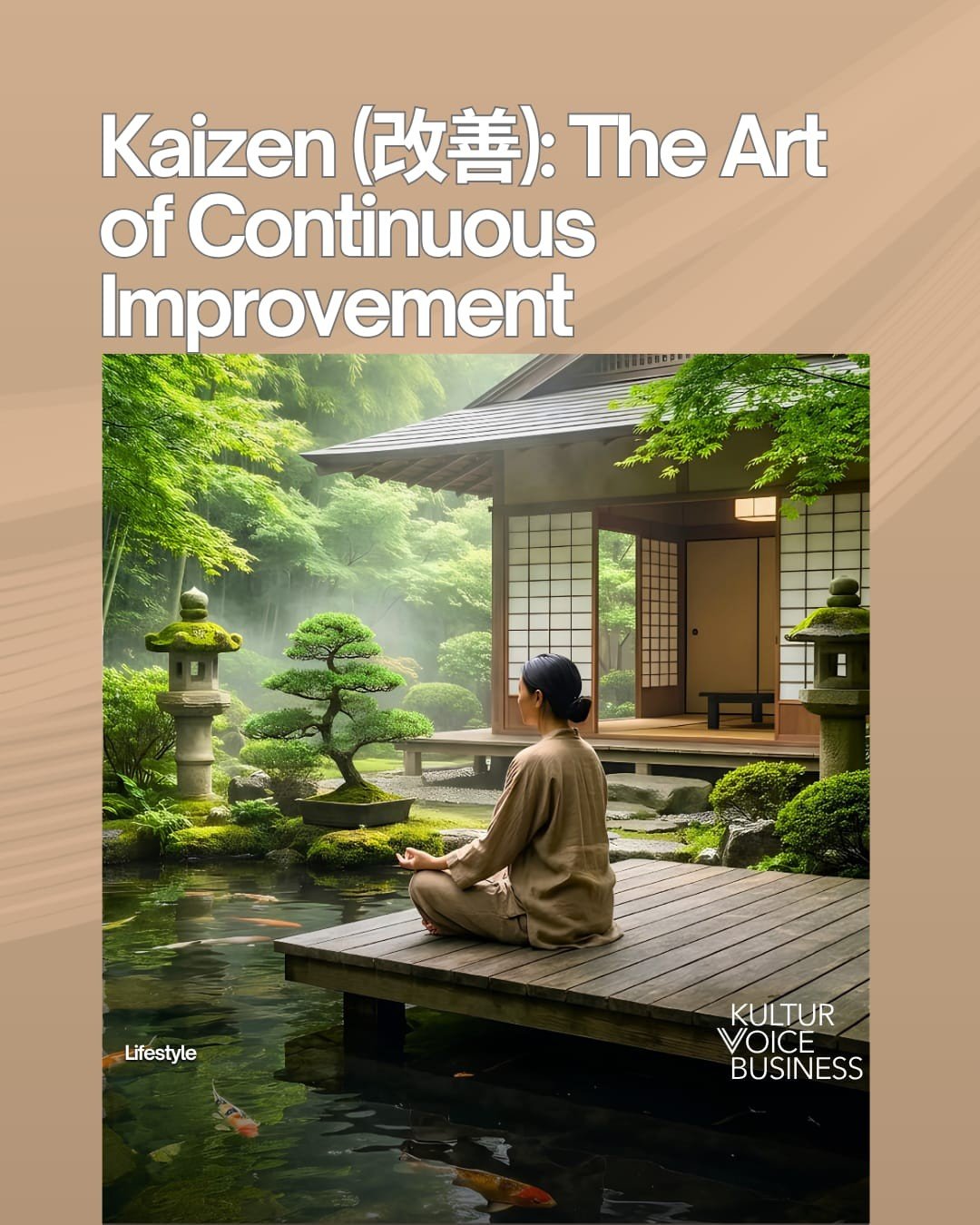

In a world that often celebrates overnight success, the Japanese philosophy of Kaizen (改善) offers a different perspective. Meaningful growth does not always come from major changes, but from small improvements made consistently over time.
Kaizen derives from two Japanese words, kai (change) and zen (for the better), and people commonly translate it as continuous improvement. Kaizen’s concept became internationally associated with Japan’s postwar industrial development particularly within Toyota’s production system.
Kaizen became Japanese companies adapted quality-management methods, encouraged close attention to processes, and treated workers’ observations as valuable sources of knowledge. Toyota’s production system became a notable example of process thinking. Company leaders urged employees to spot inefficiencies, trace their causes, and propose practical adjustments. They refused to accept recurring problems as inevitable. In this setting, Kaizen was not merely a technique for increasing output. Kaizen became a shared discipline based on observation, cooperation, standardization, and respect for the people who perform the work.
However, Kaizen principles extend far beyond factories and workplaces. Kaizen is a mindset at its core. It encourages people to reflect constantly. They search for better ways of doing things.
Unlike approaches that demand immediate perfection, Kaizen reduces change to manageable experiments. We break a large goal into small actions we begin today, observe honestly, and adjust tomorrow. The process usually follows a practical rhythm. It identifies a difficulty, understands the current situation, tests a modest improvement, evaluates the result, and retains what works. This method lowers resistance because it replaces intimidating leaps with repeatable steps. It also treats improvement as a habit of learning rather than a single event.
One of the key ideas behind Kaizen is that improvement is a continuous journey rather than a destination and that successful individuals and organizations can always find ways to grow. Unlike approaches that focus on achieving perfection immediately, Kaizen emphasizes progress through small, manageable steps. Instead of setting overwhelming goals, this philosophy encourages individuals to ask simple questions: What can I improve today? What habits can I adjust? What small action can bring me closer to my goals?
For example, someone who wants to build a healthier lifestyle does not necessarily need to completely change their routine overnight. A Kaizen approach might begin with drinking more water, taking a short walk every day, or improving sleep habits gradually. Over time, these small improvements accumulate and create meaningful changes.
Kaizen also teaches the importance of reflection without complacency. Mistakes are not viewed simply as failures, but as opportunities to understand what went wrong and discover solutions. Mistakes and delays are treated as signals that a process can be understood more clearly, not merely as reasons to assign blame. By examining daily routines, behaviours, and decisions, people can develop greater awareness of themselves and their surroundings. Once an improved method proves useful, it can become a new standard—a stable starting point for the next round of learning. This explains an apparent paradox at the heart of Kaizen: standards matter, but no standard is considered permanently perfect. Improvement remains continuous because circumstances, needs, and knowledge continue to change.
Japan’s culture is often described through the balance it maintains between continuity and change. Ancient shrines stand beside modern railways; seasonal festivals coexist with advanced technology; and everyday practices frequently emphasize respect, attentiveness, discipline, and harmony with others. Concepts such as wa (social harmony), omotenashi (thoughtful hospitality), mottainai (regret over waste), and shokunin kishitsu (a craftsperson’s commitment to mastery) reveal a cultural preference for care, responsibility, and refinement. These ideas do not describe every person or situation in Japan, but they provide useful context for understanding why gradual, collective improvement has become such an influential way of thinking.
Kaizen’s deeper value lies in combining patience with responsibility: paying attention, involving the people affected, reducing waste, and making progress sustainable. In a world that often rewards speed and spectacle, Kaizen offers a quieter vision of change. Whether applied to personal growth, education, career development, relationships, or community life, Kaizen suggests that becoming better does not require becoming someone entirely different. It begins with seeing the present clearly and improving it, one thoughtful step at a time.
Latest news from Kultur Voice Business