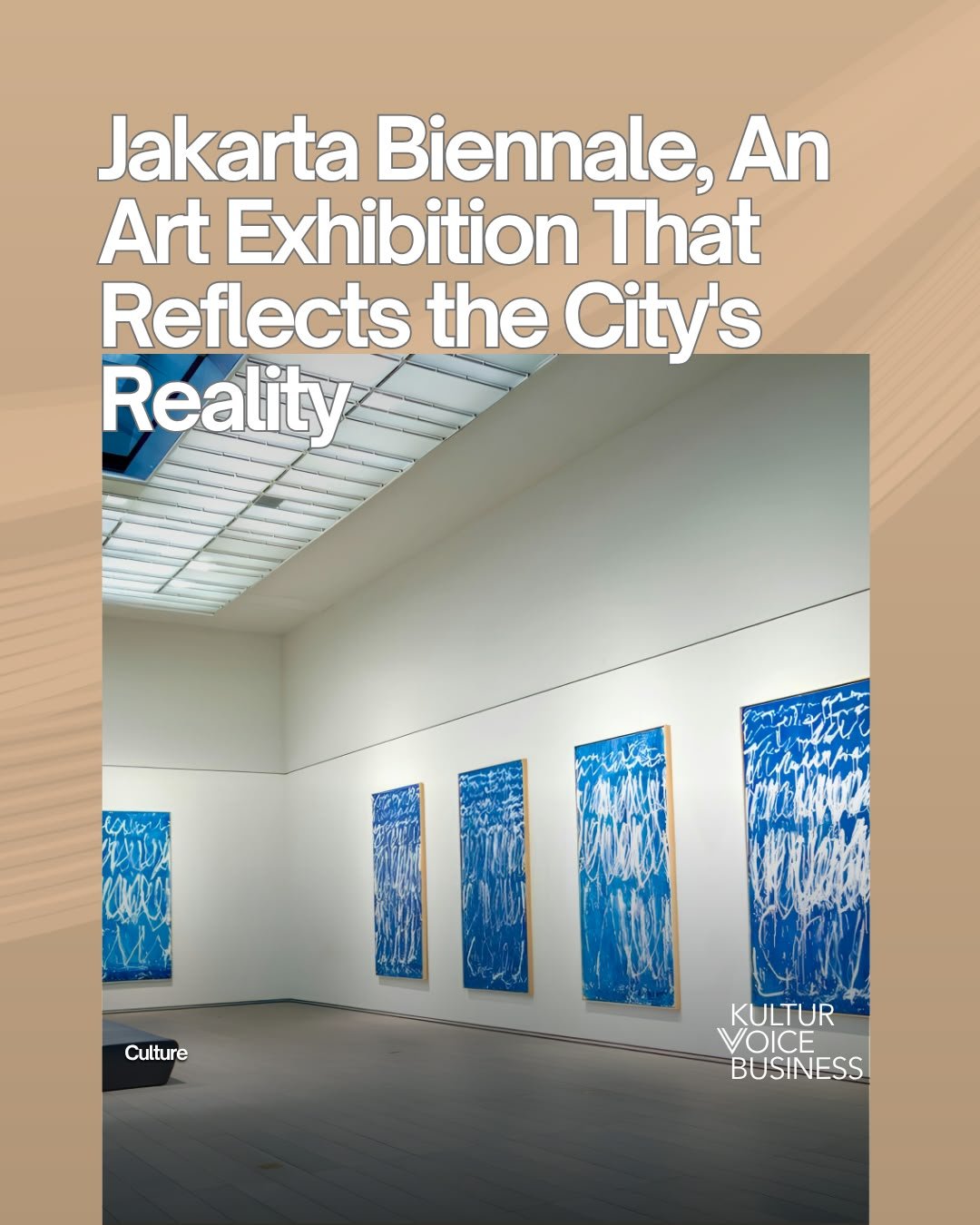

Art offers a different way to understand the realities of urban life, from displacement and rising living costs to the quiet determination of those who continue to call Jakarta home.
A city is more than its skyline, infrastructure, or economic ambitions. It is also shaped by the people who inhabit it, the communities they build, and the compromises they make to remain part of it. These realities take center stage at Jakarta Biennale 2026, which returns with KEBAL, an edition exploring human resilience in the face of an increasingly challenging urban landscape.
Taking place from 4–8 October at Gedung Trisno Soemardjo, Taman Ismail Marzuki, with additional programmes in collective spaces across Jakarta and its surroundings until November 24, the biennale approaches contemporary art as a means of examining the lived experiences behind the city’s constant transformation.
The theme KEBAL emerges from a familiar yet increasingly pressing reality: the gradual displacement of Jakarta’s residents. As property prices and living expenses continue to rise, some are pushed away from the neighbourhoods they once called home. Others find themselves navigating a city that remains essential to their livelihoods, even as the cost of belonging grows more difficult to bear.
Rather than treating resilience as an abstract ideal, this year’s biennale draws from the experiences of Jakarta’s residents and communities confronting similar circumstances around the world. Through contemporary artistic practices, it invites audiences to consider what it means to endure, adapt, and preserve a sense of belonging amid uncertainty.
The exhibition’s significance also extends beyond the artworks themselves. Organised by Majelis Jakarta, a collective of Jakarta-based art communities, the 2026 edition continues the biennale’s artist-led spirit. This approach places collaboration and shared resources at the heart of its cultural practice, reinforcing the importance of sustaining an independent and interconnected arts ecosystem.
By bringing together artists and collectives, Jakarta Biennale creates room for perspectives that might otherwise remain outside mainstream conversations about urban development. Art becomes a way to make visible the human experiences behind broader social and economic shifts, encouraging visitors to reconsider the relationship between a city and its inhabitants.
KEBAL presents resilience not simply as the ability to withstand hardship, but as the determination to imagine a different future. In a city that rarely stands still, the biennale offers an invitation to pause, look closer, and recognise the people whose stories give Jakarta its character.
Latest news from Kultur Voice Business