

When discussing football, attention often focuses on star players, strategy, or match results. But behind a team’s performance, there’s one factor that often makes the difference: leadership. At the 2026 World Cup, several coaches have demonstrated that success isn’t just built on tactics, but also on culture and human relationships.
The FIFA World Cup 2026 is the largest football tournament in history, featuring 48 teams and intense global competition. In such a high-pressure environment, the role of the football coach is crucial. A coach is not only responsible for tactics and training but also serves as the main leader who guides the team toward success.
A football coach acts as the central decision-maker, responsible for preparing players physically, tactically, and mentally. They design strategies, organize training sessions, and ensure that every player understands their role within the team. In the World Cup, where preparation time is limited, coaches must communicate their ideas clearly and quickly so that players can perform effectively on the field.
Leadership is one of the most important aspects of a coach’s role. A successful coach sets a clear vision, motivates players, and builds strong relationships within the team. They must inspire confidence, maintain discipline, and help players stay focused under pressure. In a tournament like the World Cup, where emotions and expectations are high, the coach also acts as a psychologist, managing the team’s morale and emotional stability.
In addition, coaches must be adaptable and make quick decisions during matches. They adjust tactics, choose lineups, and respond to unexpected situations such as injuries or changes in the game. Modern World Cup coaches are often described as strategists and leaders who manage not only tactics but also team culture, unity, and crisis situations. Leadership in football is essential because talent alone does not guarantee success. Teams that perform well in the World Cup are usually those with strong leadership, good teamwork, and clear organization. A coach plays a key role in building this unity and ensuring that all players work together toward a common goal.
Let’s learn about some of the outstanding coaches during FIFA World Cup 2026!
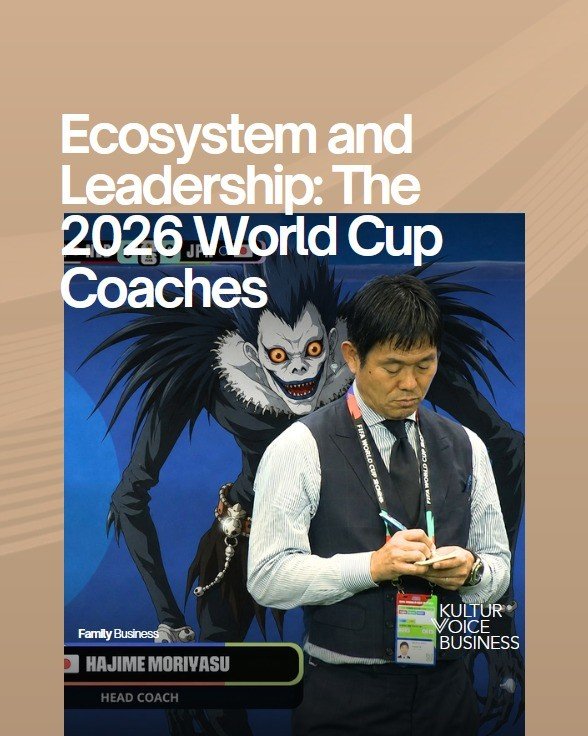
Hajime Moriyasu, implemented the “Success Cycle Model” that prioritizes quality relationships within the Japanese national team. Hajime Moriyasu built the Japanese national team on a foundation of respect, open communication, and trust, allowing players to feel safe thinking and acting independently. Through respect and bottom-up communication, he fostered a sense of psychological safety. Players felt valued as professionals, enabling them to think and act independently for the team’s success.
For Julian Nagelsmann, coaching the German national team is 70% social competence and only 30% tactics. He builds trust through honesty, enthusiasm, and the courage to admit mistakes. This humane approach is crucial to ensuring optimal player psychological well-being on the pitch. Julian Nagelsmann even stated that coaching is more about social competence than tactics. Honesty, enthusiasm, and the courage to admit mistakes are ways to build trust within a team.
Scaloni led the Argentine national team to victory through extraordinary tactical flexibility and the “La Scaloneta” spirit of unity. He didn’t stick to one system but instead adapted to the opponent. This direct and vertical approach allowed players freedom of creativity within a solid defensive structure. Lionel Scaloni led Argentina to success through a strong sense of community.
Meanwhile Mauricio Pochettino, coach of the United States national team, emphasized a high-energy approach and consistent support, especially for young players. Using a disciplined counter pressing system, he focused on building player confidence from an early age. For him, creating a comfortable environment for the team is key to achieving maximum performance and long-term success.
This lesson isn’t just relevant on the pitch. In business, organizations, and communities, leaders who can build trust, a sense of security, and a shared purpose often produce stronger teams than those who rely solely on individual ability.
In conclusion, the football coach plays a vital leadership role at the FIFA World Cup 2026. They are responsible for strategy, motivation, decision-making, and team unity. A great coach can transform a group of talented individuals into a successful team, proving that leadership is one of the most important factors in achieving success in the World Cup.
What leadership qualities are most important for building a successful team?
Craftsmanship reflects discipline, patience, and a commitment to excellence—values that translate across every industry including sports. If you appreciate depth over noise, explore more stories on KVB.global. Share this with fellow and follow Kultur Voice Business or KVB for perspectives that celebrate meaningful work.
Latest news from Kultur Voice Business

zimerov ertover 13 Aug 2026
I was recommended this web site by my cousin. I am not sure whether this post is written by him as nobody else know such detailed about my trouble. You are wonderful! Thanks!