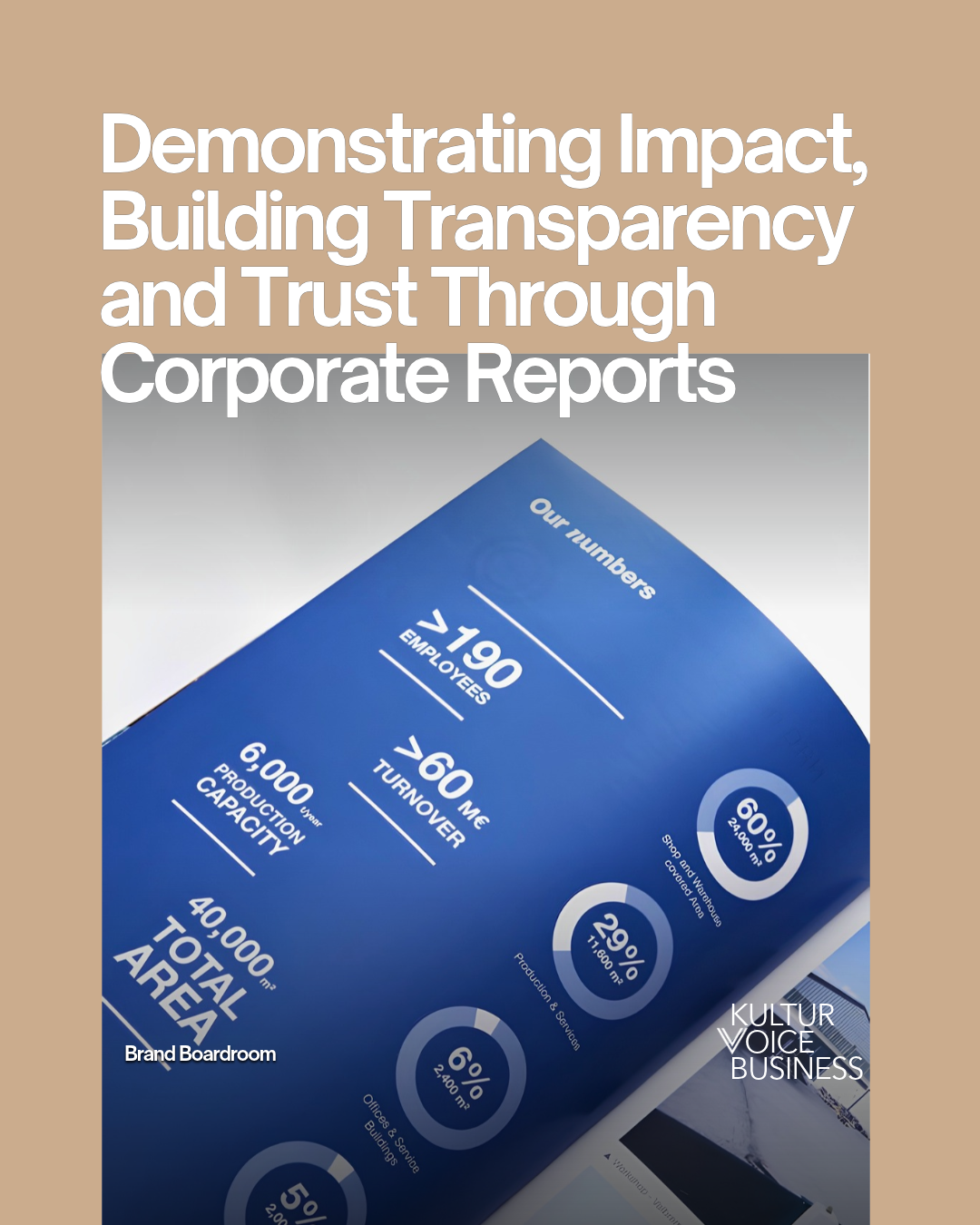

While businesses are typically judged by their products and financial performance, stakeholders increasingly look beyond commercial success to understand a company’s true economic, social, and community impact. A corporate impact report offers a structured way to communicate this broader value, connecting daily operations to wider industry contributions, future direction, and societal responsibilities. Unlike traditional promotional materials, publishing an impact report demonstrates open transparency, strengthens credibility, builds trust with investors and the public, and clarifies what the organization truly stands for.
Why Corporate Reports Matter for Business Transparency
Transparency is the foundation of long-term business relationships, fulfilling a shared need for reliable information among investors, clients, partners, and employees. Rather than relying on fragmented updates, a corporate impact report serves as a comprehensive reference point that consolidates a company’s progress, initiatives, and contributions. This allows organizations to present a complete picture of their development. It explains how they have adapted to industry shifts, navigated economic challenges, and created value for the sectors and people they serve.
True transparency requires a balanced perspective rather than a claim of perfection. A meaningful report openly acknowledges obstacles, shifting priorities, and areas for improvement, helping stakeholders understand the reasoning behind a company’s future direction. Supported by relevant data and clear examples, a corporate impact report moves beyond a simple record of past activities to build lasting trust by demonstrating what an organization has accomplished, how it operates, and where it is headed.
What Does a Good Corporate Impact Report Look Like?
An effective corporate impact report should communicate an organisation’s contributions from several perspectives. One important area is its impact on the economy, including how its operations, investments, employment opportunities, and partnerships support economic growth and resilience. It should also highlight contributions to other industry sectors, such as agriculture, lifestyle, education, financial services, industrial operations, and manufacturing, demonstrating how the company’s activities create value beyond its immediate business operations.
The report should also explain the company’s products and services, including who benefits from them and how they address specific needs. Rather than simply listing business offerings, organisations should illustrate the problems they help solve and the value they create. For example, a technology company may help businesses improve operational efficiency, while a financial services provider may support small businesses in accessing resources for expansion. Relevant examples and measurable outcomes can make these contributions more tangible to stakeholders.
Finally, a corporate impact report should communicate the organisation’s future ambitions. This includes what the company hopes to accomplish, which areas it intends to develop, and what kind of impact it wants to create in the coming years. By connecting past achievements with future objectives, businesses can present a clearer picture of their long-term direction and demonstrate their commitment to continued growth and meaningful contributions.
Turning Business Achievements into a Meaningful Corporate Narrative
Presenting information is only one part of developing an effective corporate report. How that information is organised and communicated also determines whether stakeholders can understand its significance.
A collection of statistics, project descriptions, and business milestones may provide useful information, but these details become more meaningful when connected through a clear corporate narrative.
Businesses should consider how their achievements reflect their values, business priorities, and contributions to the industries they serve. Relevant examples, supporting data, project highlights, and stakeholder stories can help illustrate the significance of their activities.
Consistency is equally important. The information presented in a corporate report should align with the organisation’s broader communications, including its website, media announcements, and other corporate materials. This helps establish a coherent understanding of the company across different communication channels.
The report should also be developed with its intended audiences in mind. Investors may be interested in business development and long-term growth, while clients may want to understand the practical value of the company’s products and services. Industry partners may be more interested in collaboration opportunities and sector contributions.
By considering these different perspectives, companies can create reports that communicate relevant information without losing sight of their overall identity.
KVB Global: Demonstrating Impact Through Corporate Reporting
At KVB Global, we recognise corporate reporting as an important part of communicating business development, transparency, and long-term contributions.
Our own experience is reflected in the Kultur Voice Business Impact Report 2011–2026 (https://kvb.global/kulturvoicebusinessimpactreport2011to2026/), published to mark the company’s 15th anniversary. The report documents KVB’s evolution from a public relations firm founded in November 2011 into a content-with-commerce company serving businesses and gig workers.
It also highlights our contributions across four impact categories: economic resilience, inclusive growth, client sector impact, and employee thought leadership and engagement. These areas reflect how our work has developed beyond communications services, encompassing partnerships, business solutions, technology-led transformation, and capacity-building initiatives.
Looking ahead, this report also communicates our ambition to connect content, cultures, and data to advance commerce in distinctive consumer products.
This report represents how an organisation can bring together its history, business activities, industry contributions, and future direction into one corporate narrative.
For companies looking to strengthen their corporate reputation and communicate their impact more effectively, developing a dedicated corporate report is a valuable step. It provides an opportunity to document achievements, demonstrate contributions, and give stakeholders a clearer understanding of the business and its long-term ambitions.
KVB Global Agency offers strategic communications consulting and corporate content development to help businesses translate their achievements, expertise, and contributions into meaningful corporate reports. From identifying key impact areas and developing the report’s narrative to structuring information and presenting business milestones, we help organisations communicate their value through clear and credible corporate storytelling.
Explore our Kultur Voice Business Impact Report 2011–2026
(https://kvb.global/kulturvoicebusinessimpactreport2011to2026/) as an example, and feel free to contact KVB Global Agency at hello@kvb.global to discuss developing a corporate impact report for your organisation.
Latest news from Kultur Voice Business