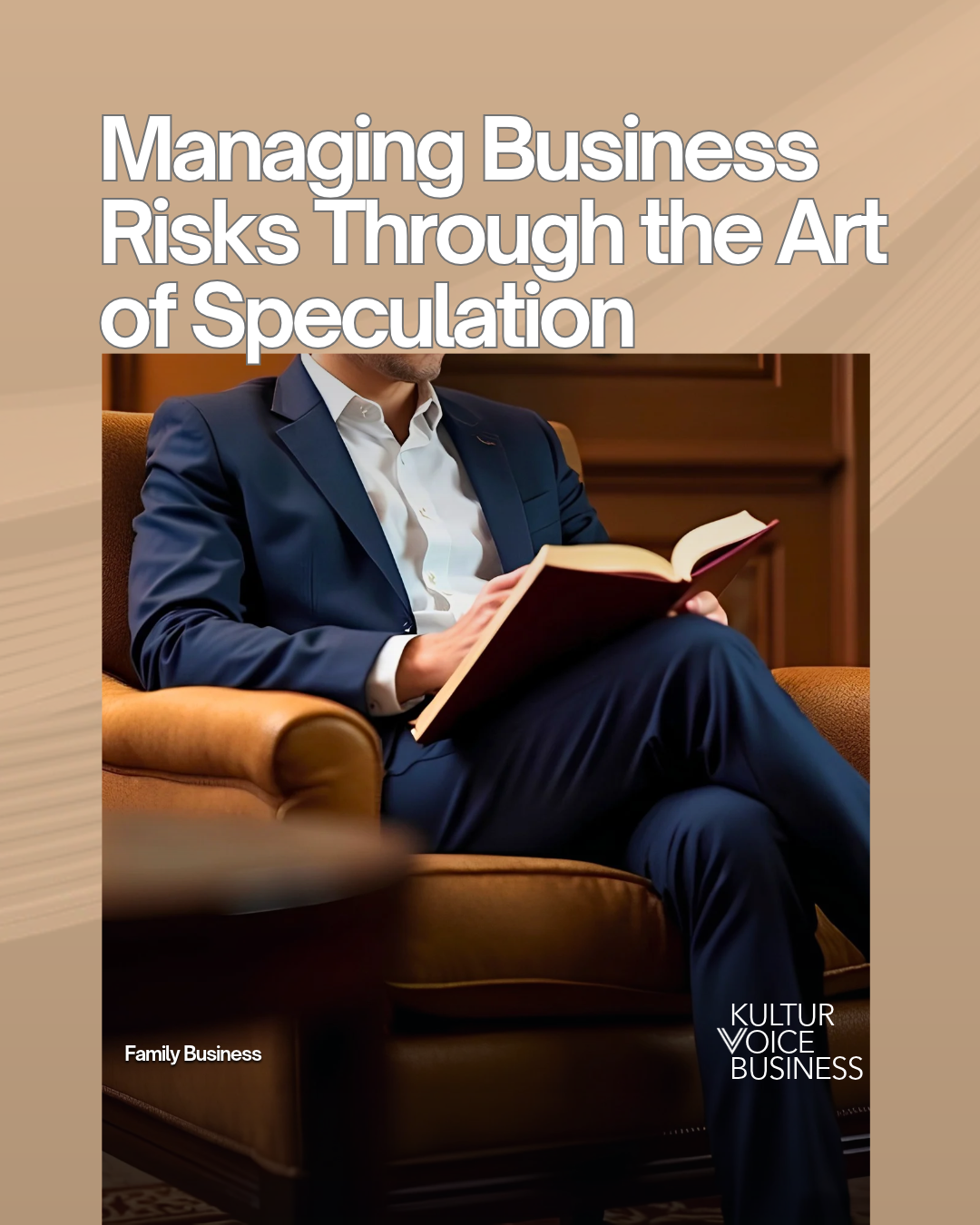

In his 1930 classic The Art of Speculation, market pioneer Philip L. Carret argued that because the future is inherently uncertain, every investor is, by necessity, a speculator. While Carret wrote for liquid public markets, his insights offer a powerful blueprint for family enterprises navigating multi-generational growth and capital preservation. By adapting five of Carret’s core tenets, family businesses can transform emotional ownership into disciplined stewardship.
First, family enterprises must master rational speculation over gambling. Founders and successors often mistake unexamined gut feelings or emotional investments for strategic ambition. True speculation demands rigorous feasibility studies, cold data, and analytical discipline before committing capital to new ventures or expansions, separating calculated risk from reckless speculation.
Second, families must adopt the rule to cut losses quickly and protect capital. One of the greatest threats to family wealth is holding onto failing business units out of sentimental nostalgia or reverence for an ancestor’s vision. Long-term survival requires separating heritage from economic viability, setting objective performance benchmarks, and having the courage to prune underperforming legacy assets to fund high-growth opportunities.
Third, long-term security relies on strategic diversification. Concentrating nearly all net worth in a single operating business leaves the family vulnerable to sudden industry disruptions. Systematically redirecting a portion of business profits into a holding structure or family office to build non-correlated assets ensures resilience across generations.
Fourth, sustainable governance requires evaluating leadership with cold objectivity. Carret emphasized that superior management transforms average assets, whereas poor leadership destroys great ones. Families must dismantle nepotism by implementing strict competency criteria for family members seeking executive roles. When internal candidates fall short, appointing qualified non-family professionals protects both the business and the family’s legacy.
Finally, navigating market dynamics mirrors managing family sentiment. Just as public market prices fluctuate on crowd emotion, family enterprises can be destabilized by internal anxiety or unrealistic expectations from non-operating shareholders. Transparent governance—maintained through formal boards and family councils—aligns ownership expectations with intrinsic business reality.
The art of speculation for family businesses is not about short-term trading, but about rigorous capital allocation, objective leadership, and strategic agility. By applying these principles, family enterprises build structured longevity, ensuring their legacy endures across generations.
Latest news from Kultur Voice Business