
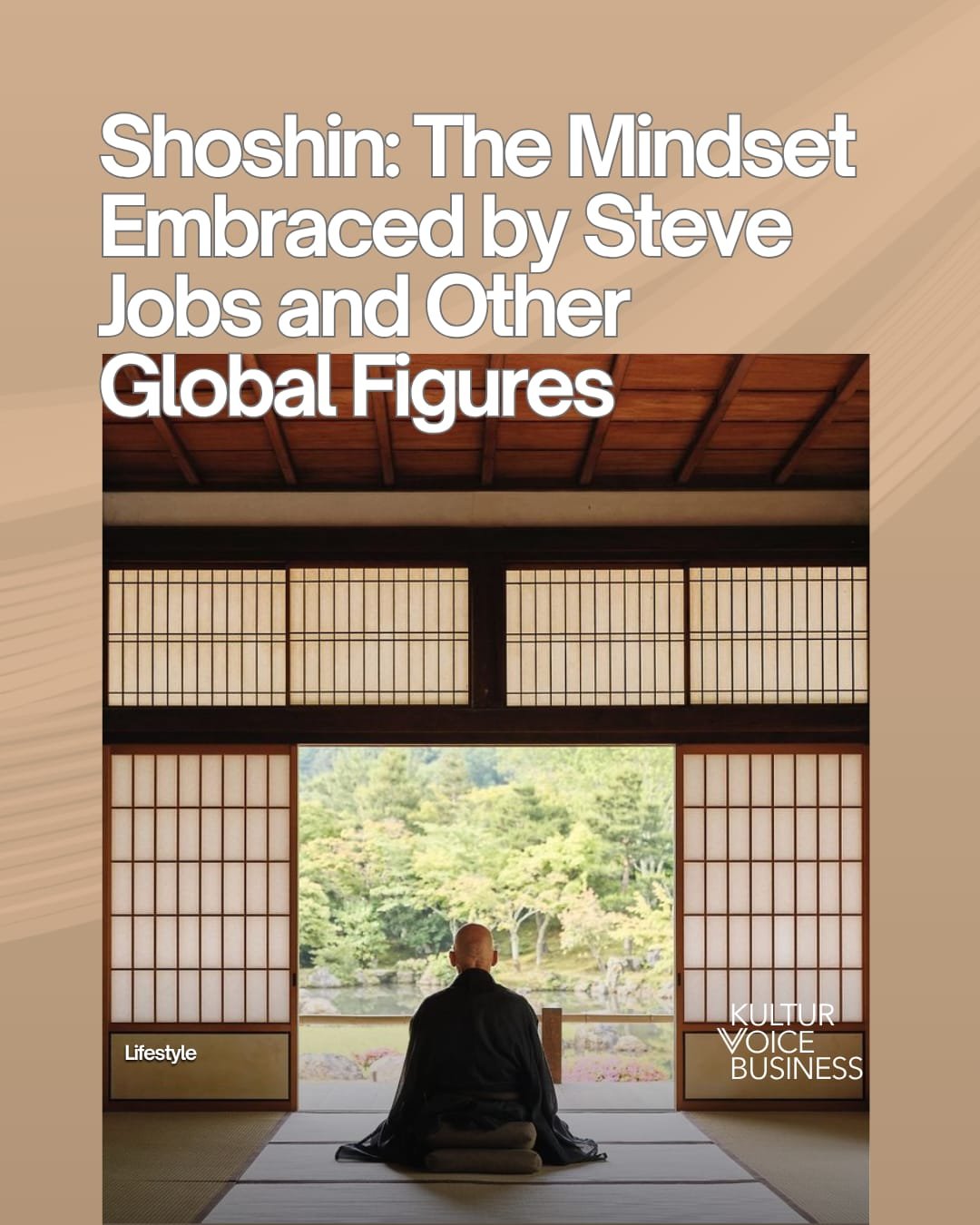

The Power of Shoshin: How Cultivating a “Beginner’s Mind” Drives Strategic Innovation and Leadership Excellence
In an era characterized by accelerated market disruptions, shifting technological paradigms, and complex competitive dynamics, seasoned leaders face an unexpected strategic vulnerability: the cognitive trap of their own expertise. While extensive experience provides pattern recognition and operational velocity, it can inadvertently entrench rigid dogmas and blind spots.
To counteract intellectual stagnation, forward-thinking executives, family enterprise stewards, and visionary founders are returning to an ancient philosophical discipline: Shoshin (初心).
Rooted in Zen Buddhist philosophy, Shoshin synthesizes two Japanese kanji: sho (初, signifying “initial” or “beginner”) and shin (心, translating to “mind,” “spirit,” or “heart”). Collectively translated as the “beginner’s mind,” it denotes an intellectual disposition characterized by uncompromised openness, eager curiosity, and a complete absence of fixed preconceptions when engaging with any problem, domain, or endeavor—irrespective of how accomplished one has become.
Historical Provenance: From Classical Zen to Modern Global Thought
The philosophical lineage of shoshin reflects centuries of rigorous contemplation and intellectual refinement:
- 13th-Century Origins: The doctrine was systematically articulated by Dōgen Zenji, the founding master of the Sōtō Zen school in Japan, and immortalized within his seminal treatise, the Shōbōgenzō. Dōgen taught that true understanding requires discarding intellectual arrogance to witness reality as it organically unfolds.
- Classical Arts and The Proverb: In 1424, the renowned Noh playwright and aesthetic philosopher Zeami Motokiyo established the timeless Japanese maxim: Shoshin wasuru bekarazu (初心忘るべからず)—”Never forget the beginner’s mind.” For Zeami, an artist who assumes total mastery has already commenced their artistic decline.
- Global Resonance in the 20th Century: The philosophy gained widespread international recognition through the venerated Zen monk Shunryū Suzuki. In his foundational 1970 work, Zen Mind, Beginner’s Mind, Suzuki distilled the core thesis into an enduring aphorism:“In the beginner’s mind there are many possibilities, but in the expert’s mind there are few.”
Overcoming the Perils of Expertise: Cognitive Rigidity and the Einstellung Effect
In behavioral science and organizational psychology, extensive domain familiarity frequently breeds cognitive entrenchment. When an executive achieves the status of an acknowledged authority, internal frameworks become self-reinforcing, narrowing the strategic peripheral vision.
Practicing shoshin serves as an intentional countermeasure against:
- The Einstellung Effect: The psychological predisposition to solve new problems using pre-existing, habitual mechanisms, even when more elegant, disruptive, or cost-effective solutions exist.
- Confirmation Bias and Legacy Anchoring: The tendency of leadership teams to validate legacy assets and historical practices rather than interrogating their ongoing market relevance.
- Intellectual Hubris: The perilous assumption that past commercial triumphs guarantee future market resilience.
By deliberately adopting a beginner’s mind, leaders suspend habitual assumptions. They cultivate the discipline to ask first-principles questions, identify underlying structural shifts, and welcome cross-disciplinary insights that conventional industry wisdom often disregards.
The Universal Architecture of Shoshin: From Budō to High-Stakes Professions
The application of shoshin extends far beyond monastic contemplation; it is embedded across high-precision Japanese crafts and demanding professional disciplines:
- Japanese Martial Arts (Budō): In arts such as Kendo, Aikido, and Judo, shoshin represents the primary psychological posture. Even tenth-degree grandmasters return to fundamental footwork and core strikes with the modesty and focused attentiveness of a white belt, recognizing that technical mastery requires continuous self-calibration.
- Traditional Japanese Calligraphy (Shodō): Master calligraphers approach every stroke with the exact breath control and deliberateness of a novice learning to hold the brush, ensuring each character remains vibrant rather than mechanically reproduced.
- Precision Disciplines: In architecture, advanced software engineering, high-stakes surgery, and higher education, treating complex problems through an unconditioned lens prevents operational complacency, inspires elegant system designs, and minimizes critical systemic oversights.
Strategic Business Leadership: Dismantling Corporate Complacency
In commercial enterprise, shoshin has evolved from a philosophical ideal into a critical strategic capability. For family businesses navigating intergenerational transitions and enterprise leaders managing digital modernization, Shoshin wasuru bekarazu acts as an institutional compass—reminding executive teams to safeguard their founding purpose while relentlessly unlearning outdated operating models.
Prominent global innovators have recognized this intrinsic value:
- Steve Jobs: Famously influenced by Zen principles, Jobs built Apple’s product design methodology around stripping away industry baggage to deliver pristine, intuitive user experiences that disrupted established personal computing and telecommunications markets.
- Marc Benioff: The Salesforce Chair and CEO has openly institutionalized shoshin, hosting regular beginner’s-mind listening sessions to evaluate enterprise software challenges without legacy corporate filters.
When enterprise boards and C-suite leaders lead with a beginner’s mind, they foster cultures that reward constructive intellectual dissent, stimulate agile hypothesis testing, and insulate their firms from disruptive external challengers.
Cultivating an Enduring Competitive Moat
Shoshin is neither an admission of ignorance nor an abdication of hard-won competence. Rather, it represents the pinnacle of intellectual sophistication: the conscious choice to remain perpetually curious.
By relinquishing the pride of past achievements, modern executives create the psychological bandwidth required to continuously unlearn, relearn, and adapt. In a dynamic global economy, the enterprises that survive and compound across generations are not necessarily those with the most entrenched operational doctrines, but those whose leaders retain the humility and courage to look at the world with fresh eyes.
Latest news from Kultur Voice Business
