
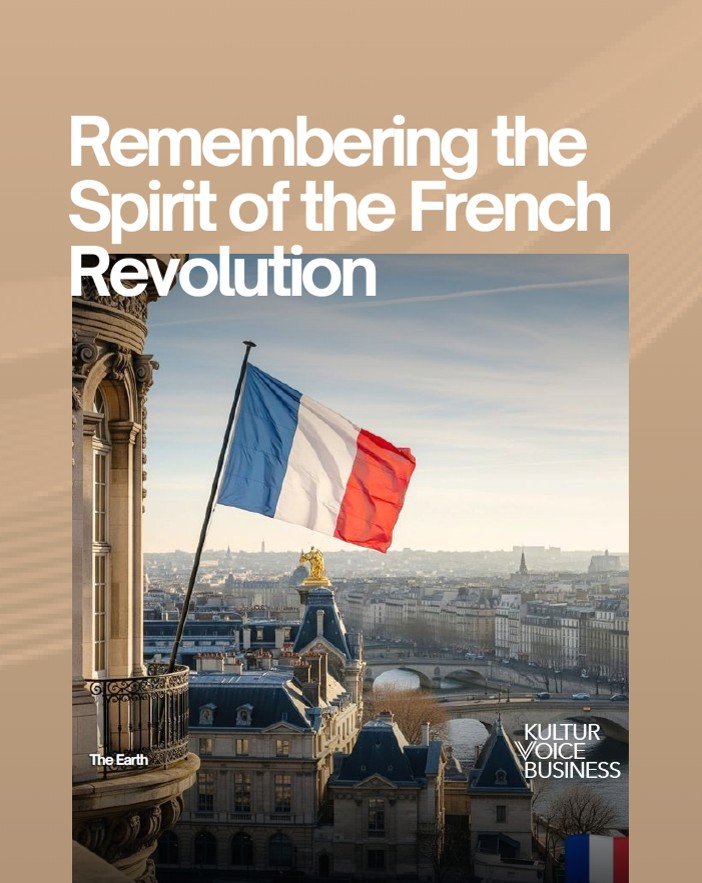

Every year on 14 July, France celebrates Bastille Day, commemorating the storming of the Bastille prison in 1789 — an event that marked the beginning of the French Revolution. More than a national holiday, Bastille Day symbolizes the triumph of liberty over oppression and serves as a reminder of one of history’s most influential political transformations. The French Revolution not only reshaped France but also laid the foundation for democratic ideals that continue to shape societies across the globe.
Bastille Day is another name for French National Day, where its official name in France is La Fête Nationale (National Celebration) and generally Le quatorze juillet (Fourteenth of July). The anniversary of the storming of the Bastille prison fortress is seen as a symbol of the revolt of this modern nation, and the reconciliation of the entire French people within the rule of the constitutional monarchy before the First Republic. Parties and official ceremonies are held all over France. The oldest and largest regular military parade in Europe was held on the morning of July 14, on the Champs-Élysées Street, Paris, in the presence of the President of the Republic, French government officials, and foreign representatives.
Before the Revolution, France was governed under the Ancien Régime, where political power was concentrated in the monarchy and privileges were reserved for the nobility and clergy. Philosophers Jean-Jacques Rousseau, Montesquieu, and Voltaire inspired the revolution.
Jean-Jacques Rousseau (28 June 1712 – 2 July 1778) was a Genevan philosopher, writer and composer whose political philosophy influenced the progress of the Age of Enlightenment throughout Europe besides some aspects of the French Revolution and the development of modern political, economic, and educational thought. Charles Louis de Secondat, baron de La Brède et de Montesquieu (18 January 1689 – 10 February 1755) was a French judge, historian and political philosopher. Montesquieu was the principal source of the theory of separation of powers, which is implemented in many constitutions throughout the world. Montesquieu’s anonymously published The Spirit of Law (De l’esprit des lois, 1748), first translated into English by Thomas Nugent in a 1750 edition, was received well in both Great Britain and the American colonies, where it influenced the Founding Fathers of the United States in drafting the U.S. Constitution. François-Marie Arouet (21 November 1694 – 30 May 1778) or popular for his pen name Voltaire was a French Enlightenment writer, philosopher satirist, and historian. Voltaire was an advocate of freedom of speech, freedom of religion, and separation of church and state. He wrote more than 20,000 letters and 2,000 books and pamphlets. Voltaire was one of the first authors to become renowned and commercially successful internationally.
The revolutionaries challenged the monarchy, and privileges were reserved for the nobility and clergy by advocating the principles of liberty, equality, and fraternity. These ideas were formally expressed in the Declaration of the Rights of Man and of the Citizen (1789), which proclaimed that all citizens possessed equal rights before the law and that sovereignty belonged to the people rather than to a king.
The development of democracy in France had profound impact beyond its borders. The Revolution demonstrated that governments could derive their legitimacy from the consent of the governed instead of hereditary rule. Throughout the nineteenth century, revolutionary movements across Europe, Latin America, and eventually Asia and Africa drew inspiration from the French example. Constitutional governments, representative institutions, and the protection of civil liberties gradually spread as nations embraced the belief that citizens should have a voice in determining their political future.
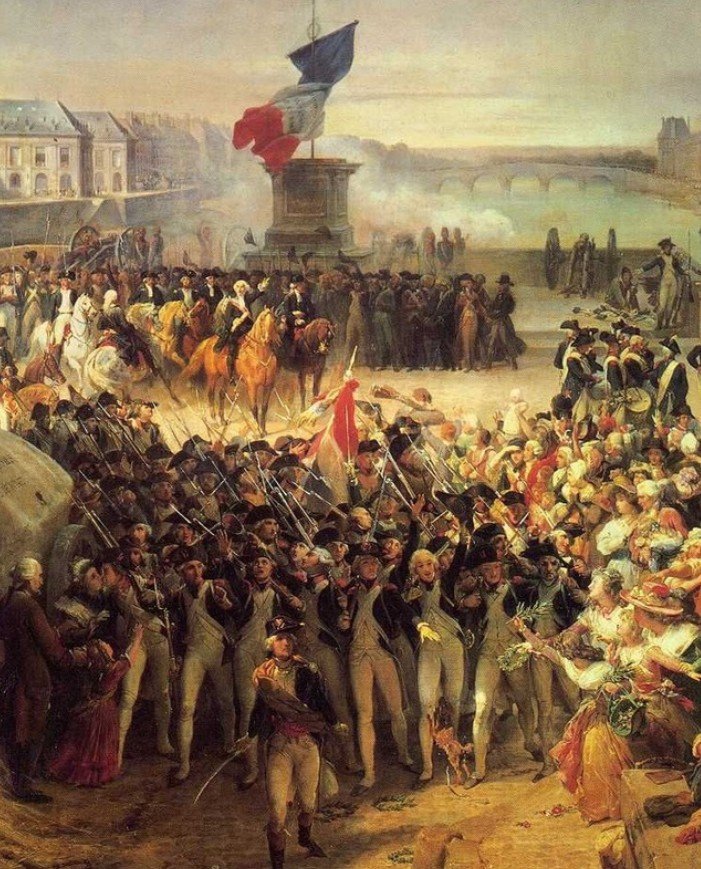 The influence of the French Revolution remains evident in today’s democratic world. Many modern constitutions incorporate principles first popularized during the Revolution, including equality before the law, freedom of expression, religious liberty, and the protection of fundamental human rights. International documents such as the Universal Declaration of Human Rights also reflect values that emerged from the revolutionary era. While democracies today continue to face challenges such as political polarization, inequality, and threats to civil liberties, the Revolution’s central message—that governments exist to serve their people—remains a cornerstone of democratic governance.
As Bastille Day is commemorated each year, it is not merely a celebration of France’s past but also a reflection on democracy’s enduring journey. The French Revolution proved that ordinary citizens could reshape history by demanding justice, representation, and freedom. More than two centuries later, its ideals continue to inspire nations striving to build societies founded upon human dignity, equality, and the democratic participation of all citizens.
If this perspective sparked a new idea for how you lead, build, or live, explore more stories on Kultur Voice Business or KVB.global — where global perspectives meet local living. Keep the conversation going by sharing this article with a colleague or friend and browse related posts to deepen your next decision.
Latest news from Kultur Voice Business


zimerovertover 10 Aug 2026
Thanks for another magnificent article. Where else could anyone get that type of info in such an ideal way of writing? I have a presentation next week, and I am on the look for such info.