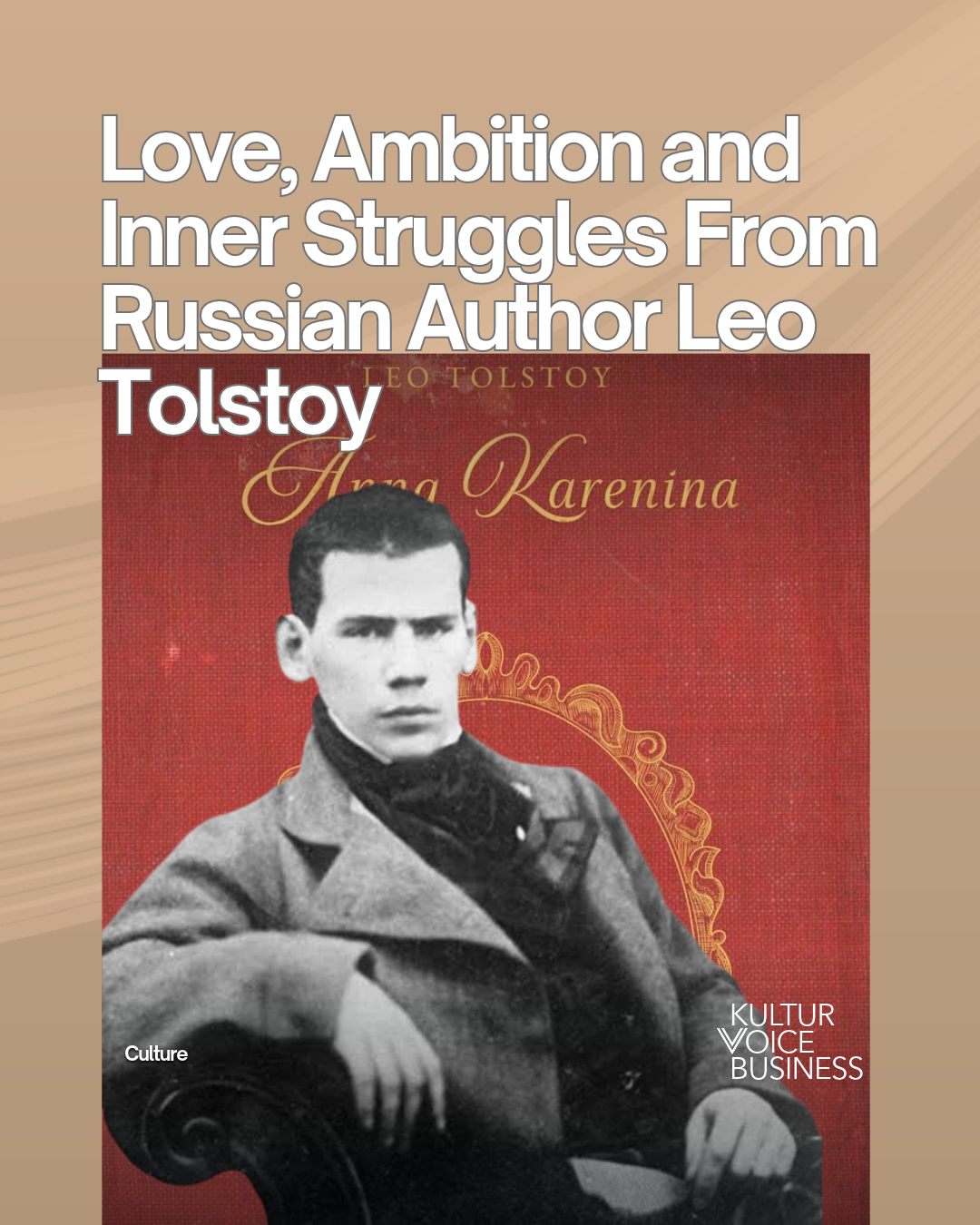

Few writers have examined the complexities of human life as deeply as Leo Tolstoy. Recognised as one of the greatest literary figures in history, the Russian novelist was known for his remarkable ability to portray human emotions, moral dilemmas, and the realities of society. Through stories that explored love, ambition, family, war, and personal transformation, Tolstoy created works that continue to resonate with readers more than a century after they were written.
Born on September 9, 1828, into an aristocratic family in Yasnaya Polyana, Russia, Tolstoy experienced a privileged upbringing. However, his early life was also marked by personal loss, as he became an orphan at a young age. His experiences, education, and observations of Russian society would later influence his literary perspective. After briefly attending university and serving in the military, he began developing his reputation as a writer through works inspired by his experiences and reflections on human nature.
Tolstoy’s literary legacy is best represented by two monumental novels, War and Peace and Anna Karenina. Published between 1865 and 1869, War and Peace portrays Russian society during the Napoleonic Wars, weaving together the lives of aristocratic families with broader questions about history, power, and human destiny. Meanwhile, Anna Karenina, published in 1877, examines love, marriage, social expectations, and the consequences of personal choices. Rather than presenting characters as entirely good or bad, Tolstoy gave them emotional depth and contradictions that made their experiences feel remarkably human.
Beyond literature, Tolstoy’s later years were shaped by a profound spiritual and philosophical transformation. He became increasingly critical of wealth, social inequality, organised religion, and institutional authority. His writings began to emphasise simplicity, compassion, nonviolence, and moral responsibility. These ideas eventually influenced prominent figures, including Mahatma Gandhi, whose philosophy of nonviolent resistance was partly inspired by Tolstoy’s writings.
Tolstoy passed away on November 20, 1910, but his influence has never been confined to the literary world. His works continue to invite readers to reflect on the choices they make, the values they uphold, and their relationships with others. More than simply telling stories, Tolstoy used literature as a way to understand the human condition. His lasting legacy lies in this ability to remind us that the most meaningful questions in life are often the ones we continue to explore.
Latest news from Kultur Voice Business