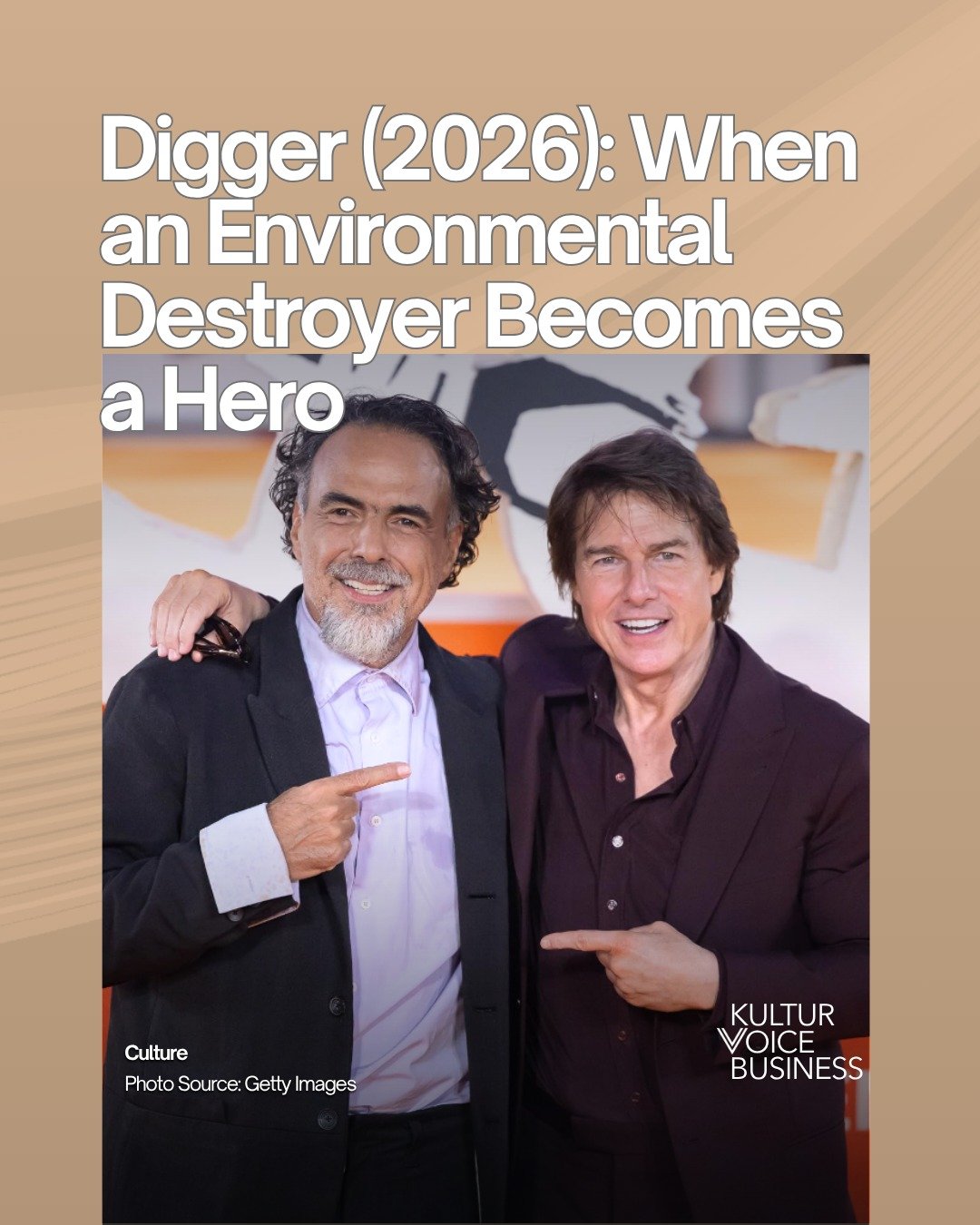

What happens when the person responsible for a disaster becomes the one expected to save the world? That question lies at the heart of Digger (2026), a dark comedy directed by Academy Award-winning filmmaker Alejandro G. Iñárritu and starring Tom Cruise and Riz Ahmed. Through environmental satire and political absurdity, the film challenges the familiar narrative of powerful figures stepping in as heroes when their own decisions have created a crisis.
Cruise stars as Digger Rockwell, an oil billionaire whose drilling operations in Greenland trigger a potentially catastrophic environmental disaster. When a methane leak threatens the surrounding ice sheet, Digger finds himself caught in a race to contain the damage. Riz Ahmed plays Dr. Ganesh, a scientist who understands the severity of the situation and must navigate the political interests complicating the response. With the American president entrusting Digger with managing the crisis, the story raises questions about the relationship between corporate power and political authority.
Rather than presenting environmental destruction as a straightforward battle between good and evil, Digger explores a more uncomfortable reality: the people responsible for a crisis may also have the power to control how the public understands it. Through exaggerated characters and absurd situations, Iñárritu satirizes how corporate interests and political agendas can overshadow scientific evidence. The result is a story in which managing public perception becomes almost as important as managing the disaster itself.
This makes the film particularly relevant in an era when corporate reputation, environmental responsibility, and public trust are increasingly interconnected. Businesses face growing expectations to demonstrate accountability, especially when their operations affect communities and the environment. Yet acknowledging a problem does not automatically mean accepting responsibility for it. Companies can communicate their sustainability commitments while leaving the underlying causes of environmental harm unaddressed.
The film’s sharpest criticism lies in this contradiction. A company can position itself as part of the solution while continuing to benefit from the very system that created the problem. In such circumstances, transparency risks becoming a communications strategy rather than a genuine commitment to change.
Digger offers more than exaggerated comedy about billionaires and political leaders. It invites audiences to question who gets to define a crisis, whose interests are protected, and whether public declarations of responsibility translate into meaningful action. By turning environmental catastrophe into dark comedy, Iñárritu delivers a provocative reminder that being seen as a hero is not the same as taking responsibility for the damage you have caused.
Latest news from Kultur Voice Business