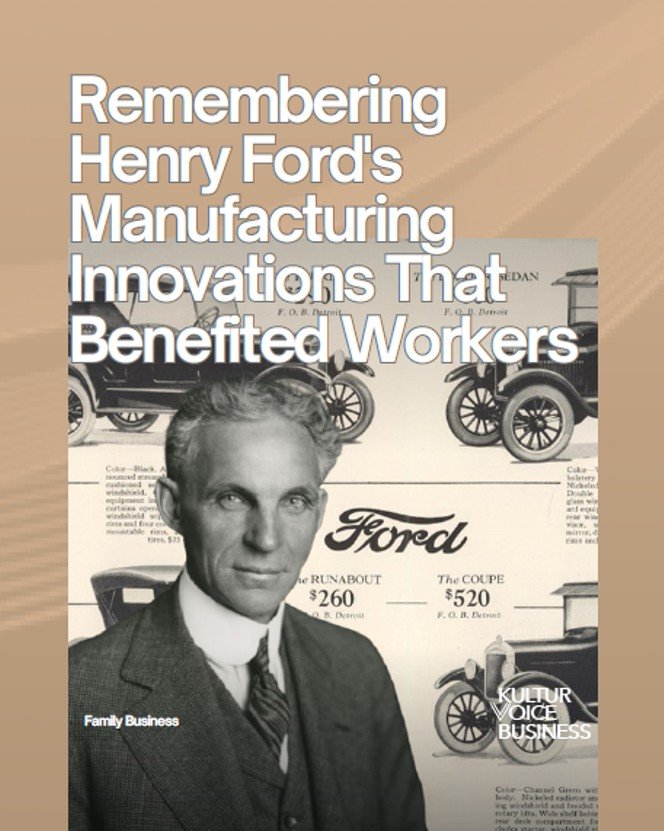

On July 30, the world remembers the birthday of Henry Ford (30 July 1863 – 7 April 1947), one of history’s most influential industrialists and the founder of the Ford Motor Company. Although he did not invent the automobile, Ford transformed how cars were manufactured and made personal transportation accessible to ordinary people. His vision reshaped not only the automotive industry but also modern business, manufacturing, and management practices that continue to influence organizations worldwide. Henry Ford was also considered to have created a middle class in American society.
Ford’s greatest achievement was reimagining production. Before 1913, Ford’s factories used a traditional production method where workers moved from one car to another, assembling many different parts themselves. As demand for the Model T grew, Ford realized this approach was too slow, expensive, and difficult to scale. In 1913, he introduced the moving assembly line at the Highland Park plant, reducing the time needed to build a Model T from more than 12 hours to around 90 minutes. This innovation significantly increased productivity, lowered manufacturing costs, and enabled Ford to sell vehicles at prices affordable to the growing middle class. Instead of treating automobiles as luxury goods, Ford believed they should improve everyday life for millions.
What truly distinguished Ford, however, was his understanding that innovation extended beyond technology. In 1914, he introduced the groundbreaking $5 workday, nearly doubling the average daily wage for many factory workers. While the policy helped reduce employee turnover and improve productivity, it also gave workers the purchasing power to buy the products they produced. Ford recognized that business growth, employee welfare, and consumer demand could reinforce one another.
These ideas later became known as Fordism, an industrial philosophy centred on mass production, standardized products, efficient assembly-line manufacturing, and relatively high wages. More than a production method, Fordism created a scalable business model that influenced industries far beyond automobiles. Throughout the 20th century, manufacturers across sectors adopted its principles to increase efficiency, reduce costs, and meet growing consumer demand.
Ford’s influence remains evident in today’s business landscape. Although modern companies have embraced automation, digital technologies, and lean manufacturing, many still rely on the principles Ford pioneered: standardization, economies of scale, continuous process improvement, and operational efficiency. Even production systems such as Lean Manufacturing were developed by refining the foundation that Ford helped establish.
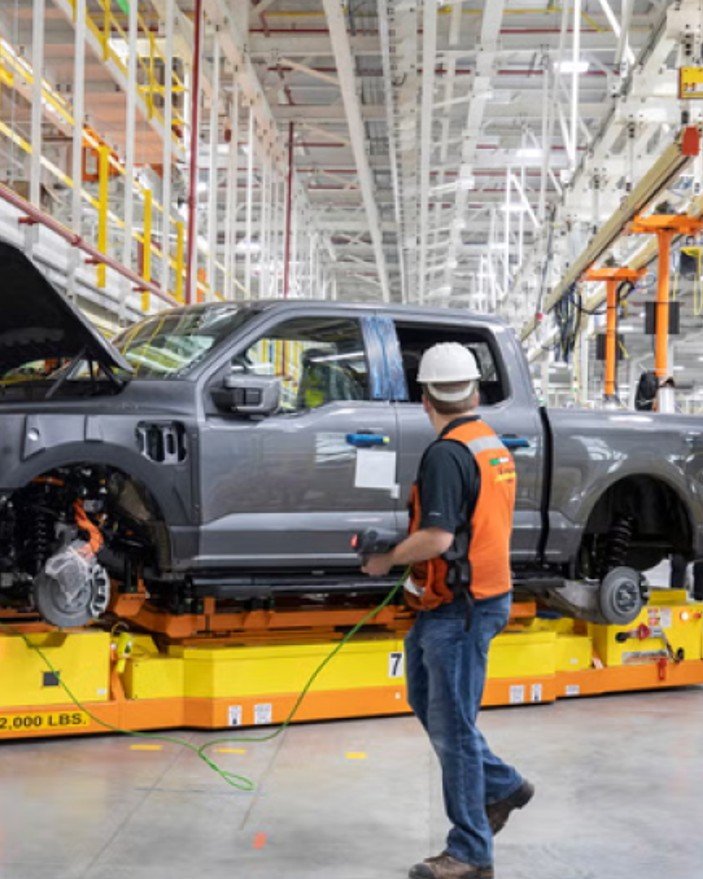 More than a century later after the founding of Ford Motor Company in Michigan, Henry Ford’s legacy continues to shape how businesses think about innovation and growth. His greatest lesson is that transformative success comes not only from creating remarkable products, but from designing systems that make those products accessible to more people.
Henry Ford was known for a watch repairman when he was a teenager, after his father gave him a pocket watch. Henry Ford met Thomas Alva Edison in 1896 who encouraged Henry to design Ford’s second car.
One of Henry Ford’s quotation is “Whether you think you can, or you think you can’t—you’re right”, that emphasized the power of mindset and self-belief in achieving success.
Where family business finds its voice. Kultur Voice Business shares stories and insights on family business, culture, and entrepreneurship. Need support in content production or public relations? Contact KVB at hello@kvb.global .
Latest news from Kultur Voice Business