
Every year on July 28, World Conservation Day serves as a reminder that the health of our planet depends on the choices we make today. As climate change, biodiversity loss, and resource depletion continue to reshape the world, conservation is no longer solely the responsibility of governments or environmental organizations. It has become a shared commitment that requires the participation of individuals, communities, and businesses alike.
Nature conservation is about more than preserving beautiful landscapes. Healthy forests, wetlands, oceans, and wildlife provide essential ecosystem services, including clean air, fresh water, fertile soil, and climate regulation. These natural systems also support millions of livelihoods and contribute significantly to global economic stability. Protecting them is not only an environmental imperative but also a long-term investment in human well-being.
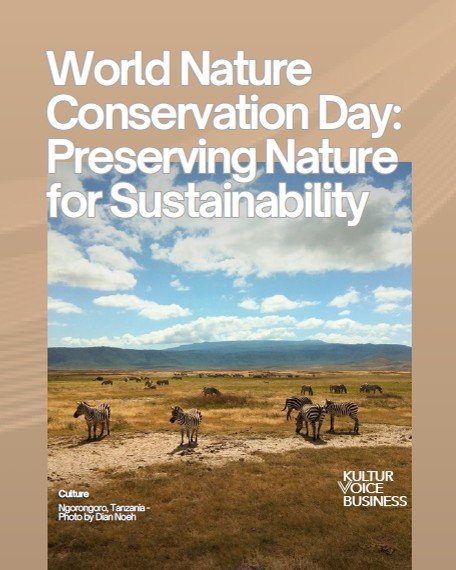
One inspiring example is the Ngorongoro Conservation Area in northern Tanzania. Recognized as a UNESCO World Heritage Site, the area demonstrates how conservation and sustainable development can coexist. It protects an extraordinary diversity of wildlife while allowing the indigenous semi-nomadic Maasai people to continue their traditional pastoral lifestyle. This balanced approach highlights that conservation efforts can safeguard biodiversity without excluding local communities, creating a model where both people and nature thrive together.
The Ngorongoro Conservation Area at 809,44 ha spans vast expanses of highland plains, savanna, savanna woodlands and forests, from the plains of the Serengeti National Park in the north-west, to the eastern arm of the Great Rift Valley. Established in 1959 as a multiple land use area, it includes the spectacular Ngorongoro Crater, the world’s largest caldera.
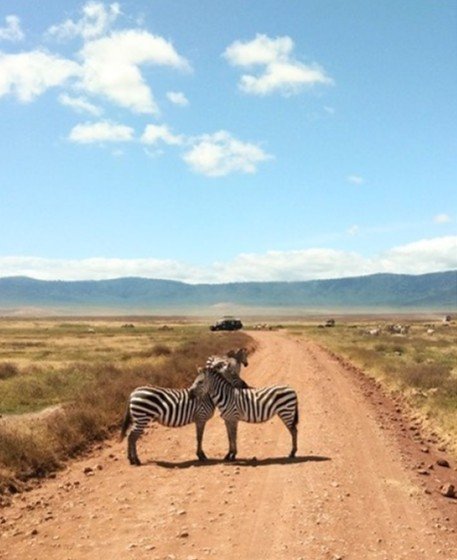
Ngorongoro Conservation Area is home to a population of some 25,000 large animals, mostly ungulates, alongside the highest density of mammalian predators in Africa including the densest known population of lion (estimated 68 in 1987). The property harbours a range of endangered species, such as the Black Rhino, Wild hunting dog and Golden Cat and 500 species of birds. It also supports one of the largest animal migrations on earth, including over 1 million wildebeest, 72,000 zebras and c.350,000 Thompson and Grant gazelles.
Ngorongoro has also been subject to extensive archaeological research for over 80 years and has yielded a long sequence of evidence of human evolution and human-environment dynamics, collectively extending over a span of almost four million years to the early modern era. The overall landscape of the area is seen to have the potential to reveal much more evidence concerning the rise of anatomically modern humans, modern behavior and human ecology.
The stunning landscape of Ngorongoro Crater combined with its spectacular concentration of wildlife is one of the greatest natural wonders of the planet. Spectacular wildebeest numbers (well over 1 million animals) pass through the property as part of the annual migration of wildebeest across the Serengeti ecosystem and calve in the short grass plains which straddle the Ngorongoro Conservation Area/Serengeti National Park boundary. This constitutes a truly superb natural phenomenon.
The variations in climate, landforms and altitude have resulted in several overlapping ecosystems and distinct habitats, with short grass plains, highland catchment forests, savanna woodlands, montane long grass plains and high open moorlands. The property is part of the Serengeti ecosystem, one of the last intact ecosystems in the world which harbours large and spectacular animal migrations.
Businesses also have an increasingly important role in advancing environmental sustainability. Companies are recognizing that sustainable practices are not simply acts of corporate responsibility but strategic investments that strengthen resilience, improve operational efficiency, and build consumer trust. Initiatives such as reducing carbon emissions, transitioning to renewable energy, minimizing waste through circular economy principles, sourcing raw materials responsibly, and improving supply chain transparency all contribute to a healthier planet while supporting long-term business growth.
Moreover, investors, customers, and regulators are placing greater emphasis on Environmental, Social, and Governance (ESG) performance. Organizations that integrate sustainability into their core strategies are often better positioned to manage risks, foster innovation, and remain competitive in an evolving global market. Conservation, therefore, is increasingly viewed as a driver of economic value rather than a constraint on development.
 World Nature Conservation Day (July 28) was not started by a single individual; rather, it developed organically through grassroots environmental movements and global coalitions, with major institutional backing from organizations like the International Union for Conservation of Nature (IUCN) to promote sustainable resource management.
World Conservation Day reminds us that environmental stewardship is a collective responsibility. Whether through protecting natural habitats, supporting conservation initiatives, or embedding sustainability into business operations, every action contributes to a more resilient future. By working together, we can ensure that economic progress and environmental preservation go hand in hand, leaving a healthier planet for generations to come.
Culture shapes how we live, create, and do business. Kultur Voice Business explores the ideas, traditions, craftsmanship, and communities that inspire everyday living and entrepreneurship. Need support in content production or public relations? Contact KVB at hello@kvb.global.
Latest news from Kultur Voice Business